
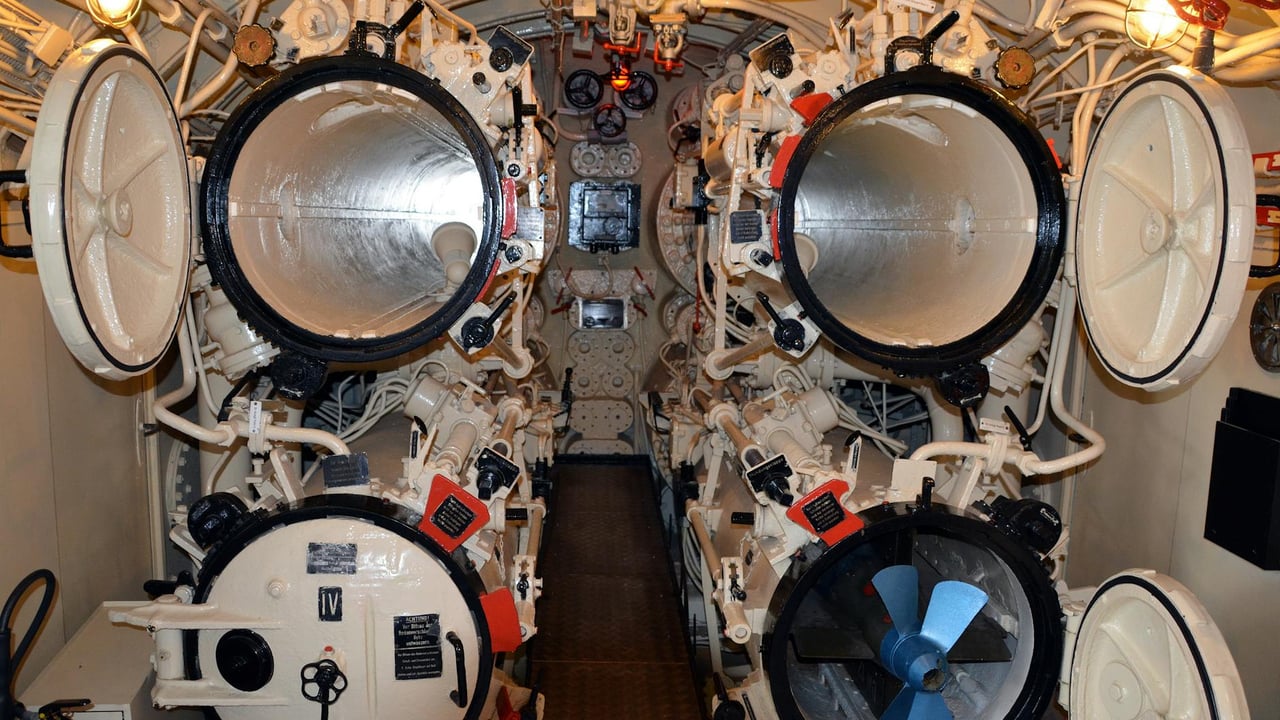

Resting quietly in the waters off Qingdao at the People’s Liberation Army Navy Museum, the Long March 1—China’s first domestically produced nuclear-powered attack submarine—serves as more than just a relic. Known by its hull number 401, this 'steel whale' represents the genesis of China's undersea deterrent and a pivotal moment in its 20th-century history. For Beijing, the vessel is a symbol of strategic defiance, marking the point where the nation transitioned from a coastal defense force to a budding blue-water power.
The project’s origins in the late 1950s were defined by the harsh realities of the Cold War and a burgeoning rift between Beijing and Moscow. After Soviet leader Nikita Khrushchev dismissed China’s ability to develop such complex technology, Mao Zedong famously vowed that China would build a nuclear submarine 'even if it takes ten thousand years.' This ultimatum birthed a period of intense, isolated research that relied on sheer willpower and rudimentary tools in the face of a total international blockade.
Lacking blueprints or foreign expertise, Chinese scientists like Huang Xuhua and Peng Shilu famously resorted to using abacuses and slide rules to calculate complex hydrodynamic and nuclear data. Legend within the Chinese defense establishment maintains that a toy model of a U.S. George Washington-class submarine, brought back by a diplomat, served as one of the few physical reference points for the design team. This era of 'hidden' scientists, who lived in anonymity for decades, remains a cornerstone of the Communist Party’s narrative on self-reliance and national sacrifice.
Since the Long March 1’s commissioning in 1974, the PLA Navy’s submarine force has evolved from these noisy, experimental early models into a sophisticated fleet of Type 093 and Type 094 vessels. The 401 served for 40 years, providing the essential training ground for the first generation of Chinese submariners and testing the limits of deep-sea endurance. Its decommissioning in 2013 and subsequent 'de-nuclearization' process were highlighted as a demonstration of China’s maturing nuclear lifecycle management and environmental responsibility.
Today, the vessel’s permanent exhibition in Qingdao is a carefully curated piece of military diplomacy and domestic education. As China currently undergoes one of the fastest naval expansions in modern history, the Long March 1 serves as a historical anchor. It links the hardships of the Mao era to the high-tech ambitions of the current leadership, reinforcing the idea that China’s path to maritime supremacy is an inevitable, long-term endeavor that cannot be halted by external pressure.