
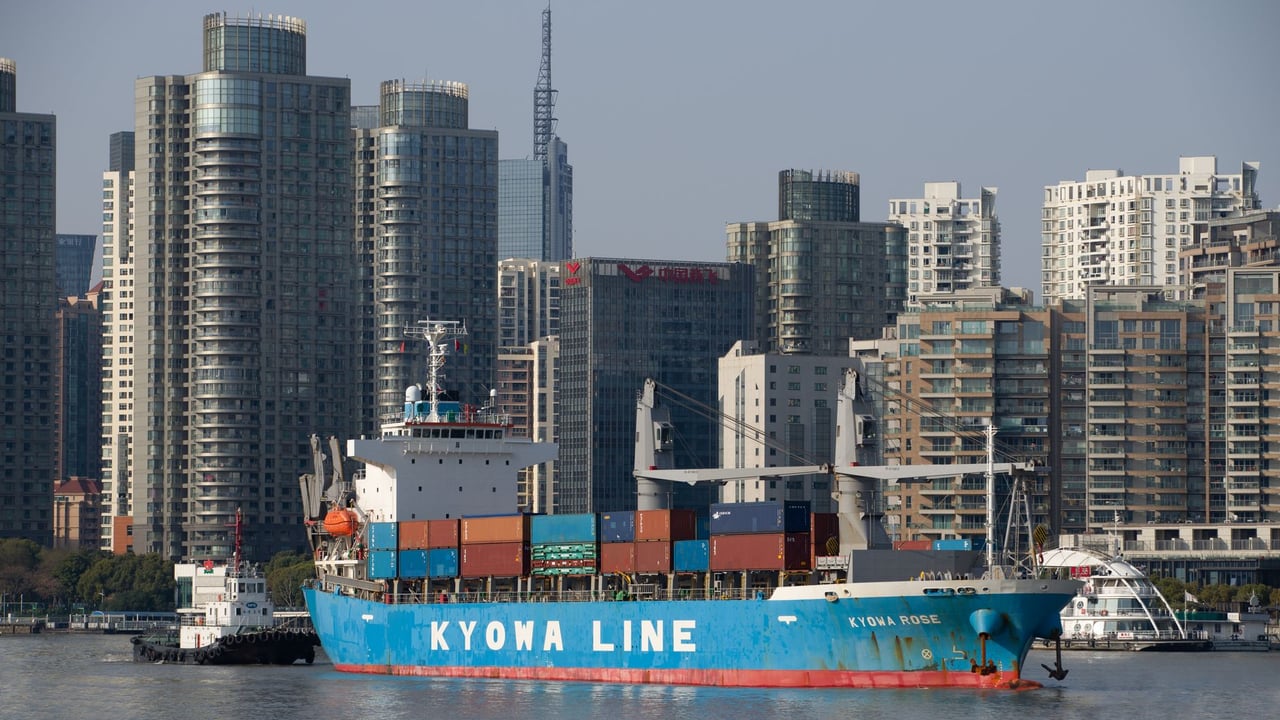

Shanghai’s maritime infrastructure is undergoing a significant transformation as the city’s port facilities report a historic surge in cross-border e-commerce. In the first five months of the current year, the total value of e-commerce goods exported via sea from Shanghai ports has already eclipsed the entire annual total for the previous year. This rapid acceleration underscores Shanghai's evolving role as a global logistics nexus, shifting the paradigm of how digital trade reaches international markets.
Data from the General Administration of Customs reveals that through May, Shanghai Customs supervised the export of over 5.2 million parcels with a combined value exceeding 5.8 billion RMB (approximately $800 million). This milestone is not merely a reflection of increased consumer demand, but rather the result of a deliberate regulatory innovation known as the 'Master Bill + LCL' (Less than Container Load) model. This system allows fragmented e-commerce orders to be consolidated with traditional trade cargo, ensuring containers remain at full capacity and reducing overhead for smaller shippers.
For years, the cross-border e-commerce sector relied heavily on expensive air freight to meet the demands of rapid delivery. However, the maturation of logistics in Shanghai is making maritime transport a viable and cost-effective alternative for small and medium-sized enterprises (SMEs). By allowing small-value items—such as the 18,000 RMB shipment of handheld fans recently processed at the Waigaoqiao terminal—to ship alongside bulk industrial goods, the port is democratizing access to global markets for niche manufacturers.
This efficiency is creating what officials describe as a 'siphon effect,' attracting inventory from major global platforms like Amazon toward Shanghai's shipping hubs. As logistics providers optimize these 'last-mile' and 'middle-mile' connections, the city is cementing its position as a preferred exit point for Chinese manufactured goods. The ability to move high volumes of low-cost items with the reliability of traditional shipping is proving to be a decisive competitive advantage in an increasingly price-sensitive global economy.