
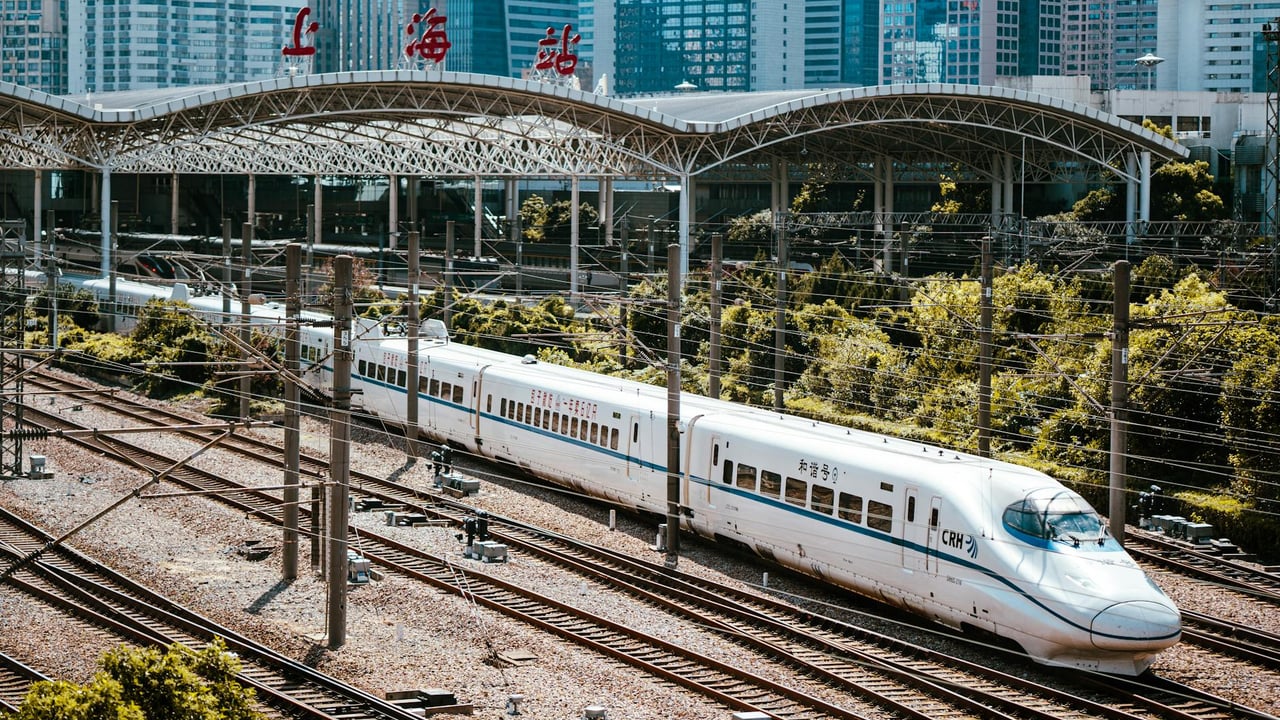

As China prepares its 15th Five-Year Plan, a clear shift in infrastructure strategy is emerging. Recent policy documents from Guangdong province and its two anchor cities, Guangzhou and Shenzhen, confirm that the long-discussed 'Second High-Speed Rail' (HSR) link is moving from vision to reality. This project is not merely an incremental update; it represents a strategic doubling down on the nation’s most productive economic corridors at a time when the broader rail boom is facing a significant cooling period.
For over a decade, China’s HSR expansion was characterized by a 'build it and they will come' philosophy that reached deep into the hinterlands. However, mounting local government debt and underutilized tracks led Beijing to impose strict new thresholds in 2021. Today, new parallel lines are only permitted if existing routes exceed 80% capacity. This high bar has effectively frozen projects for smaller municipalities, while simultaneously greenlighting a second wave of construction for an elite club of ten megacities where demand has already hit a hard ceiling.
The Beijing-Shanghai corridor exemplifies this saturation. As the only consistently profitable HSR line in the country, it has achieved 'subway-style' operations with trains departing every three minutes during peak hours. Despite price hikes of 20%, the line remains overwhelmed. This scenario is mirrored in the Yangtze River Delta and the Greater Bay Area, where the sheer density of the population and the intensity of business travel have turned once-revolutionary infrastructure into a bottleneck for further growth.
The second-generation HSR projects are pushing the boundaries of transport technology. On the Chengdu-Chongqing line, the upcoming CR450 powercar is expected to raise operational speeds to 400km/h, slashing travel times between the two western hubs to just 50 minutes. Meanwhile, the Guangzhou-Shenzhen Second HSR is being designed to solve the 'last mile' problem of the existing network, aiming to connect city centers directly rather than depositing passengers in distant suburban terminals like Guangzhou South.
Demographic trends are the silent driver of this massive capital expenditure. While China’s national population is shrinking, the top ten megacities—including the 'big four' of Beijing, Shanghai, Guangzhou, and Shenzhen—continue to draw millions of young, educated workers. By concentrating resources into these super-nodes, the central government is signaling a pivot toward 'efficiency-first' urbanization, prioritizing the connectivity of its economic engines over the regional equity of the past decade.
Ultimately, this 'Second HSR' era marks a transition from expansion to optimization. As the 'Ten Megacities' reinforce their dominance through 400km/h links and seamless urban integration, the gap between the hyper-connected coast and the disconnected interior is likely to widen. For global investors and urban planners, the message is clear: China’s future economic growth is being funneled into a few elite clusters, and the infrastructure is being built to keep that gravity well spinning.