
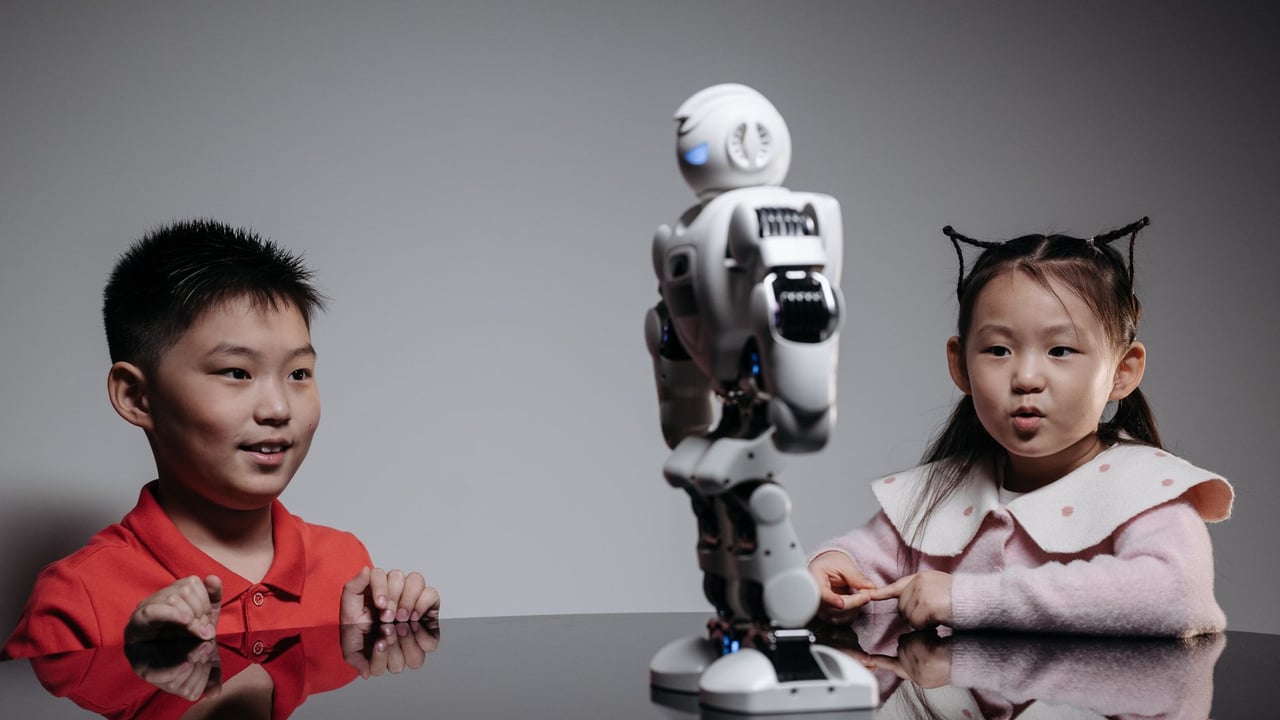

The domestic humanoid robot market in China has reached a historic price inflection point in early 2026. Once-exclusive hardware that cost hundreds of thousands of dollars is now being commoditized, with mass-produced models finally breaking the psychologically significant 10,000 RMB ($1,380) barrier.
Leading this charge is Songyan Power’s 'Bumi,' the industry’s first consumer-grade humanoid priced at 9,998 RMB. Standing 94cm tall and weighing 12kg, the unit targets education and home companionship, signaling a shift from industrial prototypes to living-room appliances. By June 2026, government subsidies have already pushed the effective retail price of such units below $1,300 on major e-commerce platforms.
Industry giant Unitree has followed a similar downward trajectory. Its entry-level R1 series launched at 26,900 RMB, a fraction of the cost of its 300,000 RMB flagship H2 model. Data reveals that Unitree’s average unit price plummeted from nearly 600,000 RMB in 2023 to just 167,000 RMB by late 2025, a testament to the speed of Chinese manufacturing optimization.
The secondary market reflects this volatility, transitioning from a high-yield rental goldmine to a liquidation phase. In early 2025, robots were rented for as much as 30,000 RMB per day for corporate events; by 2026, those rates have crashed to 3,000 RMB. In some hardware clearance markets, older engineering prototypes that once cost millions are now being bundled and sold for scrap-level pricing.
This aggressive price erosion is powered by China's hyper-mature industrial ecosystem. Local manufacturers have successfully localized 70% of core components, including harmonic reducers and servo motors. Furthermore, the industry is aggressively 'cannibalizing' the supply chains of electric vehicles and smartphones, repurposing batteries, sensors, and AI chips to bypass the need for entirely new production infrastructure.
However, a low price tag does not solve the industry's ultimate dilemma: utility. While the hardware is becoming affordable, critics note that current consumer models still struggle with limited battery life and poor autonomous reasoning in complex environments. The industry consensus is that large-scale utility will first be proven in automotive manufacturing and logistics before the machines become truly indispensable in the home.
Strategic heavyweights like BYD are already positioning themselves for this next phase. The EV giant recently confirmed it is developing its own humanoid robots, intending to leverage its massive AI capabilities and existing dealership networks to sell robots alongside cars. As China’s projected production capacity for humanoids is expected to exceed 200,000 units by the end of 2026, the global robotics landscape is entering a period of unprecedented disruption.