
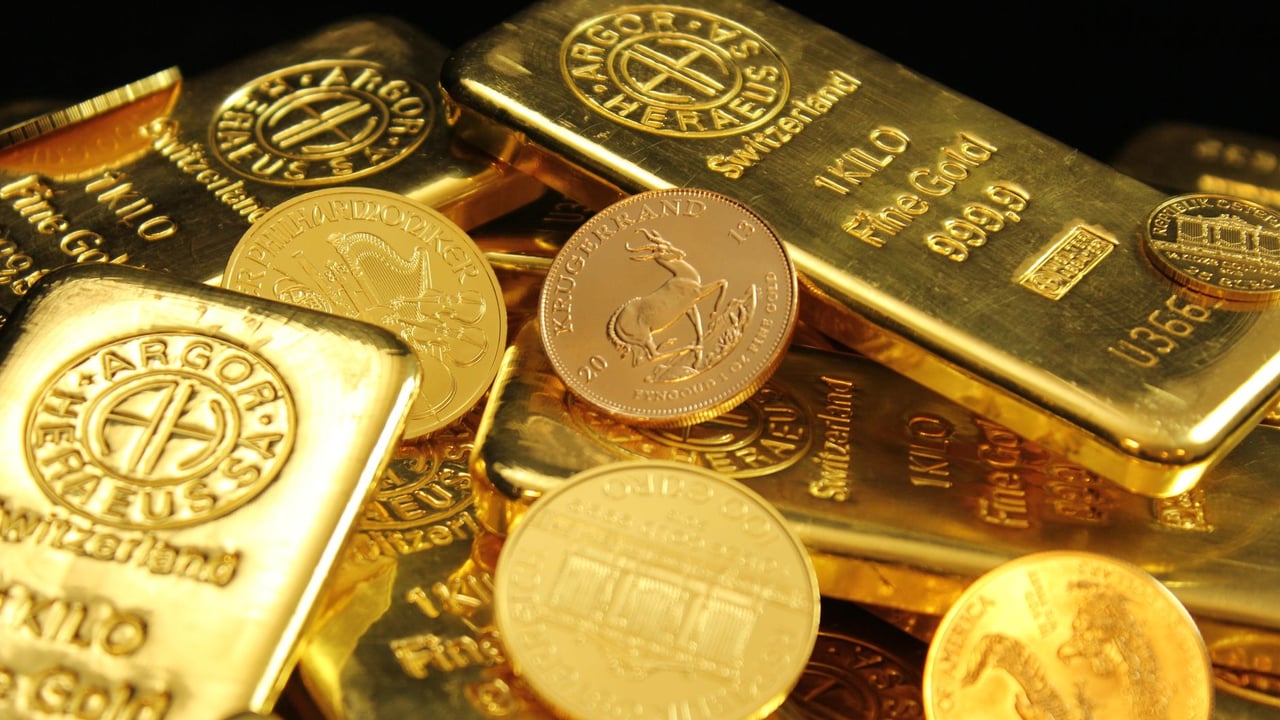

The luster of the gold market is dimming as the Agricultural Bank of China (ABC), one of the country's ‘Big Four’ state-owned lenders, signaled a defensive shift in the face of escalating market volatility. Starting June 5, 2026, the bank will hike margin requirements for its gold and silver deferred trading products, Au(T+D) and Ag(T+D), from 100% to 120%. This move is designed to buffer the institution against a sharp correction that has already seen the precious metal shed over $1,000 in value since its January peak.
This cooling period marks a stark reversal for a commodity that had reached a historic high of $5,598 per ounce earlier this year. As of this week, spot gold has tumbled to roughly $4,468, driven by a complex interplay of persistent inflation fears and a hawkish Federal Reserve. Investors are increasingly concerned that regional conflicts in the Middle East will keep energy prices high, forcing central banks to maintain elevated interest rates for longer than originally anticipated, thereby increasing the opportunity cost of holding non-yielding bullion.
Perhaps more significant than traditional macro-drivers is the ‘AI Siphon’ currently draining the commodities market. Since May, global equity markets, particularly in the U.S., Japan, and South Korea, have been propelled to record heights by an aggressive surge in artificial intelligence and technology stocks. This rotation from safe-haven assets to high-growth, earnings-driven equities has significantly reduced the demand for gold, as capital chases the explosive returns promised by the semiconductor and software sectors.
Major financial institutions are recalibrating their outlooks accordingly. Commerzbank recently lowered its year-end 2026 gold forecast to $4,800 per ounce, while Citigroup has issued more bearish short-term projections, suggesting prices could dip as low as $4,300 in the coming months. These adjustments reflect a growing consensus that the vertical climb of precious metals witnessed over the last two years was overextended and ripe for a technical correction.
However, a complete collapse appears unlikely as central banks provide a critical floor for the market. According to the World Gold Council, sovereign institutions returned to net buying in April, reversing a brief period of selling in March. Led by the Central Bank of Poland, these institutional buyers view gold as a necessary strategic reserve amidst geopolitical uncertainty, suggesting that while the retail frenzy may be cooling, the structural demand from global states remains a potent stabilizing force.