
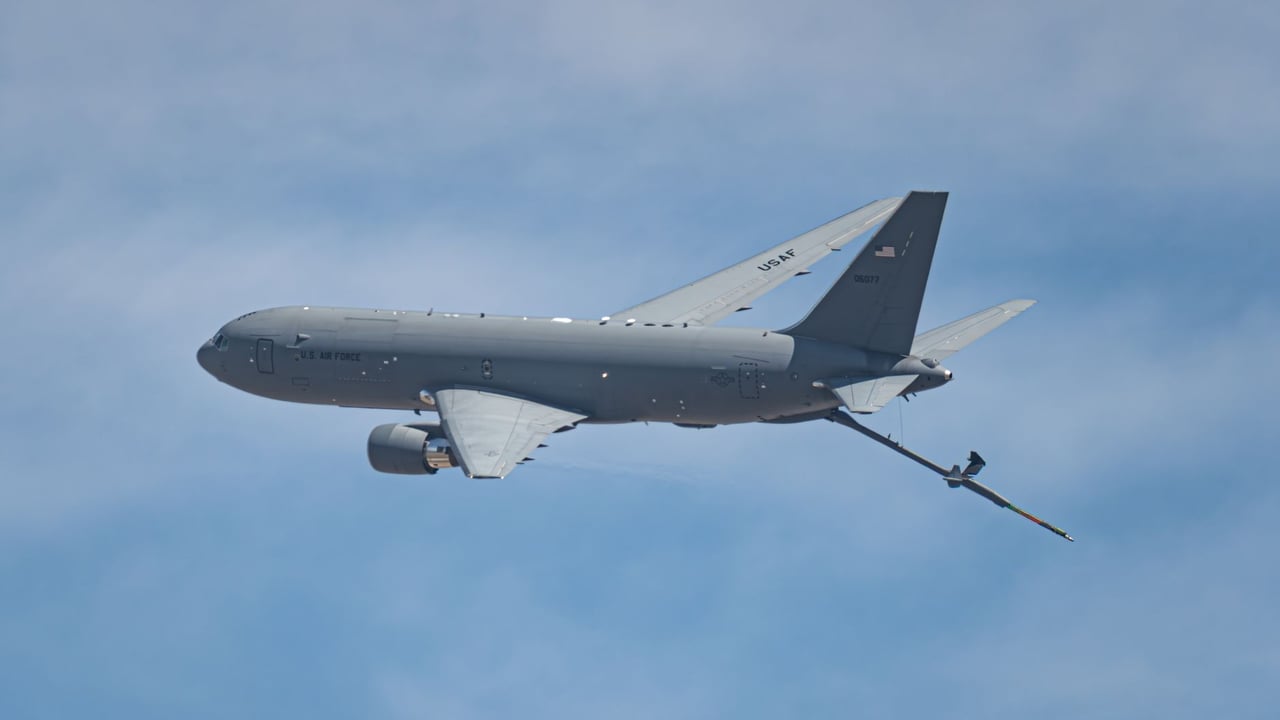

Boeing has successfully cleared a major technical hurdle in its long-standing effort to modernize the U.S. Air Force’s aerial refueling capabilities. The company announced the completion of Phase 1 flight testing for the Remote Vision System (RVS) 2.0, an advanced suite designed to replace the flawed visual technology currently used by the KC-46 Pegasus. This milestone marks a critical turning point for a program that has been frequently criticized for technical setbacks and cost overruns.
The RVS 2.0 system utilizes 'hardened' cameras and enhanced processing hardware to provide boom operators with a high-definition, three-dimensional view of the refueling process. The previous iteration, RVS 1.5, suffered from significant visual distortion and glare under specific lighting conditions, which posed safety risks when refueling sensitive aircraft like the F-22 Raptor and F-35 Lightning II. These upgrades are intended to provide the clarity necessary for precise operations in diverse combat environments.
Aerial refueling remains the backbone of American power projection, allowing the U.S. and its allies to maintain a persistent presence in distant theaters like the Indo-Pacific. The KC-46 was intended to be a modern successor to the aging KC-135 fleet, but its development has been marred by 'Category 1' deficiencies that limited its mission readiness. By validating the optical performance and hardware stability of RVS 2.0, Boeing is moving closer to fulfilling its contractual obligations and restoring confidence in the platform.
This testing phase is part of a broader set of three agreements between Boeing and the Pentagon aimed at bringing the Pegasus up to full operational capability. As the program shifts toward final certification and delivery, the successful integration of RVS 2.0 will be the ultimate litmus test for the aircraft's combat viability. For the Air Force, the delivery of a fully functional tanker is not merely a logistical upgrade but a strategic necessity in an era of increasing regional tensions.