
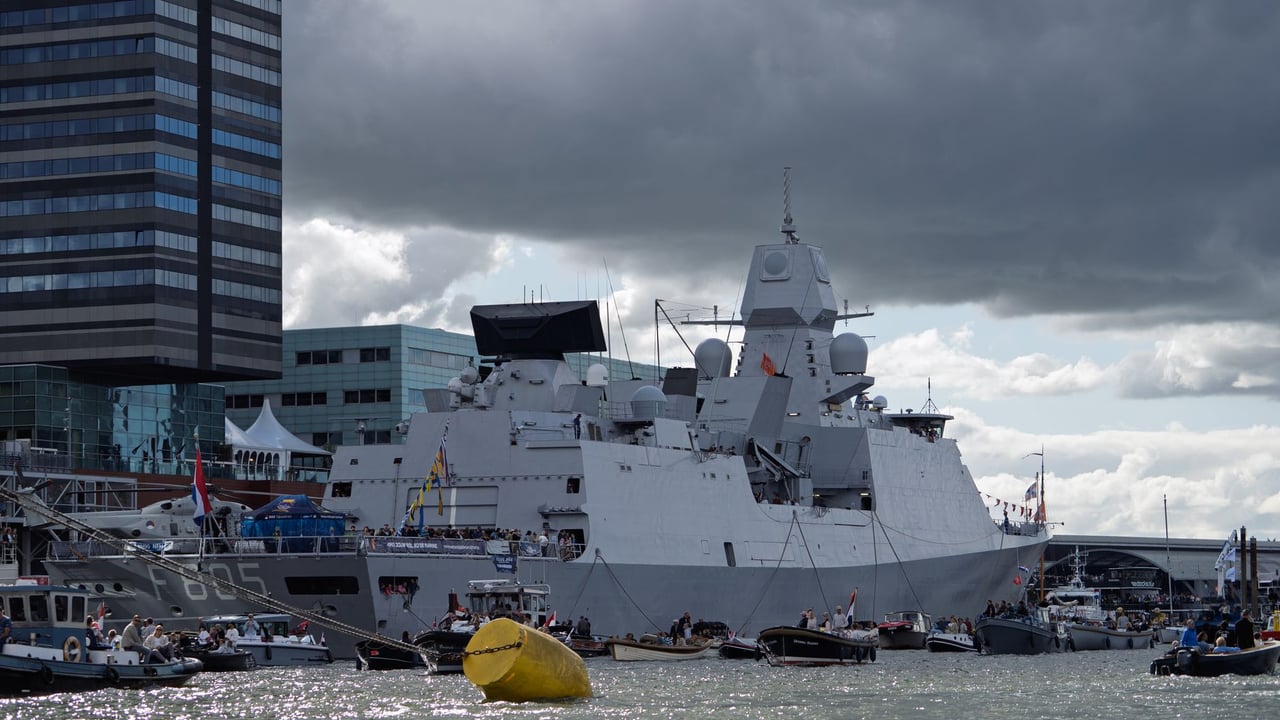

The Dutch frigate De Ruyter has become the latest European vessel to find itself in the crosshairs of the People’s Liberation Army (PLA) following a series of maneuvers in the Indo-Pacific. According to Senior Colonel Xu Chenghua of the Eastern Theater Command, the vessel’s ship-borne helicopter allegedly entered airspace near the Paracel Islands before the frigate proceeded with a transit through the sensitive Taiwan Strait. This move marks a significant assertion of maritime presence by a nation historically cautious about challenging Beijing’s territorial claims.
Beijing’s reaction was swift and predictable, characterizing the Dutch operations as an "illegal intrusion" into sovereign territory. The Eastern Theater Command reportedly deployed a combination of sea and air forces to track, monitor, and warn the Dutch vessel throughout its journey. While such transits are technically permissible under international law as freedom of navigation operations, China’s response indicates a hardening stance against extra-regional powers entering what it considers its backyard.
This incident does not occur in a vacuum but rather within a broader strategic shift in European foreign policy. As the European Union and NATO increasingly view the stability of the Taiwan Strait as vital to global supply chains and economic security, we are seeing a coordinated increase in naval patrols from the UK, France, Germany, and now the Netherlands. These nations are moving beyond diplomatic rhetoric to demonstrate a physical commitment to the international rules-based order in the Indo-Pacific.
For China, the presence of a Dutch frigate is viewed less as a direct military threat and more as a diplomatic affront that "internationalizes" the Taiwan issue. By shadowing the vessel with such visibility, Beijing aims to communicate that its anti-access/area denial (A2/AD) capabilities are fully operational. This cat-and-mouse game in the Strait serves as a constant reminder of the friction between international maritime norms and China's expansive regional ambitions.