Asia’s Quest for Artificial Life: Shenzhen Leads Regional 10-Year Roadmap for Synthetic Cells

A Shenzhen-led team of scientists from six Asian nations has published a 10-year roadmap in Nature Biotechnology for the development of synthetic cells. The strategy aims to unify regional research in AI and bio-manufacturing to eventually engineer artificial life, signaling Asia's growing dominance in the global synthetic biology sector.

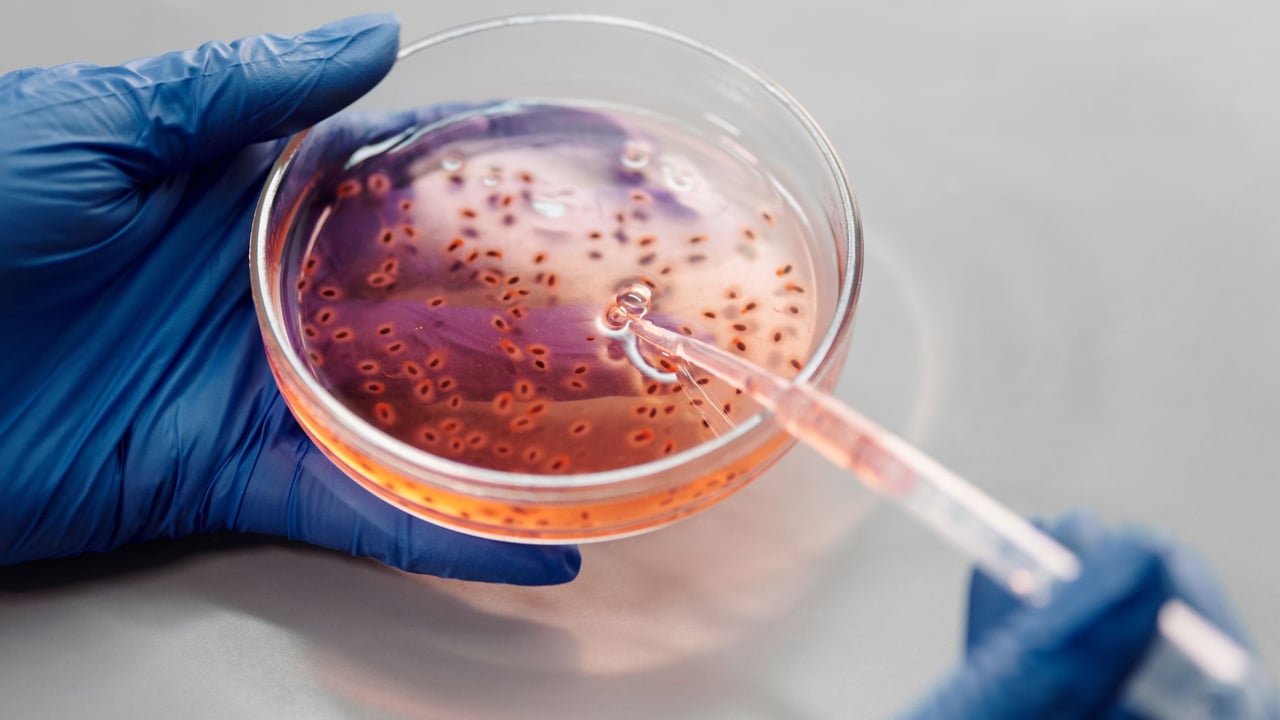
Laboratory close-up of hands in gloves holding a petri dish with pink liquid using a pipette.

Key Takeaways

  • 1The roadmap is the first of its kind in Asia and was published in the high-impact journal Nature Biotechnology.
  • 2The initiative is led by the Chinese Academy of Sciences (Shenzhen) and involves scientists from six Asian countries including Japan, South Korea, and Singapore.
  • 3It identifies four critical technical challenges to synthesizing single-cell life and sets a timeline for the next decade.
  • 4The plan emphasizes the fusion of AI and quantitative biology to move from modular components to fully integrated biological systems.

Editor's
Desk

Strategic Analysis

This roadmap represents a strategic move by China to exert leadership over the Asian scientific commons. By anchoring the region’s synthetic biology milestones to a Shenzhen-led initiative, China is effectively setting the 'standard' for how biological engineering will evolve across the continent. This is particularly significant in the context of the global 'Bio-race,' where the U.S. and China are vying for supremacy in synthetic biology—a field the Pentagon and the Chinese Ministry of Science and Technology both view as a critical 'dual-use' technology. The inclusion of traditional U.S. allies like Japan and South Korea in a Chinese-led biological framework suggests that scientific collaboration in high-end biotech may continue to bridge geopolitical divides, even as export controls on AI hardware tighten.

China Daily Brief Editorial
Strategic Insight
China Daily Brief

In a significant leap for regional scientific cooperation, a multi-national consortium led by the Shenzhen Institute of Advanced Technology (SIAT) has unveiled Asia's first comprehensive roadmap for synthetic cell research. Published recently in the journal Nature Biotechnology, the 10-year strategic plan outlines a collaborative path toward one of biology's most ambitious frontiers: the creation of functional, artificial single-cell life from the ground up.

The initiative, spearheaded by SIAT researcher Liu Chenli, brings together experts from China, Japan, South Korea, Singapore, Malaysia, and Thailand. This coalition marks a deliberate shift in the region's approach to biotechnology, moving away from isolated modular experiments toward a unified, systematic framework for biological integration. By pooling regional expertise, the roadmap seeks to overcome the fragmented nature of current synthetic biology efforts.

The roadmap identifies four core technical challenges that currently prevent scientists from assembling a living cell from non-living components. To address these, the document proposes a series of staged milestones that integrate quantitative synthetic biology with high-growth fields like artificial intelligence and advanced bio-manufacturing. This convergence is expected to create a feedback loop where AI accelerates the design of biological circuits while synthetic cells provide the data needed to refine biological models.

Beyond the theoretical pursuit of defining life, the roadmap is deeply rooted in industrial application. The transition from modular exploration to systematic integration is viewed as the necessary catalyst for the next generation of bio-manufacturing. As the global bio-economy expands, this decade-long strategy positions Asia not just as a participant, but as a primary architect of the technologies that will eventually produce sustainable fuels, precision medicines, and carbon-capturing materials.

Share Article

Related Articles

📰
No related articles found