
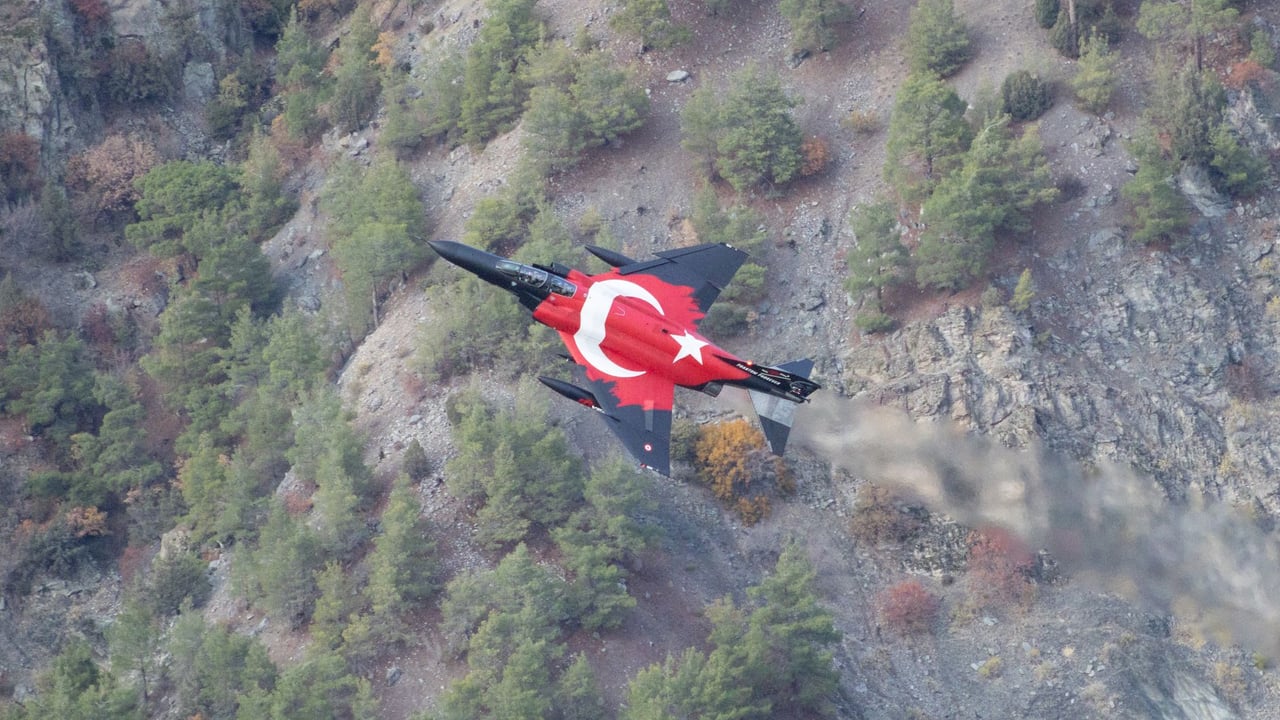

Turkey has reached a pivotal milestone in its quest for defense self-reliance with the successful warhead validation of its indigenously developed 'Gökdoğan' (Peregrine) and 'Bozdoğan' (Merlin) air-to-air missiles. Announced by Industry and Technology Minister Mehmet Fatih Kacır, this development signals the final technical hurdle before these munitions enter service with the Turkish Air Force. The move is designed to systematically phase out American-made AIM-120 AMRAAM and AIM-9 Sidewinder missiles, insulating Ankara from the vulnerabilities of Western arms embargoes.
While the Bozdoğan serves as a short-range infrared seeker, the medium-range Gökdoğan has drawn intense scrutiny from defense analysts for its striking resemblance to China’s premier PL-15E export missile. Both projectiles feature distinctive trapezoidal wings and cruciform tail fins, but the real significance lies beneath the skin. The Gökdoğan utilizes dual-pulse solid rocket motor technology, a sophisticated propulsion method that allows for energy management mid-flight to ensure high terminal velocity against maneuvering targets.
The mastery of dual-pulse technology is a high-bar achievement in aerospace engineering, involving complex material sciences such as flame-retardant insulation and precision propellant carving. Even the United States faced significant delays in integrating similar propulsion into its AIM-120 series, only realizing it with the upcoming AIM-260. China’s PL-15, which debuted in 2015, arguably set the global standard for this technology, fundamentally altering the calculus of beyond-visual-range combat by maintaining kinetic energy long after traditional single-pulse motors would have burned out.
Speculation regarding the origins of Turkey’s technical leap often points toward Islamabad. Pakistan remains the sole foreign operator of the PL-15E and maintains a deep strategic partnership with Ankara, ranging from F-16 upgrades to joint fighter development. While it is unlikely that Pakistan transferred core blueprints, the close military proximity between the two nations likely provided Turkey with invaluable operational insights and structural benchmarks, allowing Turkish engineers to bypass years of trial and error.
Despite these advancements, a performance gap remains between the Turkish and Chinese iterations. The Gökdoğan currently claims a range of approximately 100 kilometers, falling short of the PL-15E’s 160-kilometer reach and the even greater range of the domestic PL-15 used by the People’s Liberation Army. Furthermore, the Gökdoğan lacks the advanced active electronically scanned array (AESA) seekers and the integrated 'kill chain' ecosystem—including AWACS and dedicated electronic warfare platforms—that allows the PL-15 to reach its full lethal potential.
Ultimately, Turkey’s progress reflects a broader trend of middle powers leveraging second-mover advantages to build independent deterrents. By mirroring China’s historical path of 'imitate, improve, innovate,' Ankara is securing its tactical future. For Beijing, the potential diffusion of PL-15-style technology via third parties appears to be a calculated risk, as Chinese R&D has already pivoted toward next-generation missiles with ranges reportedly exceeding 300 kilometers, rendering the current generation 'safe' for export.