

Deep in the Jinggangshan Mountains, a soft light illuminates two fragile pamphlets in a museum display case: 'Why is it that Red Political Power can Exist in China?' and 'The Struggle in the Jinggangshan.' These documents, penned by Mao Zedong over 90 years ago, represent a pivotal shift in global revolutionary strategy. They mark the moment the Chinese Communist Party (CCP) abandoned urban uprisings for rural guerrilla warfare, a move that would eventually reshape the geopolitical map of Asia.
The context of this retreat was one of existential crisis. In 1927, after the Kuomintang (KMT) launched a bloody purge of its former allies, the CCP faced near-extinction. Mao’s decision to abandon the assault on Changsha and instead lead a ragtag force into the mountains was not merely a tactical withdrawal; it was a fundamental rejection of Orthodox Marxist-Leninist dogma, which prioritized the urban proletariat over the peasantry.
By 1928, this mountain stronghold became a laboratory for what would be called the 'Sinicization of Marxism.' In Jinggangshan, the CCP implemented its first major land reforms, dismantling the feudal system that had oppressed the peasantry for centuries. This wasn't just social engineering; it was a pragmatic survival strategy. By giving land to the farmers, the CCP secured a loyal base that provided the intelligence, food, and soldiers necessary to withstand KMT 'encirclement' campaigns.
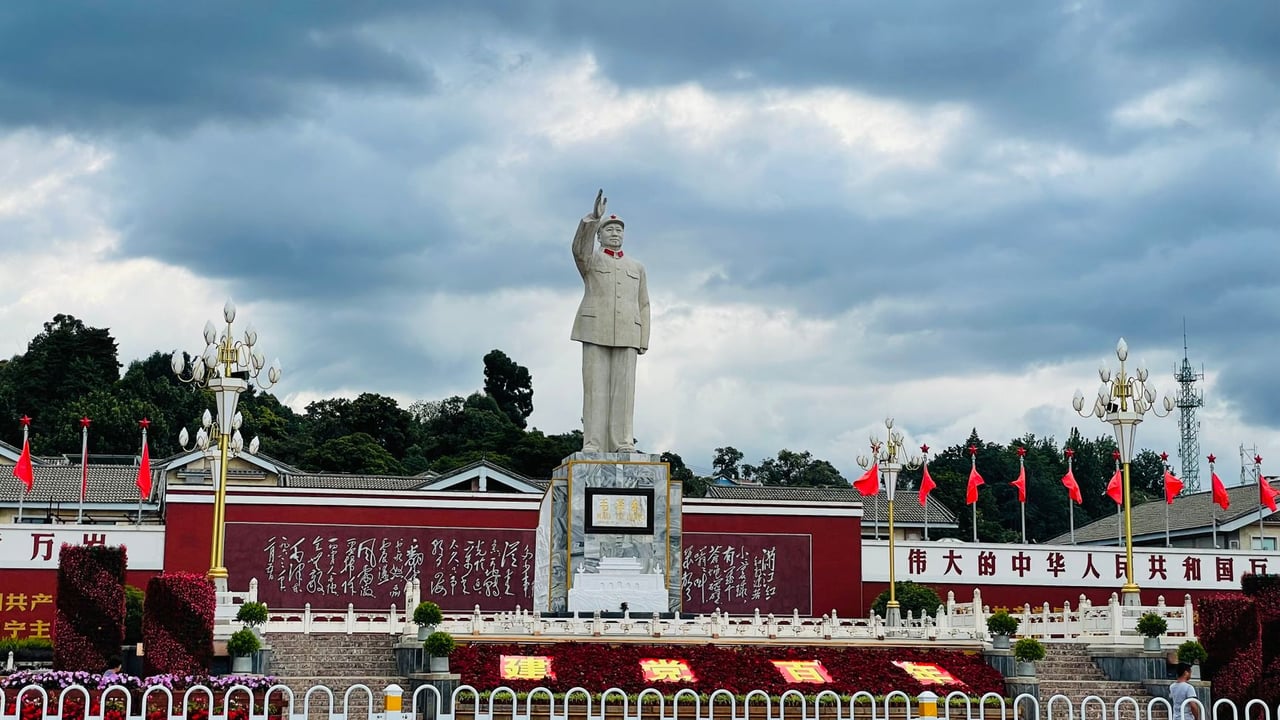
Today, Jinggangshan has transitioned from a rugged battlefield into a central pillar of the party’s modern 'Red Tourism' industry and ideological apparatus. The site is no longer just a historical landmark but a high-tech educational hub designed to bridge the gap between the revolutionary past and a digital future. In 2025 alone, over 217,000 young people participated in immersive 'ideological and political' study tours at the site.
This modern revival uses the 'Jinggangshan Spirit' to instill a sense of historical continuity and national mission in the next generation. Through immersive classrooms and lectures delivered by the descendants of revolutionaries, the state ensures that the struggles of the 1920s remain relevant to the youth of the 2020s. For the CCP, the 'spark' that began in these mountains is an eternal flame that must be carefully tended to maintain its hold on the Chinese narrative.