
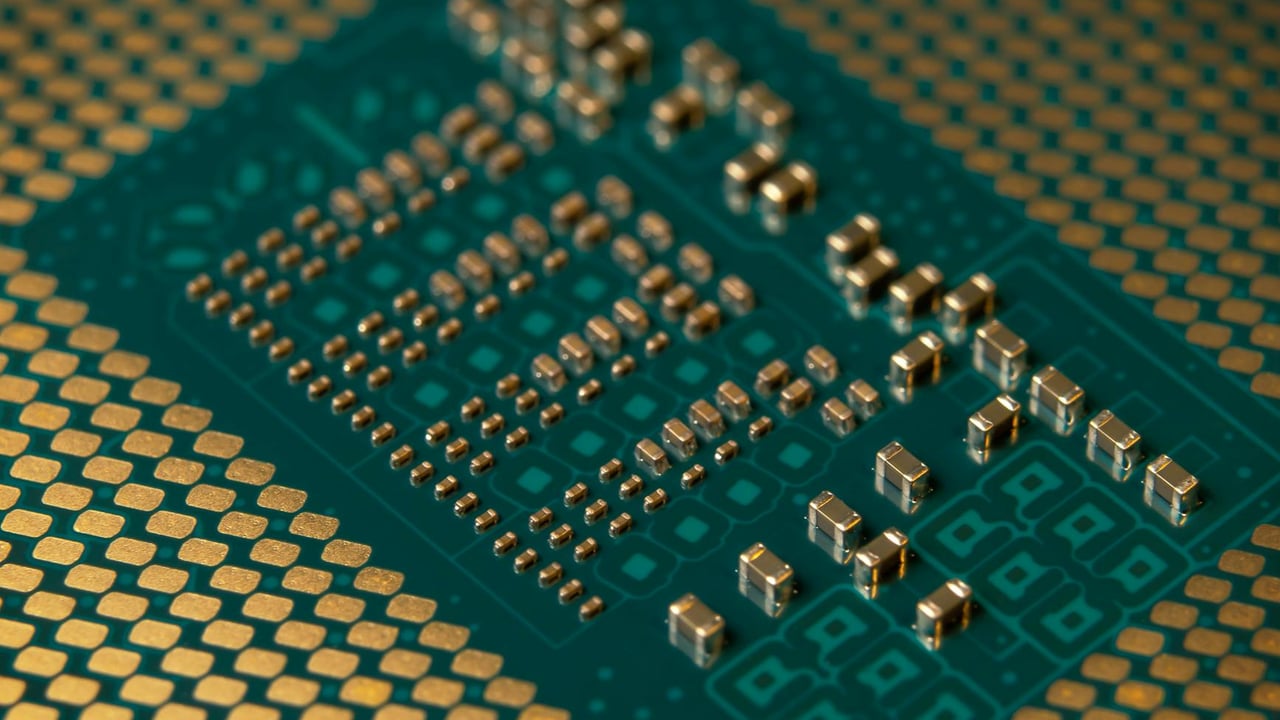

China Electronics Technology Group Corporation (CETC) has achieved a significant milestone, delivering over five million units of the world’s first mass-produced silicon-based Gallium Nitride (GaN-on-Si) radio frequency chips for smart terminals. Developed by the 55th Institute, this advancement marks a pivotal transition for GaN technology from specialized industrial infrastructure to high-volume consumer electronics. This breakthrough is expected to provide the "hardcore" technical support required for the next generation of integrated space-air-ground information networks, ensuring high-speed interconnectivity across all domains.
The technical significance of GaN-on-Si lies in its hybrid nature, blending the high-performance, high-frequency capabilities of Gallium Nitride with the cost-efficiencies and scalability of traditional silicon manufacturing. By successfully mitigating lattice mismatch through advanced buffering layers, Chinese researchers have unlocked a platform that offers higher power density and greater efficiency in a smaller footprint than legacy silicon components. This technology is becoming indispensable for the 5G-Advanced and 6G eras, as well as for the burgeoning fields of electric vehicles and augmented reality.
This hardware breakthrough arrives as the broader tech ecosystem undergoes a radical shift driven by artificial intelligence. Simultaneously, the market for high-end optical fiber preforms has seen prices surge by nearly 550% as AI data centers demand the low-latency, high-bandwidth capabilities that only "A2-class" anti-bending fibers can provide. The supply chain for optical modules is also accelerating, with 1.6T solutions now entering the market to satisfy the bandwidth hunger of massive AI training clusters.
Beyond the chip level, the maturation of China's high-tech manufacturing is visible in the robotics and mobile sectors. Breakthroughs in high-precision planetary roller screws are positioning Chinese suppliers at the heart of the humanoid robot supply chain, a critical component for the mass production of machines like Tesla's Optimus. In the consumer space, Huawei and Honor have solidified their dominance in the foldable smartphone market, further proving that Chinese firms are increasingly leading in high-end, hardware-intensive categories rather than just low-cost manufacturing.