
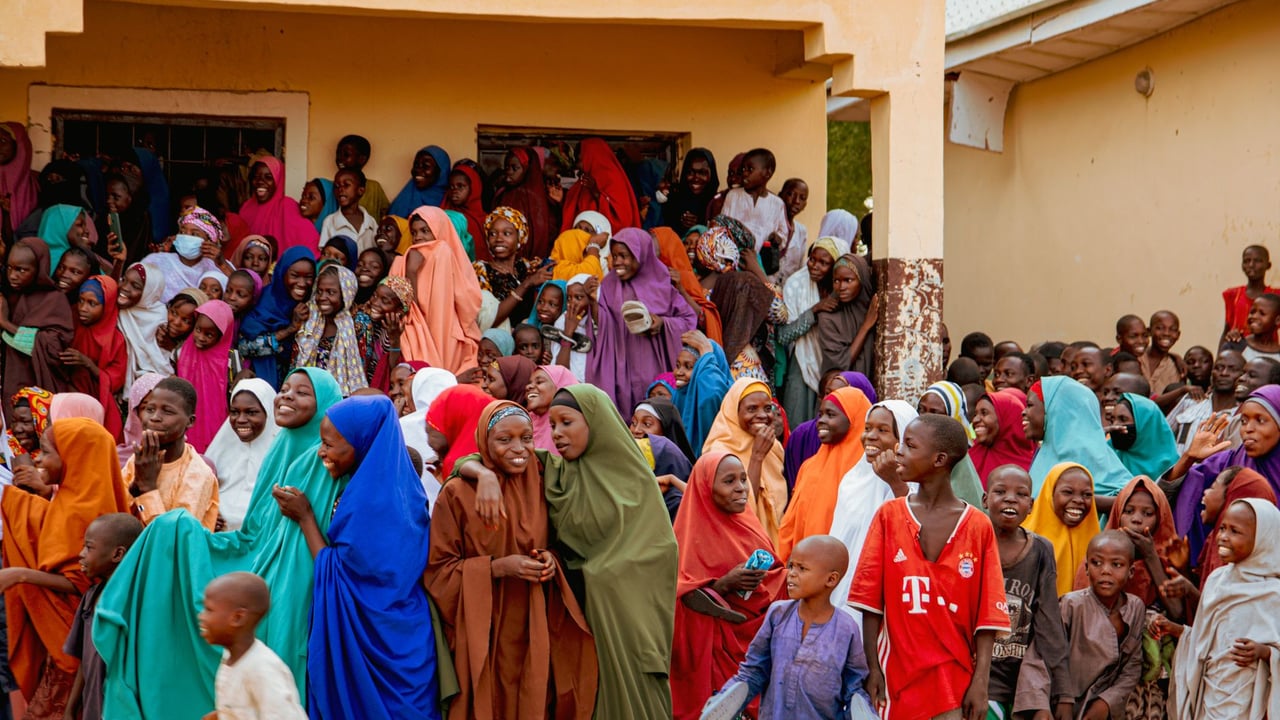

The liberation of 360 civilians from the rugged Mandara Mountains represents a rare and significant victory for the Nigerian military in its protracted struggle against regional insurgency. Conducted by the Joint Task Force in southern Borno State, the operation targeted a major extremist stronghold that had long served as a sanctuary for militants and a prison for their captives. These survivors, many of whom were abducted from communities such as Ngoshe, had endured months—and in some cases years—of captivity under what officials described as extremely harrowing and inhumane conditions.
This mission is being hailed as one of the largest and most successful rescue operations in Nigeria’s northeast in recent memory. The Mandara Mountains, stretching along the border with Cameroon, have historically provided a natural fortress for extremist groups, allowing them to evade aerial surveillance and conventional ground assaults. By successfully penetrating this high-altitude terrain, the military has demonstrated an improved tactical capability that challenges the insurgents' geographic advantage.
However, the sheer number of rescued individuals also highlights the staggering scale of the kidnapping crisis that continues to plague Africa's most populous nation. While the military victory is undeniable, the presence of such a large number of captives in a single location underscores how effectively extremist factions have been able to establish shadow administrations within Nigerian territory. The state’s ability to prevent such mass abductions in the first place remains a point of intense domestic and international scrutiny.
For the 360 liberated individuals, the road to recovery is likely to be long and fraught with challenges. Beyond the immediate need for medical care and nutritional support, the survivors face the daunting task of reintegrating into a region where infrastructure is decimated and the threat of re-infiltration remains high. The success of this operation provides a temporary morale boost, but the underlying socio-economic drivers of the insurgency in the Lake Chad Basin remain largely unaddressed.