
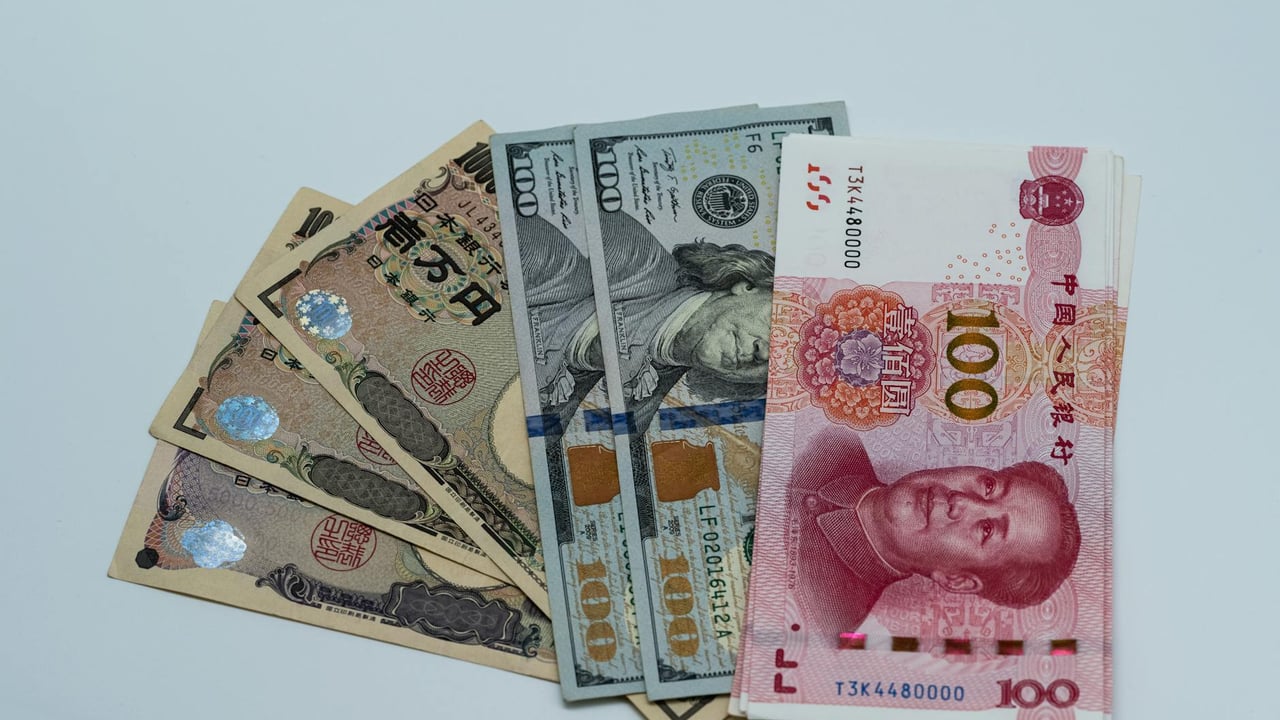

On June 1, 2026, the State Council of China formally released the 'Regulations on Foreign Investment,' a sweeping set of mandates scheduled to take effect in July. The move signals a decisive shift from mere capital guidance to punitive enforcement, introducing a legal framework that allows the state to forcibly terminate unauthorized outbound investments. Under the new rules, investors found in violation will be ordered to divest assets, see their illegal gains confiscated, and face fines of up to 1% of the total investment amount. Individual executives are not exempt, with personal penalties ranging from 50,000 to 100,000 yuan for those directly responsible for non-compliant outflows.
This regulatory hardening arrives as Beijing seeks to justify its control over private wealth by pointing to Washington’s own financial offensive. State-aligned commentators are increasingly citing U.S. Executive Orders 13959 and 14105—which restricted American capital from flowing into Chinese defense and high-tech sectors—as a precedent for Beijing's right to manage its own financial borders. By framing the crackdown as a symmetric response to U.S. 'financial hegemony,' Chinese authorities are attempting to repackage strict capital controls as a necessary component of national security in a period of intense geopolitical friction.
The scale of the problem facing the People’s Bank of China is underscored by staggering data regarding capital leakage. Reports indicate that in 2025 alone, roughly $1.04 trillion in 'hot money' bypassed official channels to exit the country, marking the highest level of unauthorized outflow since records began in 2006. This figure represents nearly 17% of China’s total trade volume for that year, suggesting that despite existing barriers, domestic capital has been fleeing at a pace that threatens the stability of the onshore financial system. Official statistics confirm that while over $330 billion of registered securities investment is currently in the U.S., the true figure including grey-market channels is likely far higher.
To stem this tide, the new regulations specifically target the infrastructure of capital flight, including offshore trading platforms and underground banks. Regulatory bodies have already ramped up pressure on popular brokerage firms like Futu Holdings and Tiger Securities, restricting their ability to acquire new mainland clients. While legal avenues such as the Qualified Domestic Institutional Investor (QDII) scheme and the Stock Connect programs remain operational, the government’s message is clear: the era of the 'back door' is over. Beijing is no longer willing to allow domestic liquidity to fuel the growth of foreign tech giants while the domestic market struggles.
Ultimately, the state’s narrative revolves around 'protecting' the retail investor from an alleged global AI bubble orchestrated by Silicon Valley. By painting the U.S. capital market as a 'financial trap' designed to siphon off global wealth, Beijing is positioning itself as a benevolent guardian of the national purse. However, the underlying reality is one of strategic survival. In the ongoing 'epic struggle' between the world’s two largest economies, Beijing views every dollar that leaves its shores not just as lost investment, but as a strategic asset transferred to its primary rival.