Brinkmanship in the Strait: Trump Vows Retaliation as Narratives Clash Over Downed Apache

President Trump has accused Iran of shooting down a U.S. Apache helicopter in the Strait of Hormuz, vowing a military response despite CENTCOM reporting the incident as a crash under investigation. The conflicting narratives highlight rising tensions in a critical global energy corridor while both crew members have been confirmed safe.

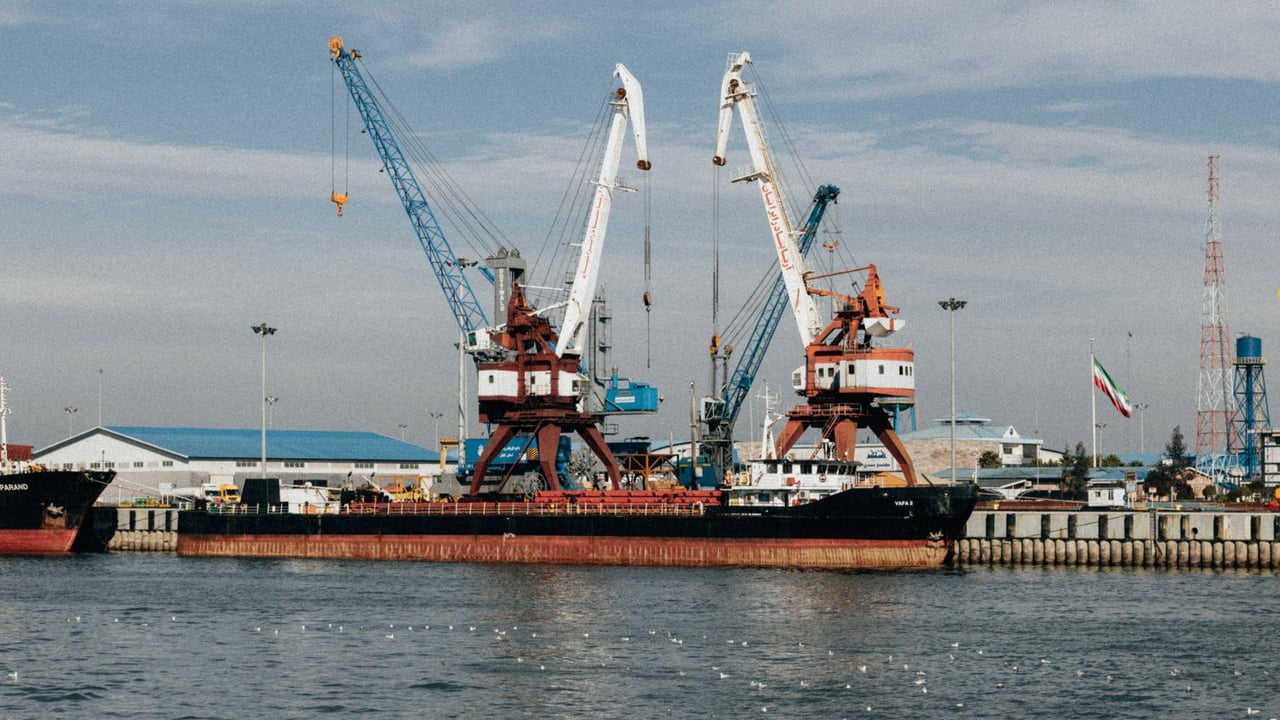
Cargo ships and cranes at the industrial port in Rasht, Gilan Province, Iran.

Key Takeaways

  • 1President Trump explicitly blamed Iran for the downing of a U.S. AH-64 Apache helicopter on June 8, 2026.
  • 2U.S. Central Command (CENTCOM) has not confirmed an attack, stating the aircraft crashed near the Omani coast and the cause is under investigation.
  • 3Both crew members involved in the incident were rescued safely and are unharmed.
  • 4The incident occurred in the strategically vital Strait of Hormuz, a frequent flashpoint for U.S.-Iran friction.
  • 5The discrepancy between the White House's rhetoric and military reporting suggests a potential rift in crisis management or a deliberate political signaling strategy.

Editor's
Desk

Strategic Analysis

The divergence between President Trump's definitive attribution of blame and CENTCOM's cautious investigation status points to a dangerous gap in the U.S. escalation ladder. If the President bypasses the military's evidentiary process to declare an act of war on social media, it leaves little room for de-escalation, even if the crash is later found to be mechanical. For Iran, this scenario presents a 'no-win' situation where political posturing in Washington may dictate the kinetic reality on the ground. For global markets, the immediate takeaway is the fragility of the 2026 security environment in the Persian Gulf, where a single localized incident can be rapidly leveraged into a broad casus belli.

China Daily Brief Editorial
Strategic Insight
China Daily Brief

The volatile waters of the Strait of Hormuz have once again become the epicenter of a high-stakes geopolitical standoff. President Donald Trump announced on June 9, 2026, that an Iranian strike was responsible for the downing of a U.S. AH-64 Apache attack helicopter. While the President’s rhetoric suggests a definitive act of aggression by Tehran, the initial military assessment offers a more measured and ambiguous perspective.

According to the President’s social media communications, the aircraft was a 'very advanced' asset performing patrol duties when it was targeted on the night of June 8. Despite the gravity of the claim, Trump noted that both crew members were recovered safely. However, he emphasized that the United States 'must respond' to what he characterized as a direct provocation, signaling a potential for immediate military escalation in the Persian Gulf.

Contrastingly, a statement from U.S. Central Command (CENTCOM) provides a different narrative of the incident. Military officials confirmed the helicopter crashed at approximately 7:33 p.m. Eastern Time near the coast of Oman. Rather than attributing the loss to enemy fire, CENTCOM maintained that the cause of the crash remains under active investigation, avoiding the escalatory language used by the White House.

This discrepancy between the Commander-in-Chief and his military commanders highlights the 'fog of war' often found in the world’s most sensitive maritime chokepoints. As the Strait of Hormuz accounts for a significant portion of global oil transit, any confirmation of kinetic engagement between U.S. and Iranian forces could trigger severe shocks to international energy markets and regional stability.

Share Article

Related Articles

📰
No related articles found