
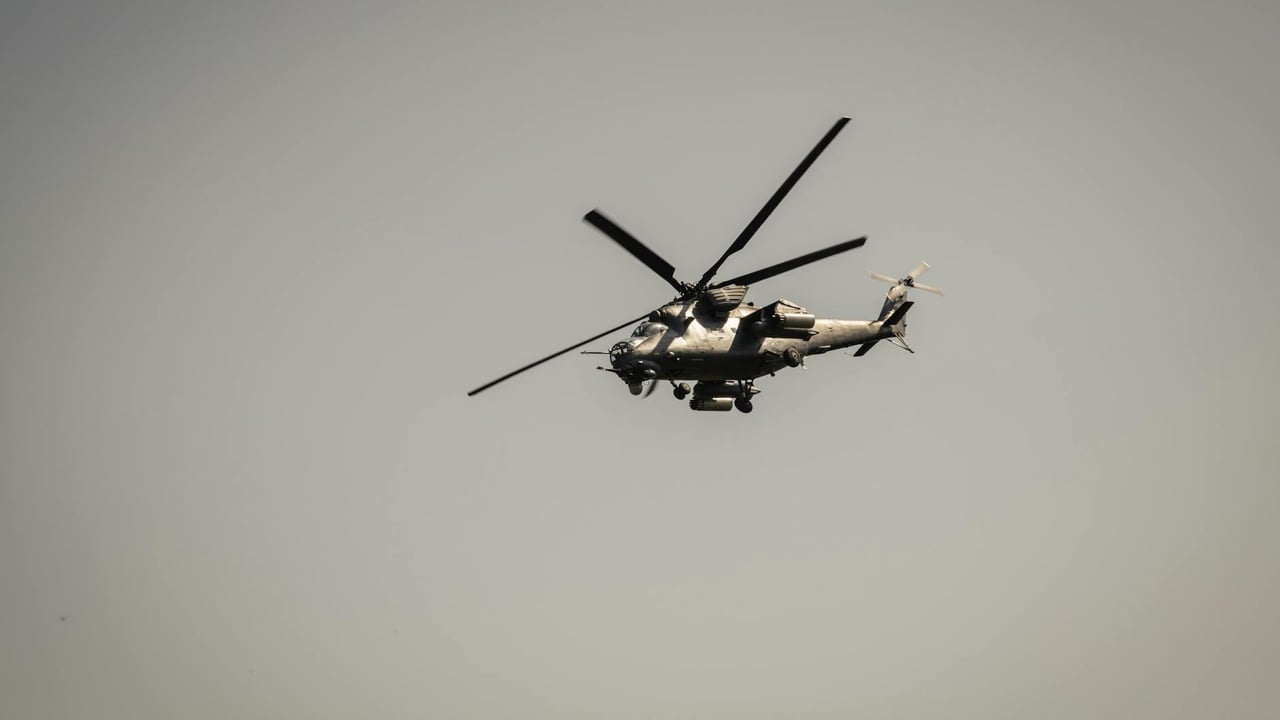

The volatile equilibrium in the Persian Gulf has been shattered by a stark display of asymmetric warfare. In a development that has sent ripples through global defense circles, a technologically advanced U.S. Apache helicopter was reportedly downed by a low-cost Iranian drone near the Strait of Hormuz. The incident, involving two pilots who were safely recovered, highlights a jarring cost disparity: a platform worth approximately $35 million neutralized by a loitering munition valued at less than $20,000.
Washington’s response was swift but calculated. President Trump, oscillating between belligerent rhetoric and a clear desire to avoid a full-scale quagmire, authorized 'self-defense' strikes against Iranian radar and air defense systems. This retaliation serves as a necessary face-saving measure for an administration that has repeatedly touted the 'greatness' of its military assets while privately signaling a reluctance to engage in another protracted Middle Eastern conflict.
Tehran, meanwhile, maintains a posture of defiant ambiguity. While some Iranian officials have moved to distance the state from direct culpability to avoid a total war, the underlying message remains clear: the Persian Gulf is no longer a safe theater for foreign intervention. Foreign Minister Araghchi’s warnings that 'intruders' will face a 'tragic fate' reflect a broader Iranian strategy of cost-imposition, where small-scale tactical victories are leveraged to drain American resources and political will.
The financial toll of this ongoing friction is becoming increasingly difficult for Washington to ignore. Estimates suggest that U.S. military expenditures in the current tri-lateral friction between the U.S., Israel, and Iran have ballooned to over $85 billion—nearly triple the initial Pentagon projections. With over 40 aircraft lost, including high-end F-35s and sophisticated surveillance drones, the U.S. defense industrial base faces the dual challenge of escalating costs and a bottleneck in replacing high-tech losses.
Adding a characteristically transactional layer to the crisis, President Trump has already begun pivoting toward a post-conflict 'deal.' By suggesting that the U.S. might participate in Iran’s reconstruction in exchange for half of its oil production, the administration is attempting to frame a military setback as a future business opportunity. This 'reconstruction-for-resources' rhetoric, however, is met with deep skepticism in Tehran and serves only to heighten the perception of American opportunistic diplomacy.
Ultimately, the 'Apache incident' is more than a tactical loss; it is a symptom of a shifting security paradigm. As low-cost autonomous systems continue to challenge expensive manned platforms, the traditional American reliance on technological superiority faces its most grueling test yet. For an administration that measures success in balance sheets and 'strong' optics, the persistent attrition in the Persian Gulf represents a nightmare scenario of diminishing returns.