
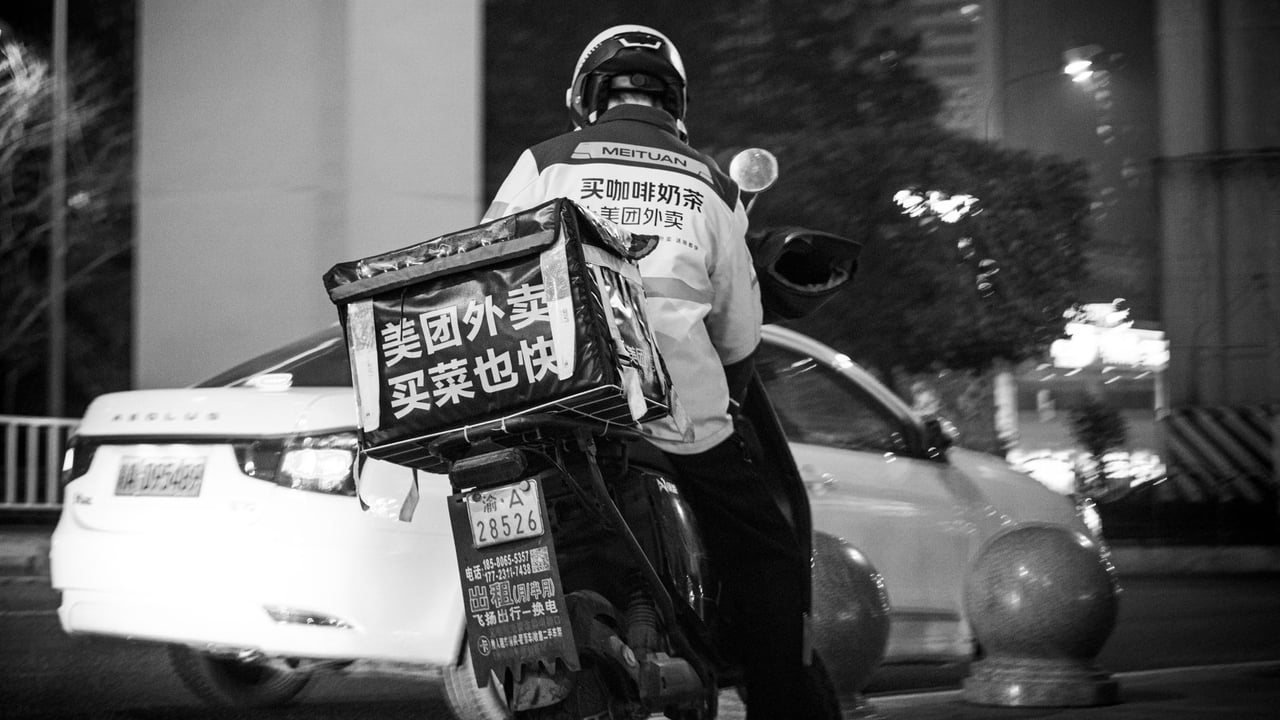

Only a year ago, China’s food delivery sector was a gold mine for the country’s flexible workforce. During the height of a massive subsidy war between platforms like Meituan, Alibaba’s Ele.me, and JD.com, riders could earn upwards of 700 yuan a day as companies burned through an estimated 150 billion yuan to secure market share. At that time, the scarcest resource wasn’t customers, but the labor capacity required to fulfill a surging volume of discounted orders.
Today, the landscape has shifted from scarcity to a staggering surplus. Industry data suggests that while China’s daily demand of 110 million orders requires approximately 4 million delivery riders, the actual number of registered couriers has ballooned to nearly 200 million. This leaves roughly 16 million riders as 'redundant capacity,' a direct result of market signals being distorted by short-term financial incentives and aggressive platform expansion.
For years, sectors like food delivery, ride-hailing, and courier services have functioned as China’s 'employment reservoir.' They provided a critical buffer for frictional unemployment, absorbing laid-off factory workers, cash-strapped small business owners, and tech professionals caught in industry crackdowns. These roles offered low barriers to entry and immediate cash flow, acting as a social safety net that expanded and contracted based on the health of the broader economy.
However, the massive capital injection of 2023 artificially expanded this reservoir by fivefold without creating a corresponding increase in sustainable demand. When the subsidies inevitably receded in late 2024, the market was left with a 'dammed lake' of labor. The narrative of high-paying gig work promoted on social media has collided with a reality where delivery fees have halved and working hours have stretched from eight to twelve hours a day just to maintain a basic income.
In major hubs like Beijing and Shanghai, the individual rider’s daily volume has plummeted from 35 orders to just 20, while base delivery fees have dropped from 6-9 yuan to as low as 3 yuan. This is a classic case of the 'tragedy of the commons,' where platforms prioritized market dominance over labor sustainability. The costs of this inefficiency are now being borne by the riders themselves, who lack collective bargaining power and social security protections.
The saturation of the gig economy points to a more concerning macroeconomic trend: the narrowing of traditional employment paths in manufacturing and services. As consumption remains tepid and factory environments remain unattractive to younger generations, the pressure on flexible employment has become unsustainable. The reservoir is no longer a temporary transit point for workers; for many, it has become a dead end.
Moving forward, relying on subsidies to patch over employment gaps is no longer viable. China’s platform economy must transition from capital-intensive growth to efficiency-driven models that prioritize technical innovation over labor exploitation. Simultaneously, public policy must focus on creating cross-industry skill transition channels to ensure that the gig economy remains a springboard rather than a trap for the nation’s workforce.