Normalizing Presence: Beijing Asserts Jurisdictional Claims East of Taiwan Through Maritime Rituals

A Chinese maritime law enforcement flotilla held a flag-raising ceremony in the waters east of Taiwan, marking a deliberate expansion of Beijing’s jurisdictional claims. This move utilizes civil maritime assets to normalize Chinese presence and administrative authority in a strategically sensitive region of the Western Pacific.

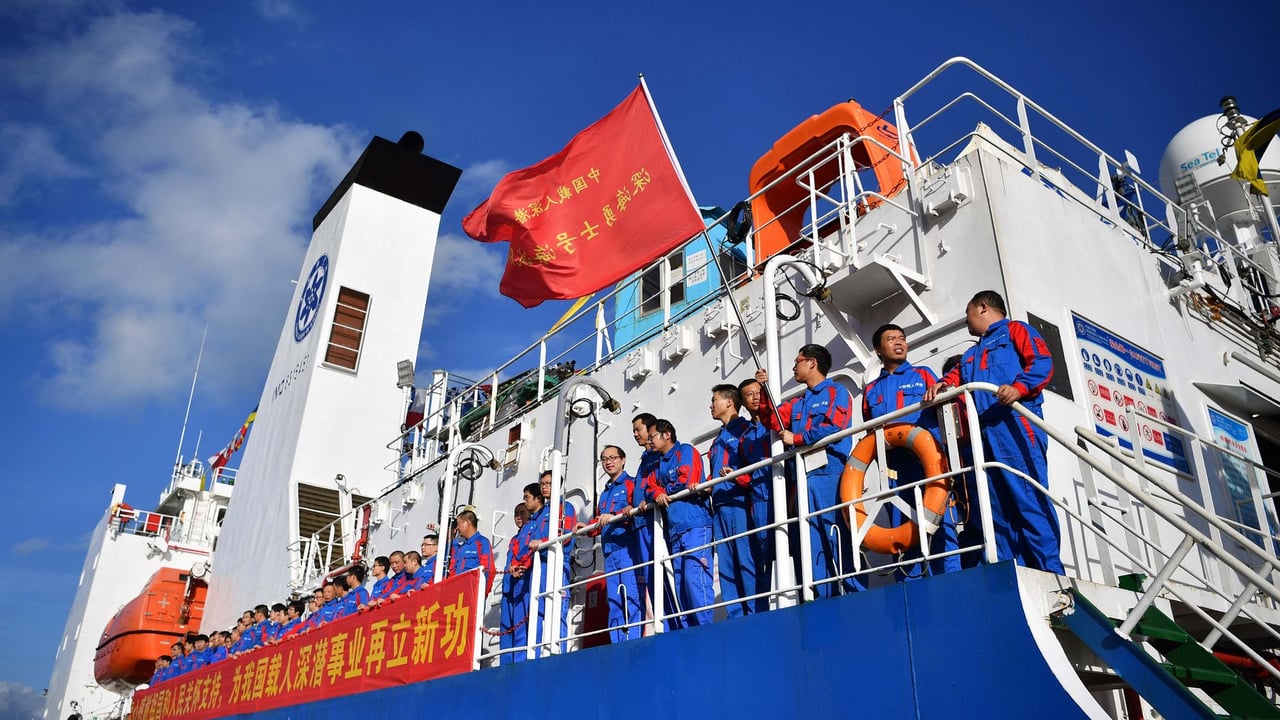
Researchers on a vessel in Sanya, China, prepare for a maritime expedition under a clear blue sky.

Key Takeaways

  • 1China’s Maritime Safety Administration (MSA) held a sovereignty ritual east of Taiwan on June 10, 2026.
  • 2The operation marks a shift from military-led exercises to 'normalized' administrative and law enforcement patrols.
  • 3The waters east of Taiwan are strategically vital for both the defense of the island and China's power projection into the Pacific.
  • 4The use of MSA vessels is a 'gray zone' tactic intended to assert sovereignty while avoiding a direct military confrontation.
  • 5Beijing is increasingly using symbolic ceremonies to reinforce its narrative of domestic control over the region.

Editor's
Desk

Strategic Analysis

This event signals a critical maturation of Beijing's 'constabulary' strategy toward Taiwan. By utilizing the Maritime Safety Administration—a civilian-facing body—rather than the Coast Guard or the Navy, China is attempting to frame its presence as routine domestic governance rather than a military provocation. This creates a strategic dilemma for Taiwan and the United States: responding forcefully to 'law enforcement' activities risks being labeled as an aggressor, while failing to respond allows Beijing to create a 'new normal' where it effectively dictates the rules of movement in the Western Pacific. The location is particularly significant, as the east coast of Taiwan was once considered a relatively safe rear area; it is now being recontextualized as a frontline for Chinese administrative overreach.

China Daily Brief Editorial
Strategic Insight
China Daily Brief

A specialized maritime law enforcement flotilla from China’s Maritime Safety Administration (MSA) conducted a formal flag-raising ceremony in the waters east of Taiwan island on June 10, 2026. This performance of sovereignty in the Western Pacific underscores Beijing’s intensifying efforts to normalize its administrative presence in areas historically beyond its routine law enforcement reach. By conducting such rituals, the Chinese government is signaling that it considers these waters to be under its domestic regulatory jurisdiction.

Traditionally, Chinese maritime activities were concentrated in the Taiwan Strait to the west of the island. However, recent years have seen a strategic shift toward the east coast, where deep-water access provides a critical gateway for the People’s Liberation Army Navy and a strategic buffer for the mainland. The deployment of maritime law enforcement vessels, rather than purely military warships, serves as a sophisticated 'gray zone' tactic designed to assert control without triggering an immediate military escalation.

This specific operation focuses on 'specialized law enforcement,' a term that Beijing uses to justify the boarding, inspection, and monitoring of vessels in what it claims are its territorial waters. The ceremony functions as a potent symbolic tool in the broader information war, providing visual evidence for domestic audiences of China's expanding reach. For international observers, it represents a direct challenge to the status quo and the freedom of navigation in the region.

Taipei and its partners view these maneuvers as part of an 'encirclement' strategy meant to erode Taiwan’s maritime space and psychological resilience. As Beijing continues to integrate its maritime law enforcement agencies with its broader geopolitical objectives, these types of administrative patrols are likely to become more frequent. This evolution from periodic military drills to constant civil-maritime supervision indicates a long-term plan to effectively govern the waters surrounding Taiwan.

Share Article

Related Articles

📰
No related articles found