The Robot Architect: He Xiaopeng’s Personal Gambit to Transform Xpeng into a Physical AI Powerhouse

Xpeng CEO He Xiaopeng has taken direct control of the company's robotics division to lead its transition into a 'Physical AI' company. The move aims to leverage Xpeng's EV manufacturing and AI expertise to bring the 'IRON' humanoid robot to mass production and commercialization.

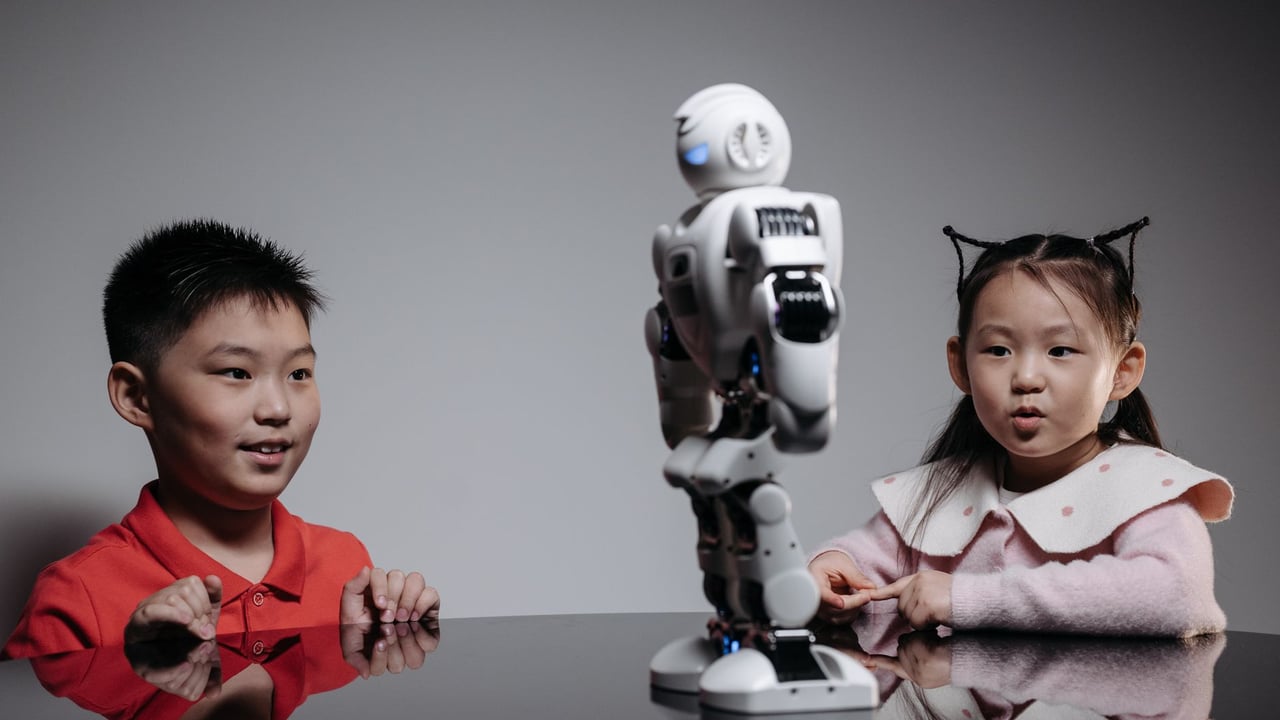
Kids amazed by a humanoid robot during an indoor play session, showcasing technology and learning.

Key Takeaways

  • 1He Xiaopeng is now concurrently serving as the CEO of Xpeng’s robotics business to accelerate mass production.
  • 2The company is rebranding its strategic focus from 'Smart EVs' to 'Physical AI' or embodied intelligence.
  • 3The humanoid robot 'IRON' has reached a developmental milestone, transitioning from a concept to a functional product ready for commercialization.
  • 4Xpeng plans to replicate its automotive supply chain, quality control, and global scaling capabilities within the robotics sector.
  • 5The move signifies Xpeng's intent to compete globally in the high-end humanoid robotics market, paralleling efforts by firms like Tesla.

Editor's
Desk

Strategic Analysis

He Xiaopeng’s decision to personally oversee the robotics division is a clear signal that Xpeng no longer views robotics as a R&D side project, but as a critical hedge against the commoditization of the electric vehicle market. By labeling the initiative 'Physical AI,' Xpeng is attempting to capture the valuation premiums currently reserved for pure-play AI firms while utilizing its heavy industrial footprint. The success of this pivot will depend on whether the 'G3 moment' for robots—the leap from prototype to reliable mass production—can be achieved in a sector where the cost-to-utility ratio remains a significant barrier for most competitors. Strategically, this places Xpeng at the center of the 'embodied AI' race, suggesting that the future of the company lies in the intelligence of the machine rather than the wheels it sits on.

China Daily Brief Editorial
Strategic Insight
China Daily Brief

He Xiaopeng, the visionary founder and CEO of the Chinese electric vehicle manufacturer Xpeng Motors, has announced he will personally take the helm of the group’s robotics division. In a candid internal letter to employees, He framed the move as a necessary step to guide the company through a 'historical turning point.' The company is shifting its core identity from a mere smart vehicle manufacturer to a pioneer in 'Physical AI,' signaling a major strategic pivot in the face of an evolving global tech landscape.

This transition comes as Xpeng’s humanoid robot, codenamed 'IRON,' moves toward the precipice of mass production. He likened the current stage of the robotics unit to the period eight years ago when Xpeng was preparing to launch its first mass-market vehicle, the G3. By assuming the role of CEO for the robotics business, He intends to apply the lessons learned from the brutal EV market to the nascent humanoid robot sector, aiming for a first-mover advantage in high-end, scalable automation.

Central to this strategy is the concept of embodied AI, where software intelligence is integrated into a physical form capable of navigation, interaction, and labor. He emphasized that the robotics unit will no longer operate in a vacuum but will instead be deeply integrated into Xpeng’s broader industrial ecosystem. This includes leveraging the company's existing strengths in hardware engineering, large-scale AI models, supply chain management, and precision manufacturing to accelerate commercialization.

The timing of this move reflects a broader trend among Chinese tech titans to diversify beyond their original domains as the domestic EV market reaches a point of hyper-competition. By prioritizing 'Physical AI,' Xpeng is positioning itself as a direct competitor to global players like Tesla, whose Optimus program shares similar ambitions. The goal is to prove that the manufacturing prowess and software agility developed for autonomous driving can be the definitive foundation for the next generation of industrial and domestic robotics.

Share Article

Related Articles

📰
No related articles found