
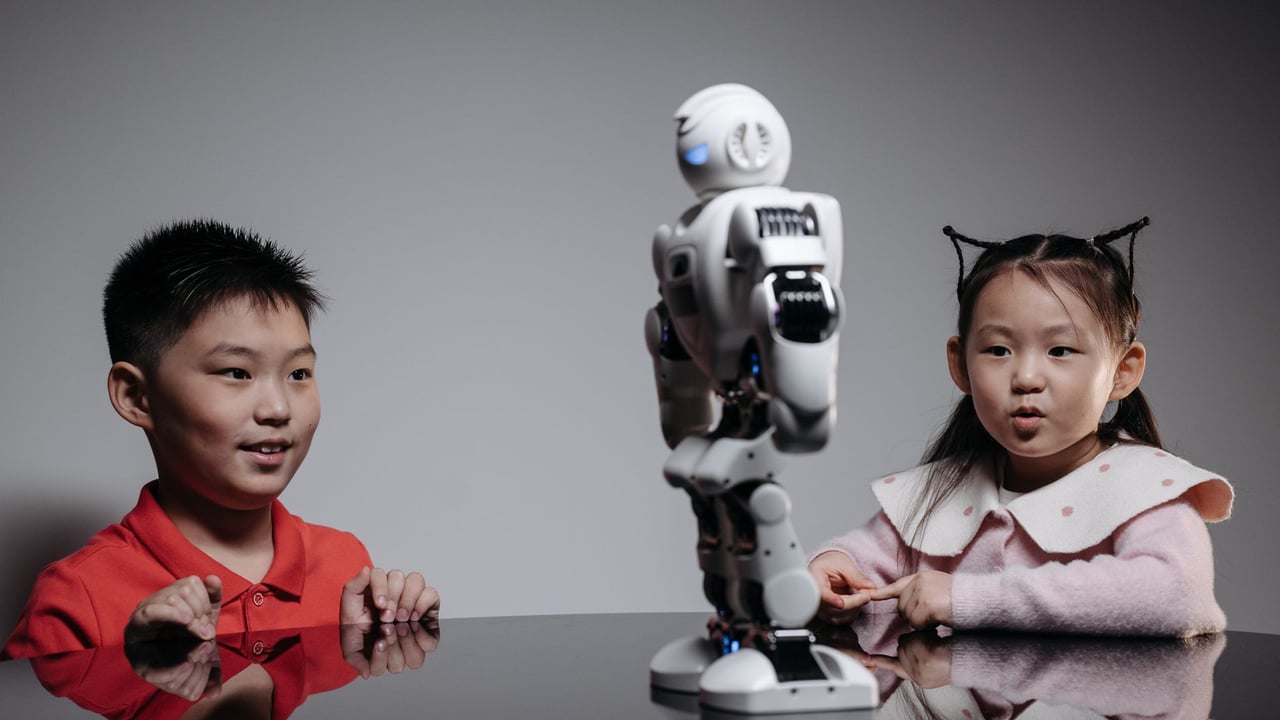

Beijing-based Xingdong Jiyuan, known internationally as Astribot, has emerged as a frontrunner in the global humanoid robotics race, successfully transitioning from laboratory prototypes to real-world industrial application. During a recent demonstration at the company’s facility, its humanoid units showcased sophisticated package sorting capabilities, marking a significant milestone for the domestic embodied AI sector. The firm is now positioning itself as China’s answer to US-based rivals like Figure AI and Tesla’s Optimus program.
The company distinguishes itself as one of the first in China to achieve genuine Product-Market Fit (PMF) within the high-stakes logistics industry. Through strategic partnerships with industry heavyweights such as China Post and SF Express, Astribot has deployed units across more than ten logistics centers in five Chinese provinces. This rollout demonstrates a shift from theoretical potential to commercial viability, proving that humanoid systems can operate within the existing infrastructure of the world's largest delivery networks.
Efficiency remains the ultimate metric for success in the automation sector, and the current benchmarks are promising. Astribot’s robots are reportedly performing at approximately 85% of human sorting speeds. While still trailing human dexterity slightly, this threshold is sufficient to justify commercial deployment, particularly as the system offers the potential for 24-hour operation without the fatigue associated with manual labor. This deployment signals a broader industry pivot toward targeted, revenue-generating use cases.
Founder Chen Jianyu draws direct parallels between his firm’s trajectory and that of global leaders like Figure and Tesla. By prioritizing a hardware-software integrated approach and targeting structured industrial environments before attempting the unpredictability of household tasks, Astribot is following a pragmatic roadmap. The company’s strategy leverages China’s massive logistics ecosystem as a live laboratory, providing the high-frequency data necessary to refine AI models for embodied intelligence.