
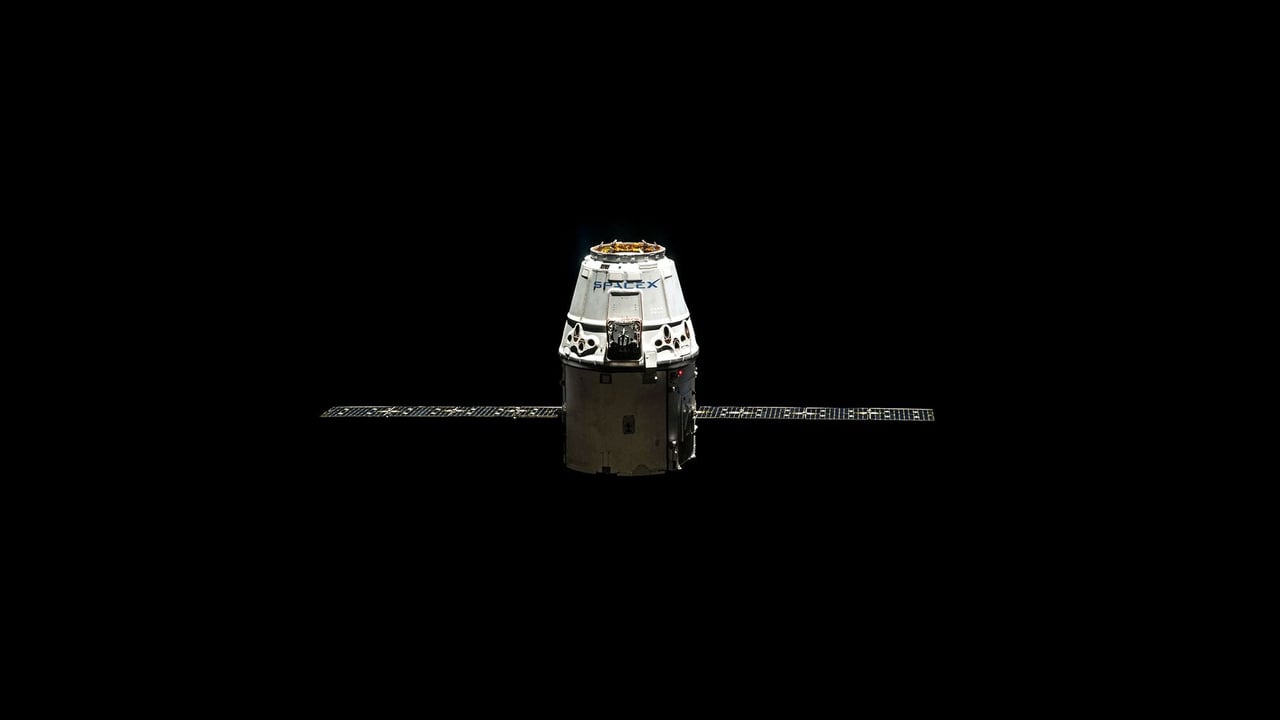

The global space race is entering a mature phase where the 'physics problem' of reaching orbit is being superseded by the 'business problem' of industrial scale. As SpaceX targets a record-breaking valuation on the public markets, China’s commercial space sector—led by firms like LandSpace, CAS Space, and Yuishi Space—is undergoing a profound transformation. These companies are no longer just laboratory experiments funded by venture capital; they are rapidly evolving into manufacturing powerhouses that borrow more from the electric vehicle (EV) industry than from traditional aerospace.
Tang Wen, founder and CEO of Yuishi Space, suggests that the primary risks facing the industry are no longer purely technical but organizational. His company is among a handful of Chinese startups explicitly benchmarking against SpaceX’s 'Starship' by adopting stainless steel hulls and liquid oxygen-methane propulsion. This choice isn't merely for performance; it is a calculated bet on the industrialization of space. Stainless steel costs a fraction of aerospace-grade aluminum and allows for a production tempo ten times faster, effectively turning rockets into mass-produced industrial goods.
This shift toward manufacturing efficiency has triggered a talent war that reaches far beyond the aerospace sector. To bridge the gap between R&D and scale, rocket companies are aggressively 'poaching' management and operations talent from China’s mature New Energy Vehicle (NEV) industry. The logic is simple: EV veterans have already mastered the '0 to 100' journey of scaling complex hardware production, a skill set that traditional aerospace engineers, often siloed in research-heavy state enterprises, frequently lack.
On the demand side, the urgency is driven by China’s ambitious satellite mega-constellations, such as the 'GW' and 'Qianfan' projects, which collectively plan to launch over 25,000 satellites. Tang estimates that the market will eventually require at least 200 launches per year to sustain these networks. Currently, neither the state-owned giants nor the private upstarts have the capacity to meet this demand, creating a supply-driven market where the first company to achieve 'airline-like' frequency and scale will likely monopolize the sector.
However, the path to profitability remains steep. While SpaceX’s Falcon 9 has proven the financial viability of reusable rockets, most Chinese players are still operating at significant losses. The industry consensus is that 2026 to 2027 will be the critical 'inflection point.' During this window, the transition from successful prototypes to scalable, reusable launch vehicles will determine which firms survive the inevitable market consolidation that favors a few dominant players.