Winged Hussars of the Digital Age: Poland Welcomes First F-35s to Shield NATO's Eastern Flank

Poland has officially inducted its first three F-35 stealth fighters, part of a larger 32-aircraft acquisition aimed at modernizing its air force by 2029. This deployment strengthens NATO's eastern flank and solidifies Poland's role as a key regional military power amid ongoing tensions with Russia.

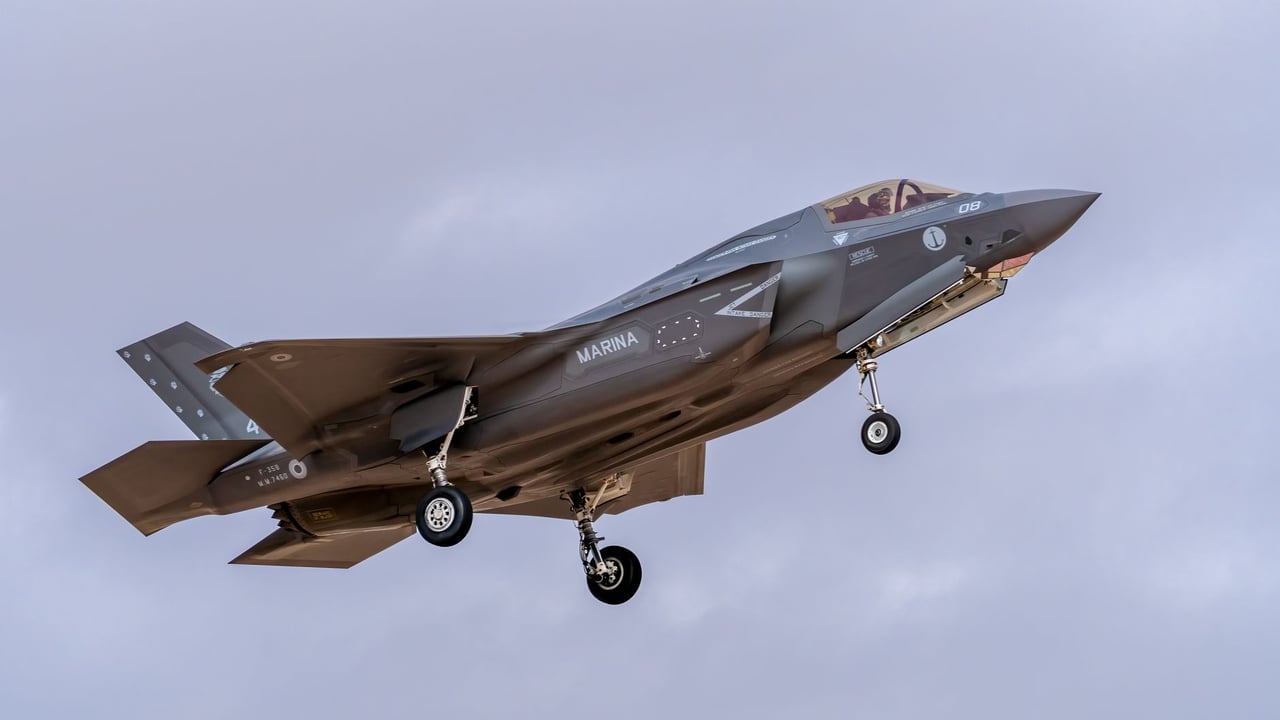
Close-up of a marine F-35 fighter jet landing in Los Llanos, Spain.

Key Takeaways

  • 1Poland officially inducted its first three F-35 multi-role stealth fighters at the Łask Air Base.
  • 2The aircraft are part of a 32-jet deal signed with the U.S. in 2020, valued at approximately $4.6 billion.
  • 3Dubbed the "Hussars," the fleet is expected to be fully delivered by 2029, replacing Soviet-era equipment.
  • 4The procurement is a cornerstone of Poland's massive military modernization in response to regional threats from Russia.

Editor's
Desk

Strategic Analysis

Poland's induction of the F-35 is the clearest signal yet that the center of gravity within NATO is shifting eastward. Warsaw is no longer merely a consumer of security provided by Western Europe; it is positioning itself to be the alliance's primary land and air power on the continent. The choice of the name "Hussars" reflects a nationalistic branding of this modernization, framing high-tech American hardware as the modern iteration of Polish sovereign defense. Strategically, these jets provide a crucial ISR (Intelligence, Surveillance, and Reconnaissance) capability that will allow Poland to act as a "quarterback" for NATO forces in any potential conflict, drastically complicating Russian military calculus in the Baltics and Eastern Europe.

China Daily Brief Editorial
Strategic Insight
China Daily Brief

The arrival of the first three F-35 Lightning II aircraft at Poland's 32nd Tactical Air Base in Łask marks more than just a procurement milestone; it signals a tectonic shift in European aerial supremacy. Christened the "Hussars" in an explicit nod to the legendary cavalry that once defined Polish military might, these fifth-generation fighters represent the vanguard of Warsaw’s multi-billion-dollar effort to transform into a continental defense hub.

President Andrzej Duda and Defense Minister Władysław Kosiniak-Kamysz’s presence at the induction ceremony underscores the existential weight Poland places on its air superiority. This $4.6 billion acquisition, finalized in 2020, is designed to replace aging Soviet-era fleets and provide a seamless interoperability with the United States and other NATO allies. By the time the full order of 32 jets is fulfilled in 2029, Poland will possess one of the most sophisticated air forces on the continent.

The strategic logic behind this move is inseparable from the heightened security risks emanating from the Kremlin’s aggression in neighboring Ukraine. Warsaw has effectively abandoned its legacy hardware in favor of a "westernization" strategy that integrates F-35s with M1 Abrams tanks and HIMARS rocket systems. This synergy creates a high-tech "kill web" capable of monitoring and contesting airspace across the Suwalki Gap and beyond.

However, the transition involves more than just hardware; it requires a massive logistical and training overhaul. The 2029 delivery timeline provides Poland a window to cultivate a new generation of pilots and technicians capable of managing the F-35’s data-heavy battlefield management systems. As the "Hussars" take to the skies, Poland is cementing its role as the primary guardian of NATO’s frontier.

Share Article

Related Articles

📰
No related articles found