
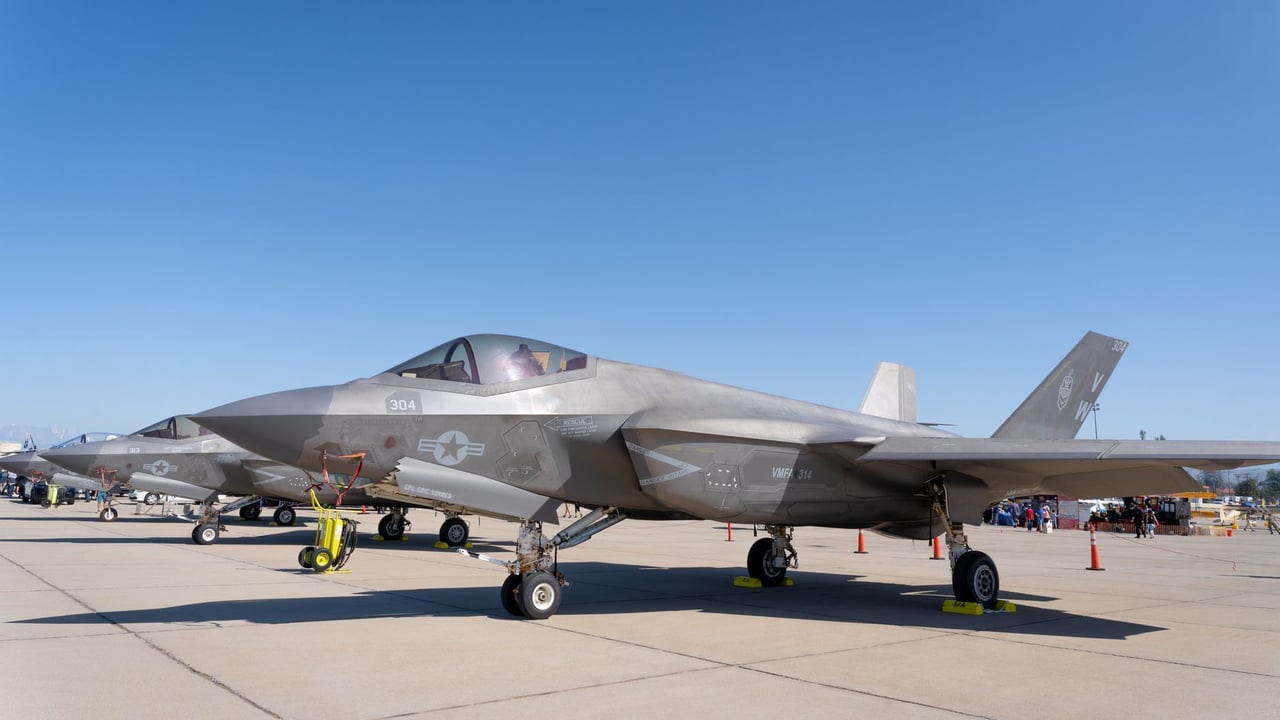

The F-35 Lightning II, the technological centerpiece of American and allied air power, is facing a deepening readiness crisis that threatens to undermine its role as a credible deterrent. A recent report from the U.S. Government Accountability Office (GAO) reveals a startling decline in the fleet’s operational status, with only 25% of aircraft deemed 'full mission capable' in the 2025 fiscal year. This collapse in readiness suggests that the vast majority of the world’s most advanced fighter fleet is currently unable to perform its full range of designated combat tasks.
The decline is part of a multi-year trend that sees the fleet's 'mission capable' rate—the ability to perform at least one task—drop from 67% in 2021 to a mere 44% in 2025. Military officials attribute this paralysis to a toxic mix of delayed software updates, chronic spare parts shortages, and the inevitable wear-and-tear on airframes that are increasingly difficult to maintain. The shortage of specialized components, such as cockpit canopies, has become a primary driver of fleet-wide groundings, highlighting a fragile supply chain unable to keep pace with operational demands.
In response to this spiral, the F-35 Joint Program Office (JPO) has launched the 'Global Support Solution (GSS) Reset,' a strategic overhaul aiming for an 80% readiness rate by 2030. However, the price tag for this recovery is staggering. The JPO estimates that maintenance and rectification costs will exceed original budgets by $13.7 billion through 2031. This fiscal gap forces various military branches to divert funds from other programs just to keep the existing F-35 fleet airworthy, raising concerns about the long-term sustainability of the $1.6 trillion program.
Compounding the technical failures is a growing controversy over contractor performance and government oversight. Despite the plummeting readiness rates, Lockheed Martin received over $114 million in incentive bonuses between 2020 and 2023. The GAO investigation found that the JPO frequently manipulated performance metrics, citing 'non-contractor delays' to artificially inflate readiness scores and justify these payouts. Such systemic failures in accountability suggest that the current incentive structure is disconnected from actual combat utility, rewarding contractors even as the fleet's efficacy withers.