
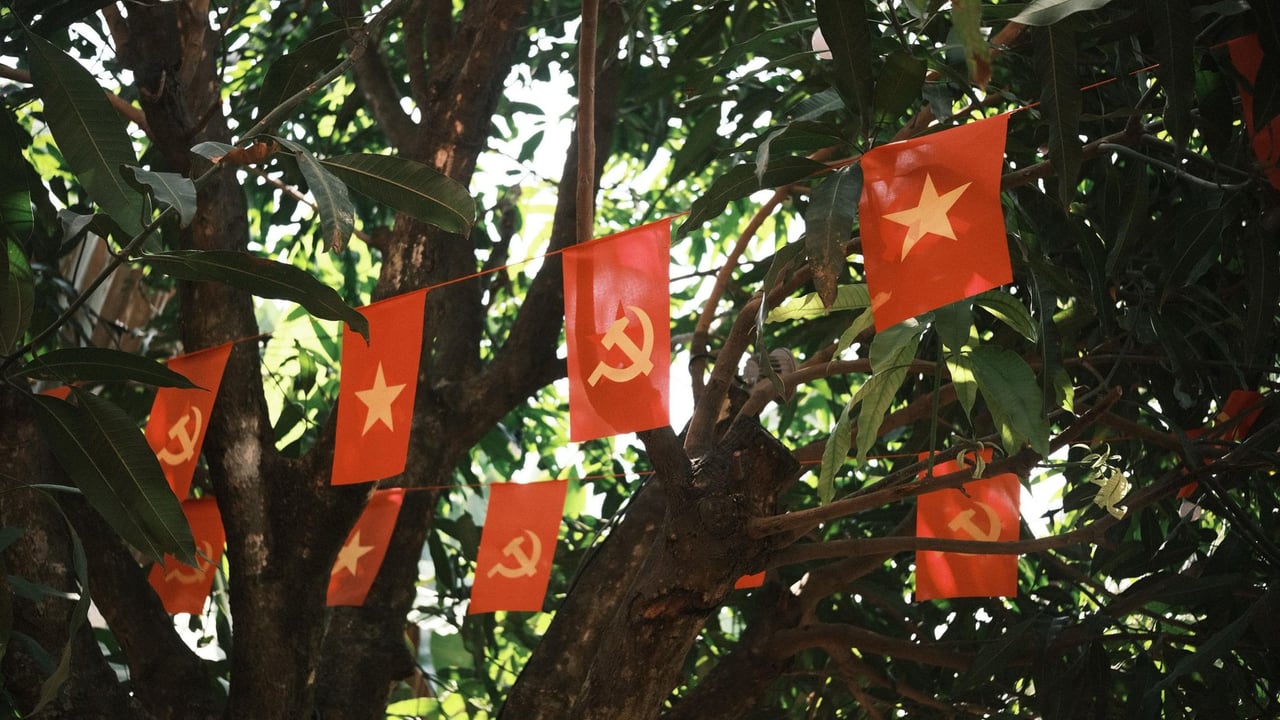

In the heart of Beijing and the rugged peaks of Jiangxi, the Chinese Communist Party is increasingly leveraging monumental public art to solidify its historical narrative. These grand installations, often categorized as 'Red Sculptures,' serve as more than just aesthetic landmarks; they are the physical manifestation of the party’s 'Red Faith.' By linking the revolutionary past with a modernized present, these structures aim to provide a visual anchor for national identity in an era of rapid social change.
The sculpture known as 'Jinggang Red Flag' in Jiangxi province stands as a primary example of this ideological infrastructure. Located at the 'cradle of the Chinese revolution,' the 19.27-meter tall structure commemorates the 1927 founding of the first rural revolutionary base. Its fluid, irregular shape mimics a flag caught in a gale, symbolizing the volatility and 'spark' of the early movement that would eventually consolidate power across the mainland.
Contrasting this rustic origin is the 'Flag' sculpture situated at the Museum of the Communist Party of China in Beijing. This newer installation utilizes a more minimalist, 'xieyi' (freehand) style to project a sense of stability and institutional permanence. While the Jinggangshan monument captures the struggle of the revolution's birth, the Beijing 'Flag' reflects the self-assuredness of a century-old party that now positions itself as the architect of China’s future.
This shift in artistic expression follows a broader state-led initiative to promote 'Red Tourism' and combat 'historical nihilism'—a term the leadership uses to describe skepticism toward official party history. For the Chinese public, these monuments are intended to bridge the generational gap, turning abstract historical concepts into tangible, emotive experiences. By placing these works in both historical hinterlands and modern urban centers, the state creates a curated path of memory that leads directly to the present leadership.
The integration of art and ideology suggests that the party views the emotional resonance of these monuments as essential for long-term governance. As the original witnesses to the revolution pass away, the physical landscape of 'Red' monuments must take over the task of storytelling. These sculptures are not merely static tributes to the past but are designed to be 'living' symbols that reflect the light of a new era, reinforcing the inevitability of the party’s continued rule.