China’s Robotics Ambition Finds a New Testing Ground in Beijing

Beijing has launched a premier 5,000-square-meter training base to accelerate the development of humanoid robots across 30 simulated environments. The facility uses 120-plus robots and advanced motion-capture technology to generate the massive datasets required for 'embodied AI' to function in the real world.

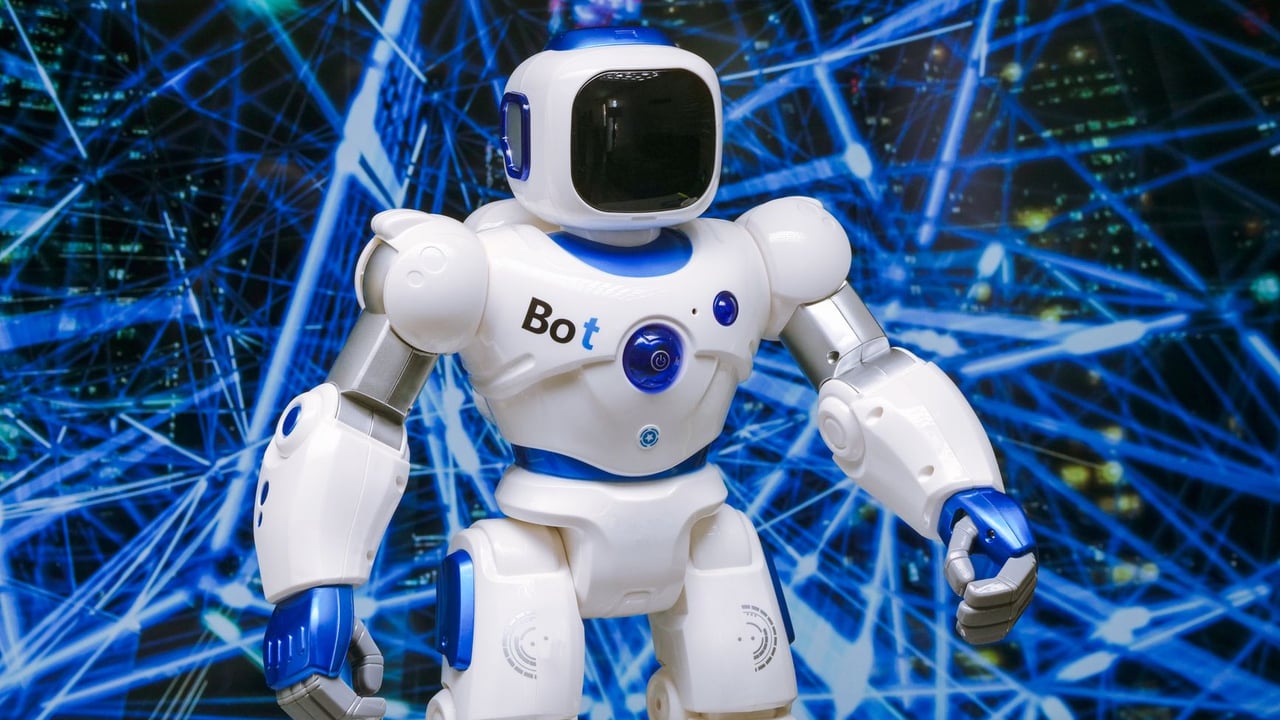
Advanced humanoid robot with glowing blue accents in a digital network setting.

Key Takeaways

  • 1A 5,000-square-meter training base for humanoid robots has opened in Beijing, focusing on 'embodied AI.'
  • 2The facility features 30 simulated scenarios ranging from domestic homes to industrial and medical environments.
  • 3Equipped with 120 robots and a 200-square-meter motion-capture arena to record high-precision movement data.
  • 4The base uses remote-operation cockpits and wearable tech to bridge the 'sim-to-real' gap in robotic learning.
  • 5This infrastructure aims to solve the global shortage of high-quality physical interaction data for general-purpose robotics.

Editor's
Desk

Strategic Analysis

This facility represents a critical pivot in the global AI race, moving from purely digital intelligence to 'embodied' intelligence. While Western firms like Tesla and Boston Dynamics have individual leads, China is betting on state-backed, centralized infrastructure to commoditize the necessary data. By creating a 'data factory' for physical movement, Beijing is effectively subsidizing the R&D costs for its domestic robotics sector. The significance lies in the scale: by training robots in 30 different environments simultaneously, they are attempting to solve the generalization problem—making a robot that can work in a kitchen as easily as it can in a factory—which remains the 'holy grail' of the industry.

China Daily Brief Editorial
Strategic Insight
China Daily Brief

The Beijing Humanoid Robot Innovation Center has unveiled a massive new training facility designed to bridge the gap between artificial intelligence and physical reality. Spread across 5,000 square meters, this 'embodied AI' data and training base is a specialized laboratory where robots are put through high-intensity simulations. The site replicates over 30 diverse real-world settings, including domestic kitchens, bedrooms, supermarkets, and medical clinics.

This initiative directly addresses the most significant bottleneck in the field of humanoid robotics: the scarcity of high-quality physical interaction data. While large language models like GPT have the entire internet's text to learn from, humanoid robots require precise data on how to navigate physical space and manipulate objects. To solve this, the facility is equipped with over 120 robots and a 200-square-meter professional optical motion-capture arena.

Researchers at the base utilize a sophisticated array of data-collection tools, including wearable motion-capture suits, sensor-laden gloves, and remote-operation cockpits. These tools allow human operators to 'teach' robots by performing tasks that are then recorded and translated into machine-learning datasets. This full-stack approach to data acquisition is intended to accelerate the evolution of robots from simple programmed machines into truly intelligent, adaptive agents.

Beijing’s investment in this infrastructure signals a strategic shift in China’s broader industrial policy toward the next generation of automation. By centralizing the expensive resources required for high-level robotics training, the state is lowering the barrier to entry for domestic firms. The ultimate goal is to move beyond specialized industrial arms and toward general-purpose humanoid robots that can seamlessly integrate into the workforce and daily life.

Share Article

Related Articles

📰
No related articles found