
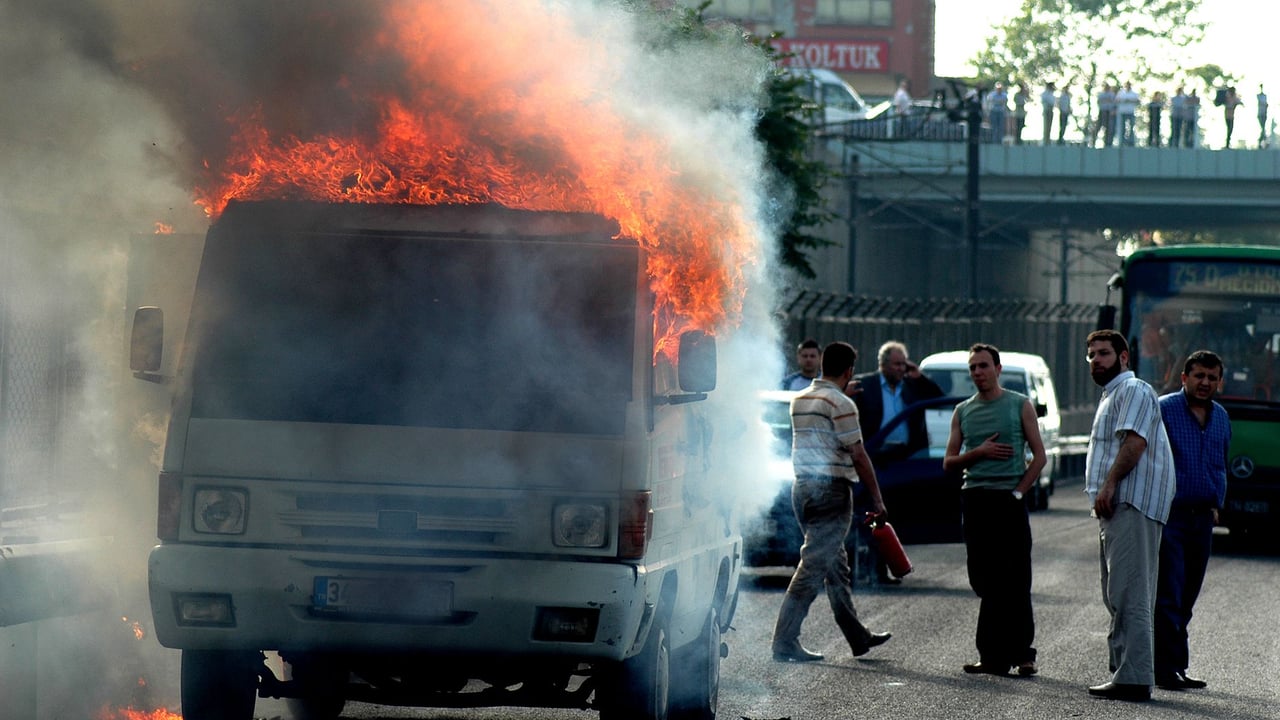

A violent high-speed collision at a Turkish intersection has once again focused international attention on the country's persistent struggle with urban road safety and aggressive driving culture. Surveillance footage from the scene captured the moment a vehicle, traveling at an excessive velocity, bypassed traffic signals and struck another car with such force that an immediate fireball erupted upon impact. The sheer kinetic energy of the crash caused the two vehicles to stack on top of one another, sweeping across the asphalt in a trail of debris and flame.
This incident is not an isolated tragedy but rather a high-profile symptom of a wider systemic issue within Turkey’s rapidly expanding metropolitan areas. Despite significant government investment in road infrastructure over the last decade, the human factor—characterized by a propensity for high-speed maneuvers in residential and commercial zones—remains a volatile variable. The visual intensity of this crash, which has been widely circulated across social media platforms, serves as a grim reminder of the lethality of urban speed violations.
International road safety benchmarks often point to Turkey as a nation in transition, where infrastructure quality has outpaced the implementation of rigorous traffic enforcement and public safety education. While major highways have seen safety improvements, local intersections remain high-risk zones due to inconsistent automated enforcement and a lack of 'calming' infrastructure. This collision underscores the urgent need for Turkish authorities to move beyond reactive policing and toward a more comprehensive, technology-driven approach to traffic management.
As the country continues to integrate more deeply into global transit and tourism networks, the reputation of its public thoroughfares carries significant economic and political weight. Incidents of this magnitude place immense pressure on local municipalities to accelerate the rollout of smart city technologies, such as AI-monitored intersections and synchronized traffic signaling. For global observers, the tragedy serves as a case study in the challenges of managing public safety in high-density, rapidly motorizing emerging economies.