
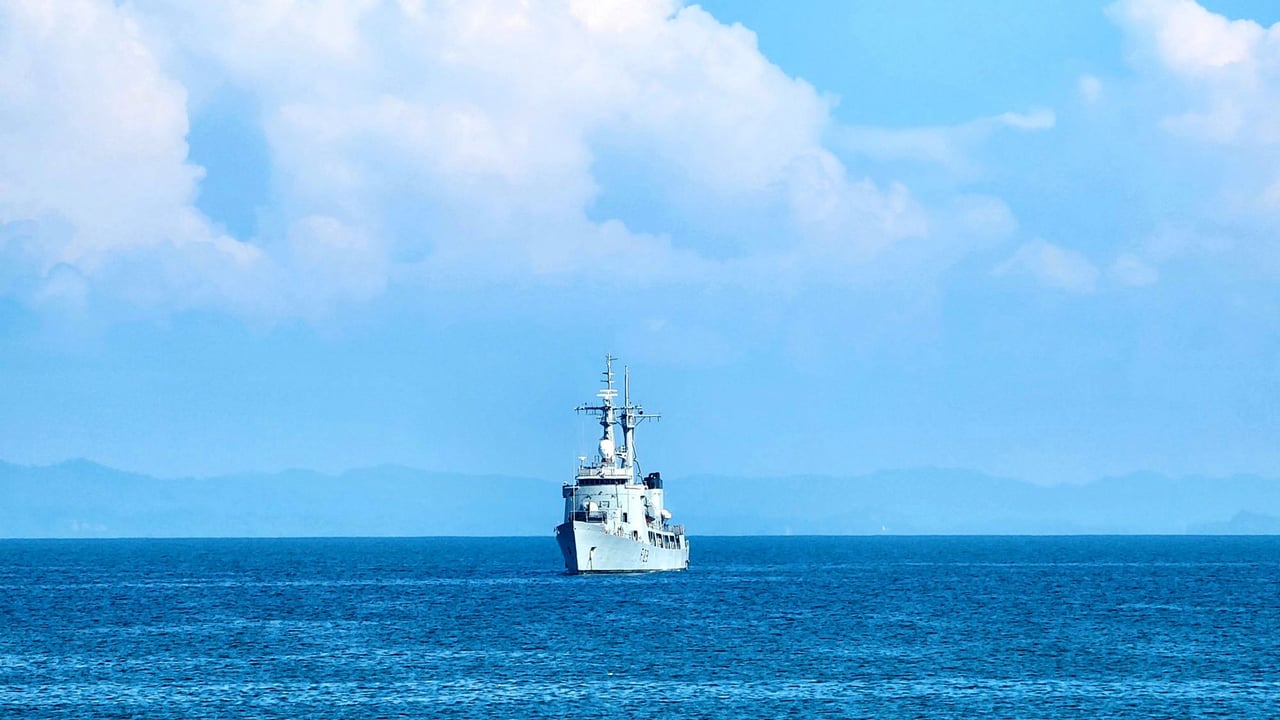

The People’s Liberation Army Navy (PLAN) has once again signaled its global ambitions by dispatching its primary training assets on a high-profile, far-seas mission. The deployment centers on the Hull 83 Qi Jiguang, a vessel widely regarded as China’s 'floating university,' alongside the veteran amphibious transport dock Kunlun Shan. Together, these ships represent the dual pillars of China’s maritime strategy: the professionalization of its officer corps and the expansion of its blue-water power projection.
Since its commissioning in 2017, the Qi Jiguang has served as a cornerstone of Chinese naval diplomacy. At 9,000 tons, it is the largest and most technologically advanced training ship in the Chinese inventory, specifically designed to bridge the gap between classroom theory and the rigors of deep-sea operations. By visiting nearly 30 countries across four continents, the vessel has become a mobile billboard for the PLAN's modernization and its desire to be seen as a responsible global maritime actor.
However, the inclusion of the Kunlun Shan, a Type 071 amphibious transport dock, adds a more tactical dimension to the voyage. As the first of its class, the 20,000-ton Kunlun Shan was the vessel that initially signaled China’s move away from coastal defense toward a capability for large-scale, over-the-horizon troop and vehicle transport. Its presence on this mission allows cadets to experience the complexities of modern amphibious warfare and strategic logistics firsthand.
This mission is more than a simple pedagogical exercise; it is a vital component of Beijing’s long-term naval development. As the PLAN continues to build larger and more complex platforms, the human element—the officers who command them—remains the critical variable. These long-distance voyages provide the environmental stress and diplomatic exposure necessary to transform a regional fleet into a sophisticated global force capable of protecting Chinese interests far from home shores.