A Thaw in the Persian Gulf? Europe’s “Big Four” Signal Support for New US-Iran Rapprochement

The UK, France, Germany, and Italy have issued a joint statement welcoming a US-Iran memorandum of understanding, offering sanctions relief in exchange for verifiable nuclear de-escalation. The "Big Four" emphasized the necessity of reopening the Strait of Hormuz to stabilize the global economy and urged a swift transition toward a long-term diplomatic resolution.

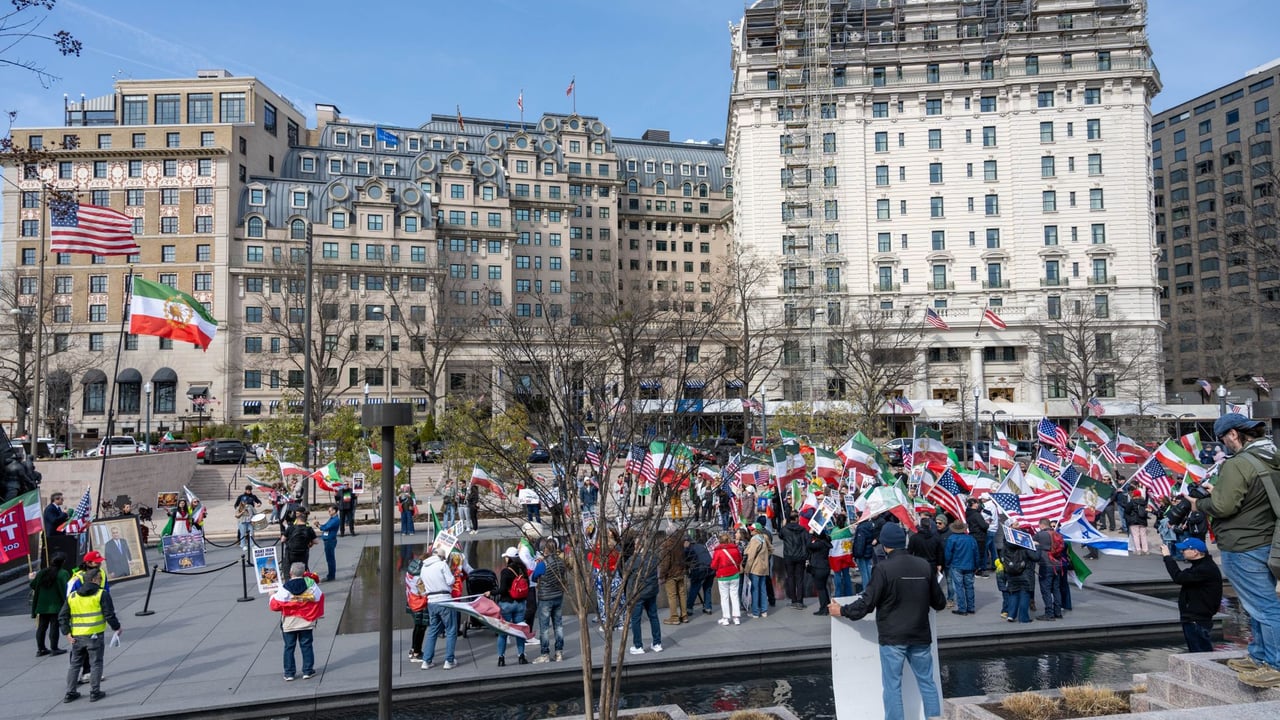
A vibrant demonstration with flags in Lafayette Square, Washington, DC with historic buildings in the background.

Key Takeaways

  • 1The UK, France, Germany, and Italy (E4) formally endorsed the new US-Iran memorandum of understanding.
  • 2Sanctions relief is explicitly conditioned on Iran's adoption of clear and verifiable nuclear restrictions.
  • 3The statement identifies the reopening of the Strait of Hormuz as an urgent priority for global economic stability.
  • 4The move represents a coordinated transatlantic effort to resolve the long-standing nuclear impasse through diplomacy.

Editor's
Desk

Strategic Analysis

This joint declaration marks a significant pivot in European strategy, moving from a role as hesitant mediators to active participants in a US-led diplomatic push. By including Italy in this high-level pronouncement alongside the traditional E3 (UK, France, and Germany), the group signals a broader continental consensus on the urgency of the Iranian file. The emphasis on the Strait of Hormuz is particularly telling; it reveals that the primary driver for this sudden diplomatic energy may be the looming threat of energy-induced global inflation rather than just non-proliferation concerns. If Tehran responds with genuine transparency, we could see a rapid restructuring of regional trade, but the 'verifiable' clause remains a formidable hurdle that has tripped up several previous iterations of the nuclear deal.

China Daily Brief Editorial
Strategic Insight
China Daily Brief

The geopolitical landscape of the Middle East shifted significantly this week as the "Big Four" of European diplomacy—the United Kingdom, France, Germany, and Italy—jointly endorsed a burgeoning memorandum of understanding between Washington and Tehran. This rare moment of transatlantic alignment suggests a concerted effort to move beyond the years of maximum pressure and nuclear brinkmanship that have characterized Persian Gulf relations.

While the statement carries a tone of optimism, it remains anchored in cautious pragmatism. The European powers explicitly tied the lifting of economic sanctions to clear and verifiable measures by Iran to scale back its nuclear program. By insisting on these conditions, Europe is attempting to ensure that any diplomatic thaw is more than just a temporary respite, but a foundation for long-term regional security.

Beyond the nuclear file, the joint declaration touched on a critical artery of global commerce: the Strait of Hormuz. The demand for the urgent and unrestricted reopening of this vital waterway underscores the severe economic anxiety currently gripping global markets. For London, Paris, Berlin, and Rome, the Iranian crisis is not merely a security dilemma, but a direct threat to the stability of energy prices and global supply chains.

This coordinated European response places the ball firmly in Tehran’s court, offering a clear roadmap for reintegration into the global economy. By aligning so closely with the United States, the E4 are presenting a united Western front, aiming to leverage the promise of sanctions relief to secure a comprehensive diplomatic solution. Success now depends on whether the momentum generated by this memorandum can survive the complex internal politics of both the US and Iran.

Share Article

Related Articles

📰
No related articles found