
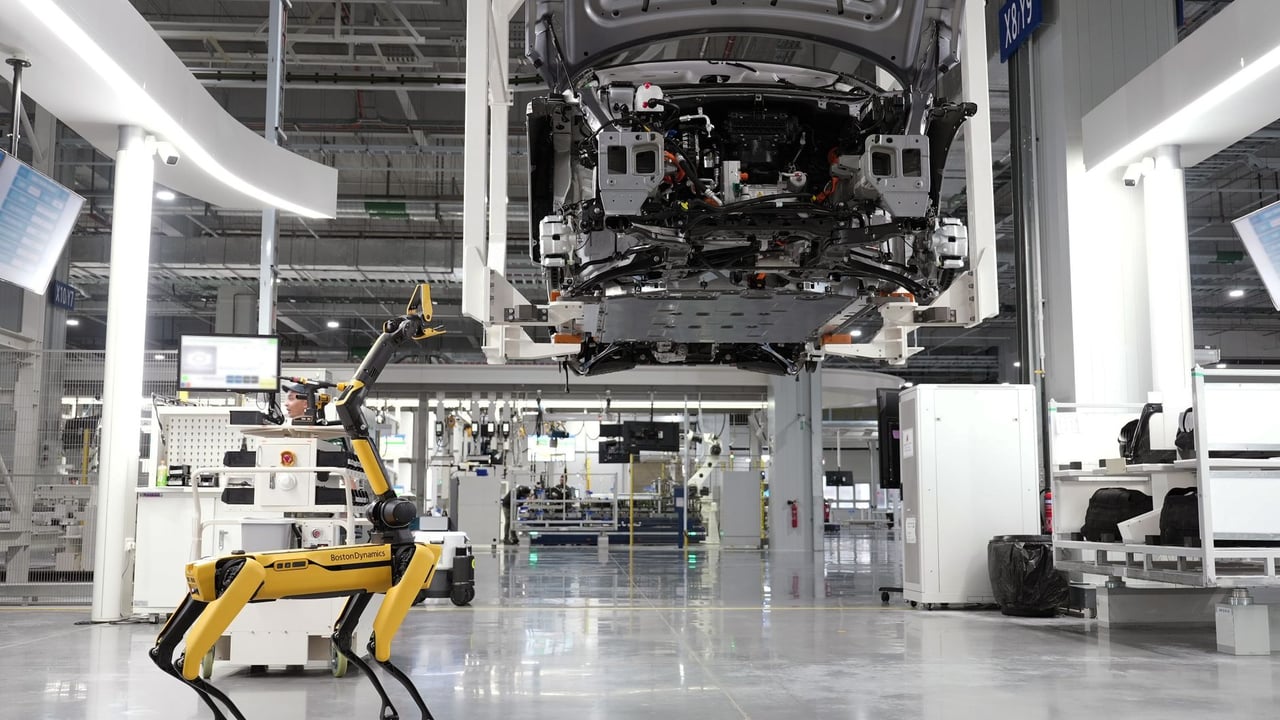

Across China, the industrial lines that once exclusively birthed electric vehicles are increasingly spawning a new kind of machine: the humanoid robot. He Xiaopeng, chairman of XPeng, recently announced he would personally oversee the company's robotics division, signaling a strategic shift that is reverberating throughout the world's largest automotive market. This is not merely a flight of fancy but a calculated play on technical synergy, as industry experts estimate that roughly 70% of the technology used in smart EVs—ranging from LiDAR sensors and high-performance chips to electric drive systems—can be directly repurposed for embodied artificial intelligence.
XPeng is not alone in this high-stakes race. BYD, the world’s largest EV manufacturer, along with GAC and Chery, have all revealed humanoid programs, while Li Auto has restructured its internal AI divisions to prioritize embodied engineering. This movement extends deep into the supply chain, where global giants like Bosch and domestic tier-one suppliers like Tuopu Group are investing billions into modular robotics platforms. For these firms, the humanoid robot represents the ultimate evolution of the 'software-defined vehicle,' essentially a car that walks on two legs.
Unlike the flashy laboratory prototypes of the past, these robots are already entering the workforce. SAIC Group has deployed humanoid assistants on battery production lines to handle hazardous tasks, while Chery is piloting robots for traffic patrol in Wuhu. The immediate commercial roadmap is ambitious: XPeng expects mass production to begin as early as the fourth quarter of this year, with robots acting as sales assistants in car showrooms by 2027 and entering households by the end of the decade.
However, the path to mass adoption remains fraught with economic and technical hurdles. While prices for humanoid units have dropped significantly—from over half a million yuan to roughly 160,000 yuan in some cases—they remain too expensive for widespread consumer use. Furthermore, the industry still struggles with autonomous decision-making in unscripted, complex environments. Moving from a controlled factory floor to the unpredictability of a private home requires a leap in AI reasoning that the industry has yet to fully master.
Despite these challenges, the economic allure is undeniable. Consulting firm Roland Berger predicts the market for car-manufacturer-led robotics could reach $750 billion by 2035 and scale to a staggering $4 trillion by 2050. As the Chinese EV market faces intense domestic price wars and thinning margins, the pivot to humanoid robots offers a second growth curve that leverages existing R&D and supply chain dominance to secure a new frontier in global technology.