
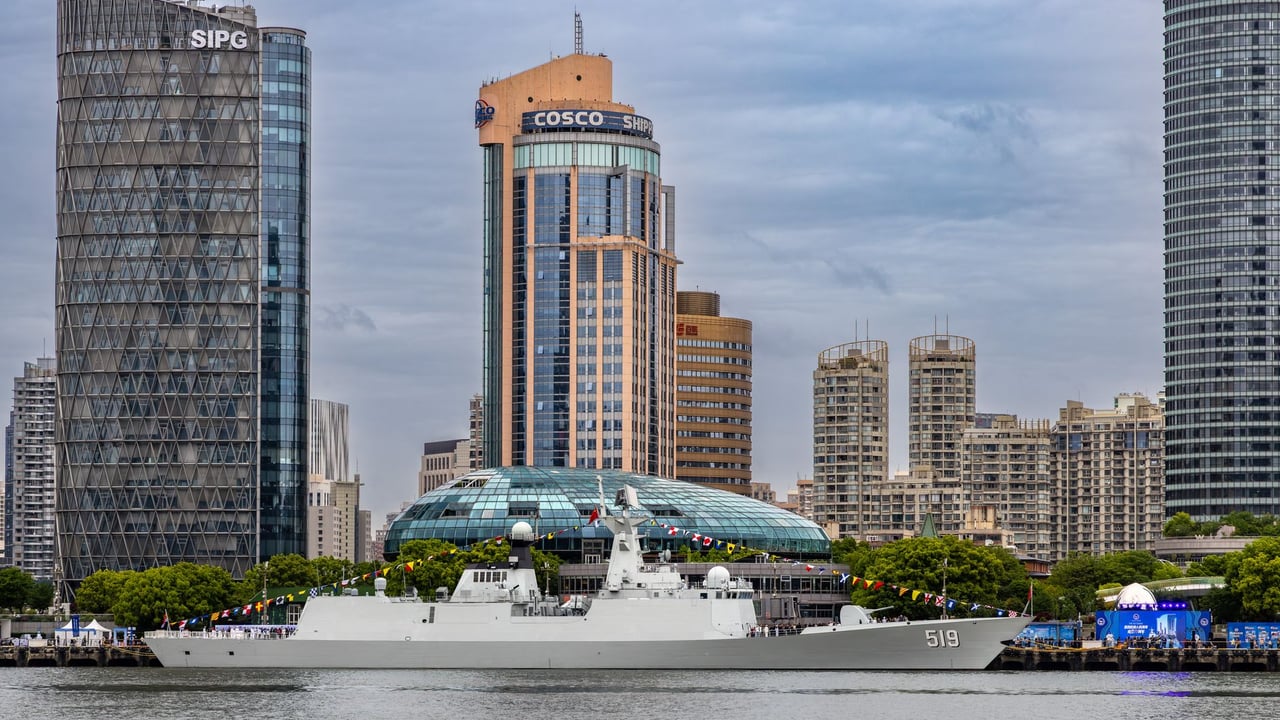

Deep within the vibrating hull of the CNS Yangzhou, the relentless thrum of machinery creates an environment that would overwhelm an untrained ear. This 'noise bombing' is the daily reality for the vessel's female helmsmen, a specialized cadre of sailors tasked with steering one of China’s frontline frigates through increasingly complex maritime environments. Their training focuses on developing 'super hearing,' a critical skill that allows them to isolate precise verbal commands from the chaotic roar of engine rooms and crashing waves.
The CNS Yangzhou, a Type 054A multi-role frigate, serves as a primary workhorse for the People’s Liberation Army Navy (PLAN). As China continues its rapid naval expansion, the focus is shifting from the sheer number of hulls to the quality and specialization of the personnel who man them. The rigorous training regimen for these female sailors is designed to ensure that even in the heat of a high-decibel combat scenario, the connection between command and execution remains instantaneous and error-free.
Beyond the technical proficiency of steering a several-thousand-ton warship, the promotion of these stories by state military outlets signals a broader strategic narrative. By highlighting the grit and professionalization of female personnel, the PLAN is projecting an image of a modern, inclusive, and highly disciplined force. This integration is not merely performative; it reflects a practical necessity to draw from a wider talent pool to staff the sophisticated systems of a global blue-water navy.
This emphasis on sensory discipline—tuning out the literal and metaphorical noise—mirrors the PLAN’s overall doctrinal shift toward precision and readiness. As these helmsmen master the art of auditory focus, they embody the evolution of the Chinese sailor from a traditional laborer to a high-tech operator capable of maintaining composure under the immense pressures of modern naval warfare.