
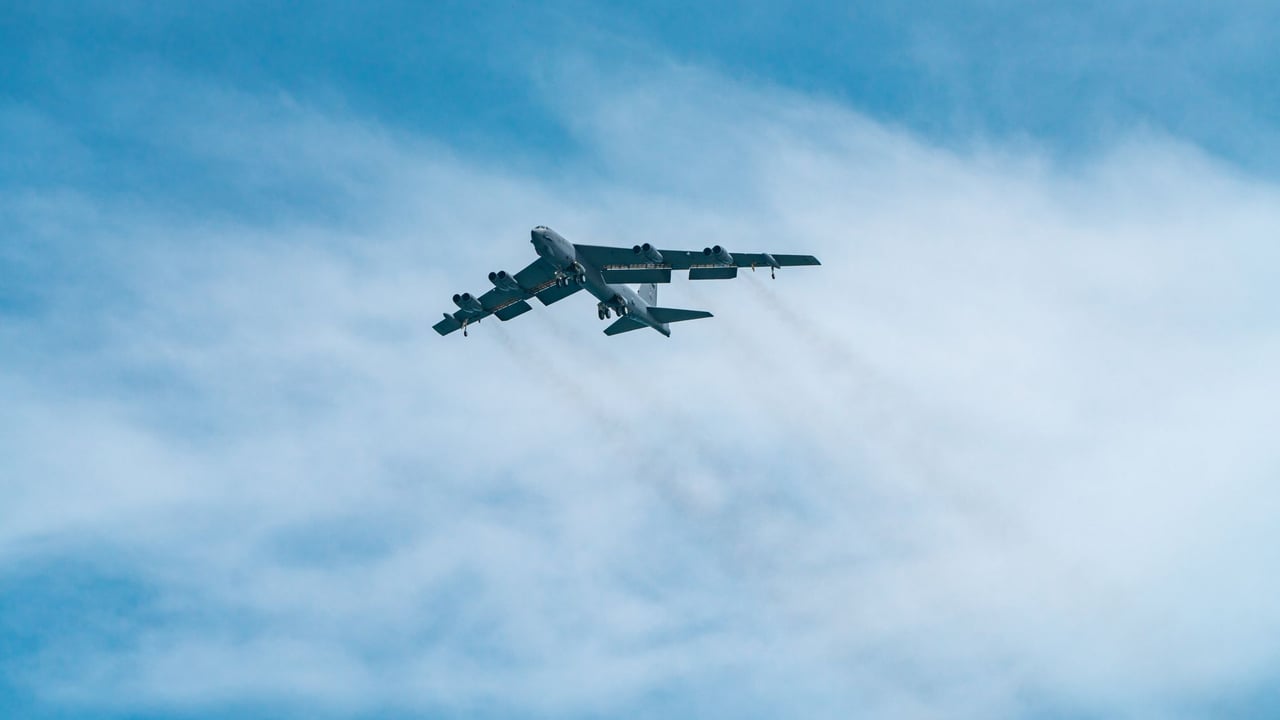

A devastating aviation disaster unfolded in the California desert on June 15, 2026, when a B-52 Stratofortress crashed shortly after takeoff. Military officials from Edwards Air Force Base confirmed the loss of the strategic bomber, which went down in the Mojave Desert at approximately 11:20 a.m. local time. Preliminary investigations suggest there were no survivors among the eight personnel on board, a figure higher than the aircraft's standard five-person crew.
The crash occurred roughly 160 kilometers north of Los Angeles, sending shockwaves through the aerospace testing community centered at Edwards. Rescue teams were dispatched immediately, but the severity of the impact left little hope for recovery operations. The cause of the incident remains unknown and is currently under a comprehensive military investigation to determine if mechanical failure or human error played a role.
The B-52 Stratofortress has served as the backbone of the United States' nuclear triad since 1955, capable of carrying a massive array of nuclear and conventional precision-guided munitions. Despite its Cold War origins, the fleet has undergone numerous modernizations to remain relevant in the 21st century. This latest incident, however, brings the challenges of maintaining such a legacy platform into sharp focus for Pentagon planners.
Operating an aircraft that is nearly 70 years old requires meticulous maintenance and creates significant logistical hurdles. As the U.S. Air Force prepares for a transition to newer platforms like the B-21 Raider, it continues to rely heavily on the B-52 for global power projection. This tragedy serves as a somber reminder of the inherent risks faced by service members operating aging heavy machinery in high-stakes environments.