
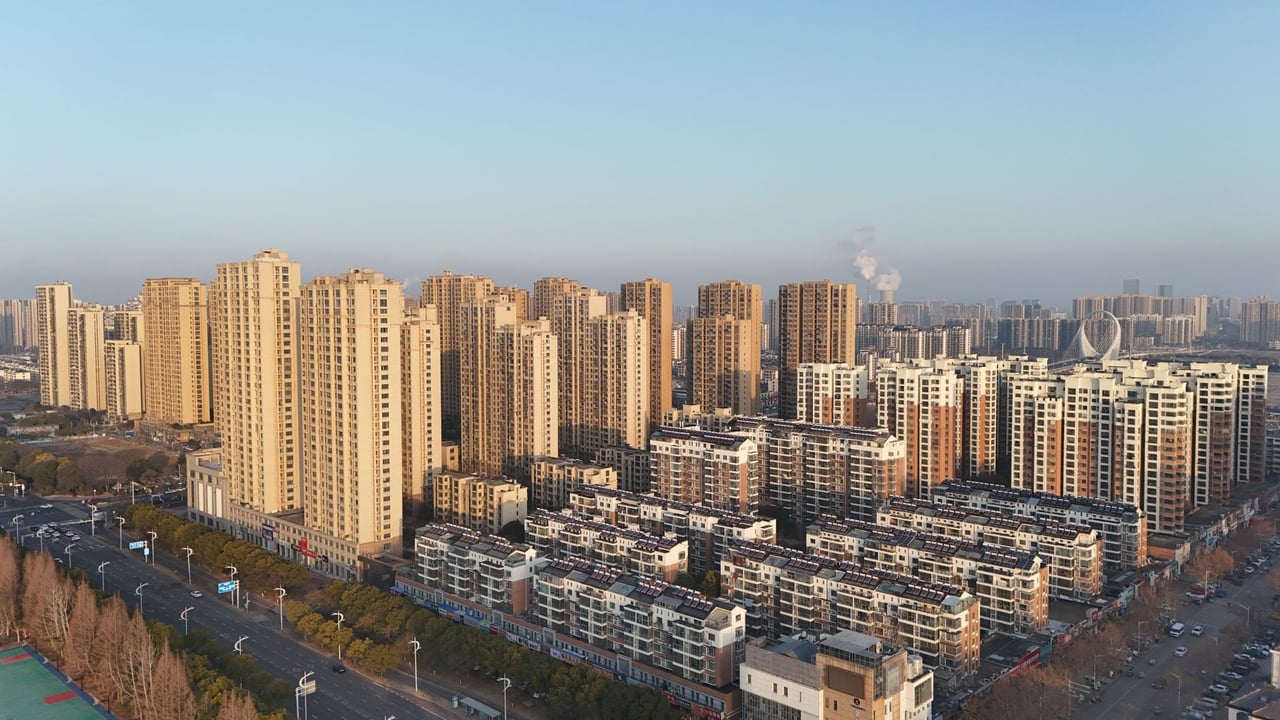

For the first time in eight months, the relentless slide in China’s new home prices has shown signs of exhaustion. Data released by the National Bureau of Statistics for May reveals that the year-on-year decline in new property prices across 70 major cities has finally narrowed, suggesting that the government’s multifaceted efforts to floor the market are beginning to take hold. While the recovery remains fragile, the data points to a crucial shift in momentum that analysts are increasingly labeling as a structural turning point.
The recovery is being driven almost entirely by the nation’s top-tier metropolises. Tier-1 cities—Beijing, Shanghai, Guangzhou, and Shenzhen—have now seen four consecutive months of month-on-month price increases for new homes. Shanghai and Shenzhen, in particular, have emerged as the vanguard of this stabilization, with secondhand home prices in both hubs leading the country in gains. This regional strength acts as a critical barometer for national sentiment, as historical trends suggest that price corrections in China typically resolve in the core before trickling out to the periphery.
Market observers emphasize that the narrowing of year-on-year declines is a more significant indicator than monthly fluctuations. While month-on-month data can be volatile and subject to seasonal noise, the year-on-year metric reflects a broader directional shift. Experts suggest that the current bottoming-out process signals that price adjustments in major hubs are reaching a level of maturity where buyers are finally willing to step back in, supported by a relaxation of purchase restrictions and more favorable mortgage terms.
However, the headline recovery masks a deepening divergence between China's economic powerhouses and its struggling hinterlands. While Tier-1 and select Tier-2 cities like Hangzhou and Taiyuan are seeing price stabilization, Tier-3 cities continue to face headwinds, with new home price declines actually widening in some areas. This 'K-shaped' recovery highlights the reality that inventory overhang and demographic outflows remain unresolved issues for smaller urban centers, even as the capital-rich coastal cities begin their ascent.
Looking ahead, the longevity of this rebound will depend on whether the confidence seen in Shanghai and Shenzhen can be successfully exported to the rest of the country. For now, the market appears to be entering a phase of 'anchored stability' where the freefall has ended, but a broad-based rally remains elusive. The structural theme for the coming years will likely be one of extreme fragmentation, where prime real estate in core cities decouples from the stagnating markets of the interior.