
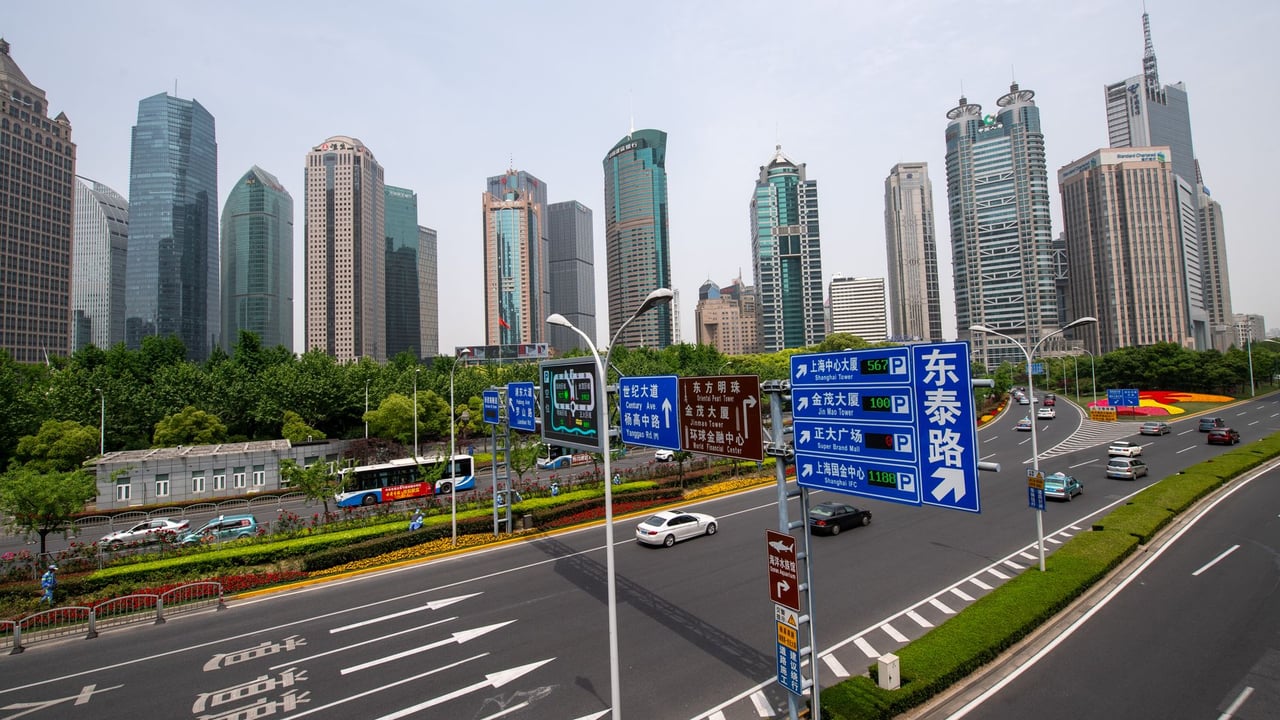

At the 2026 Lujiazui Forum in Shanghai, Wu Qing, Chairman of the China Securities Regulatory Commission (CSRC), outlined a strategic recalibration of the nation's financial markets. The centerpiece of this vision is a capital market that moves beyond mere volume, prioritizing the funding of 'New Quality Productive Forces'—a term synonymous with the state-led drive for self-reliance in high-end technology. Wu’s address framed the 'New Nine Measures' policy framework as a foundational shift, transforming the A-share market from a speculative playground into a disciplined vehicle for national economic upgrading.
Central to this transformation is a significant expansion of the Sci-Tech Innovation Board, or Star Market. Wu announced that listing criteria will be adjusted to better accommodate 'hard tech' sectors, specifically mentioning breakthroughs in artificial intelligence, quantum computing, and embodied AI. By allowing pre-revenue or loss-making firms in these strategic sectors to access public capital, Beijing is signaling its willingness to tolerate higher market risk in exchange for long-term technological sovereignty. This policy seeks to bridge the gap between early-stage venture capital and the public markets, which have historically been wary of unproven technologies.
Institutional discipline remains a high priority as the regulator seeks to rebuild investor trust after years of volatility. Wu highlighted a 'zero-tolerance' approach to financial fraud and market manipulation, noting that over 1,300 cases were investigated in the past two years, resulting in billions of dollars in fines. This regulatory crackdown is coupled with a push for 'patient capital'—long-term investments from insurance funds and pension schemes. The goal is to stabilize the market’s inherent volatility by reducing the dominance of retail-driven momentum trading and replacing it with institutional, value-oriented holdings.
On the international front, Wu signaled a commitment to 'two-way opening' despite a challenging geopolitical climate. Plans for a pilot program for RMB foreign exchange futures and the inclusion of qualified foreign institutional investors (QFII) in treasury bond futures indicate a desire to provide better hedging tools for global capital. By strengthening the linkage between the Shanghai and Hong Kong markets, the CSRC aims to maintain China’s relevance in the global financial hierarchy while ensuring that the flows of capital remain within a tightly supervised regulatory 'moat.'
Finally, the CSRC is doubling down on Shanghai’s role as a global financial hub. The introduction of new futures products, including liquefied natural gas (LNG) and power futures, suggests a move toward setting 'Shanghai Prices' for critical global commodities. This initiative is not merely about market depth; it is a strategic effort to enhance China's pricing power in the global energy transition, ensuring that the financial infrastructure of the future is built on Chinese-regulated platforms.