
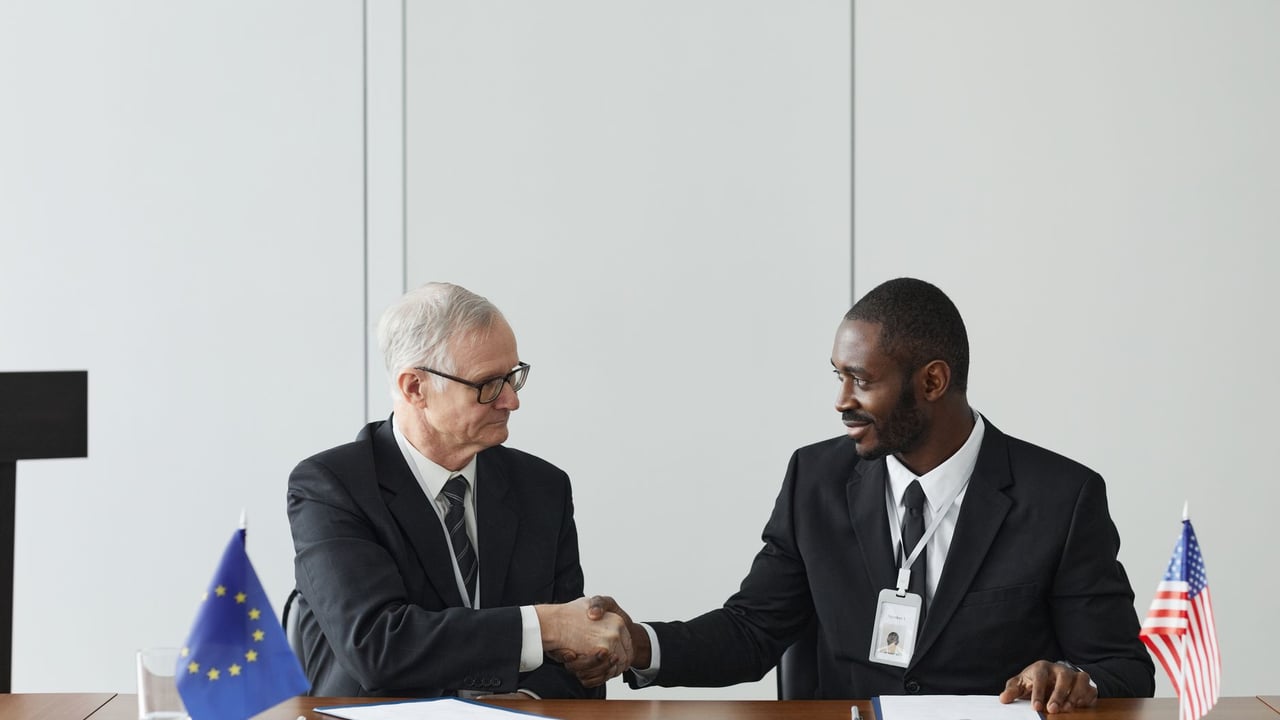

In a diplomatic development that threatens to upend decades of geopolitical orthodoxy, the United States and Iran have reportedly finalized a comprehensive Memorandum of Understanding (MoU). This agreement, signed remotely by President Donald Trump and confirmed by Tehran, establishes a framework for the 'permanent termination' of hostilities across all military fronts, including the volatile borders of Lebanon. The deal represents a radical pivot from the 'maximum pressure' campaigns of the past, seeking instead to integrate Iran into a new regional security architecture through economic incentives and mutual security guarantees.
The memorandum outlines a rapid de-escalation timeline, beginning with a 60-day window to negotiate a final, legally binding treaty. Central to this de-escalation is the immediate lifting of the U.S. naval blockade and the restoration of maritime traffic in the Strait of Hormuz, a critical global energy chokepoint. In exchange, Tehran has committed to maintaining its nuclear program at status quo levels while participating in a supervised dilution of its enriched material stockpiles, effectively pausing its path toward a nuclear weapon without completely dismantling its domestic infrastructure.
Perhaps the most striking element of the MoU is the economic 'carrot' dangling before Tehran: a proposed $300 billion reconstruction and economic development fund, backed by the U.S. and regional partners. This massive capital injection, paired with the immediate authorization for Iran to resume global oil sales and the unfreezing of restricted assets, suggests a strategy aimed at stabilizing the Iranian economy to ensure domestic buy-in for the peace process. The agreement also explicitly addresses Lebanese sovereignty, indicating an attempt to decouple regional proxies from the central conflict.
Critics and observers remain cautious, noting that the 'Art of the Deal' approach to Middle Eastern diplomacy faces significant hurdles. The 60-day negotiation period is fraught with technical complexities regarding uranium enrichment levels and the verification of sanctions removal. Furthermore, the reliance on a future United Nations Security Council resolution to codify the deal implies a need for cooperation from other global powers, including China and Russia, who have their own strategic interests in the longevity of the Iranian regime.
As Vice President J.D. Vance and Iranian Parliament Speaker Mohammad Bagher Ghalibaf prepare for a face-to-face summit in Switzerland, the world is watching to see if this memorandum is a durable peace or a temporary reprieve. If implemented, the deal would not only reshape the global energy market by reintroducing Iranian crude but could also fundamentally alter the U.S. military footprint in the Persian Gulf. For now, the agreement stands as an audacious gamble on bilateral pragmatism over ideological confrontation.