
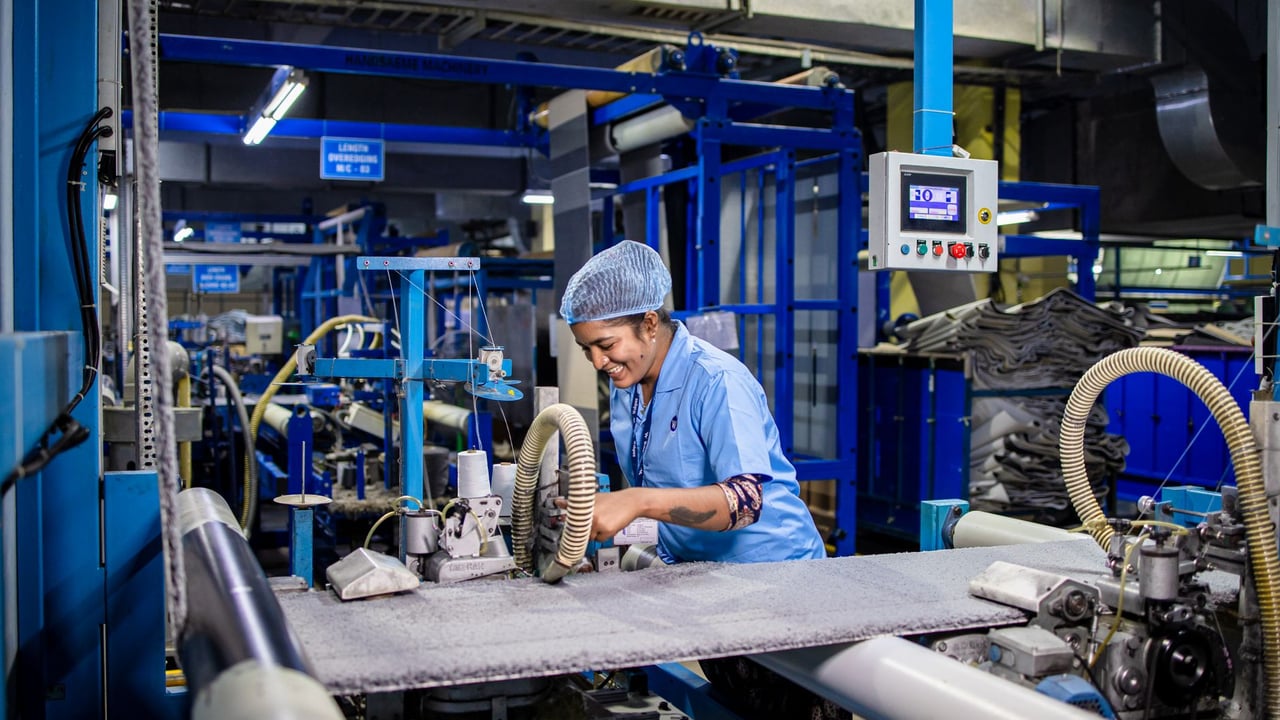

For over a decade, China’s ambitious youth followed a predictable path toward wealth: master code, secure a role at a tech giant in a tier-one city, and ride the digital wave. However, the release of the 2026 Chinese University Graduate Employment Report by the MyCOS Institute reveals a profound structural shift. The era of 'blindly choosing' computer science is over, replaced by a pragmatic migration toward advanced manufacturing and state-aligned engineering sectors.
The report highlights a stark contrast in the labor market. For the first time, all 'Green Card' majors—those characterized by high salaries, high job satisfaction, and high professional relevance—fall within the engineering domain. Automation has emerged as the new gold standard, while former darlings like information security and network engineering have fallen out of the top-tier rankings. This isn't just a seasonal fluctuation; it is a reflection of China’s broader transition toward 'New Productive Forces.'
Beijing is playing a heavy hand in this redirection. The Ministry of Education recently added 38 new undergraduate majors tailored to national strategic needs, focusing on semiconductors, energy science, and 'embodied AI.' Simultaneously, the government is aggressively pruning the curriculum, with over 10% of existing majors being cut or suspended in 2026 alone. Marketing, public management, and logistics are being purged to make room for disciplines that solve the technical 'chokepoints' of the modern industrial era.
Graduates are also recalibrating their geographical and educational expectations. The allure of Beijing and Shanghai is waning as 'tier-two' and 'tier-three' cities—often the hubs for new energy and equipment manufacturing clusters—absorb a growing share of the workforce. This 'downward' migration is paired with a cooling fervor for postgraduate studies. Instead of hiding from a tough job market in academia, students are increasingly prioritizing immediate employment in 'hard tech' sectors over the diminishing returns of a general master’s degree.
This realignment extends to vocational education, which is seeing a surprising surge in satisfaction. As manufacturing undergoes a digital and intelligent transformation, the demand for high-skilled technicians has created a 'skills premium.' Vocational graduates in power systems and industrial automation now report higher job satisfaction than many of their peers at four-year universities, signaling that the traditional stigma against 'blue-collar' work is eroding in the face of economic reality.
The rise of generative AI is further complicating the professional landscape. The report notes that routine clerical and information-processing roles are increasingly vulnerable. This technological pressure is forcing a bifurcation in the labor market: graduates must either possess high-level engineering skills that AI cannot yet replicate or be adaptable enough to work across disciplines. In this new economy, the 'iron rice bowl' is no longer a specific company, but a specific, hard-to-replace skill set.