
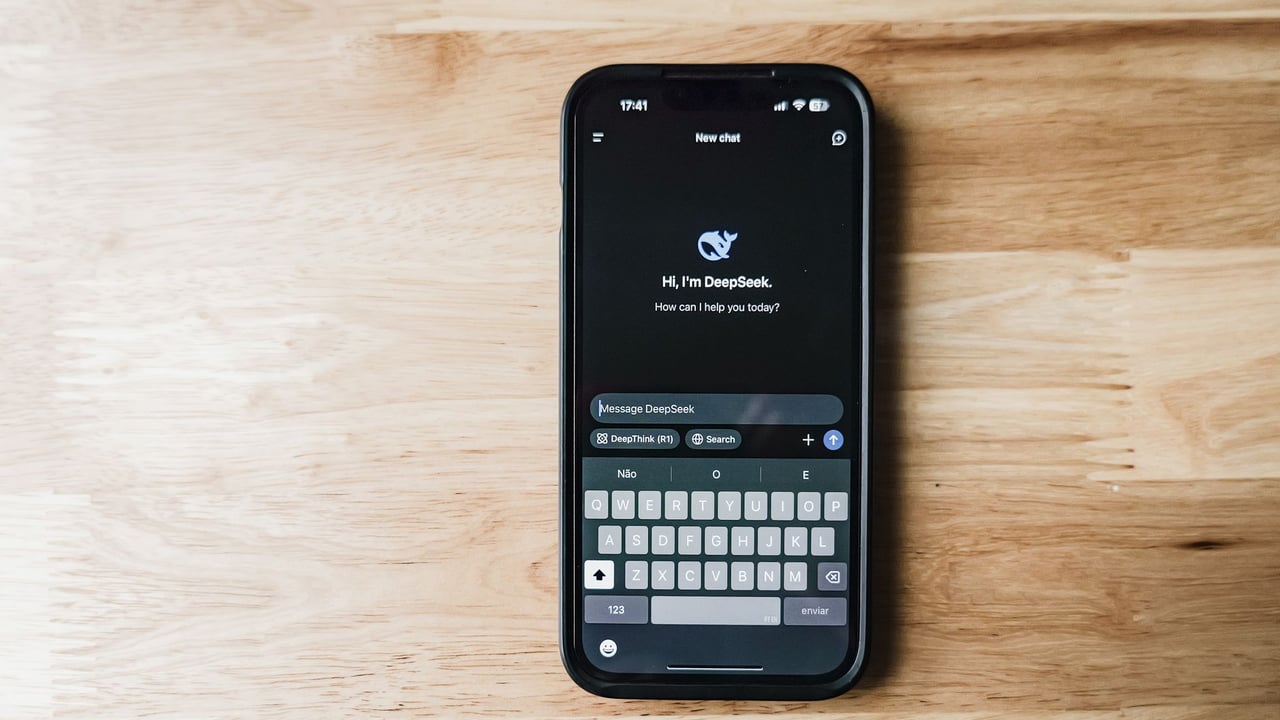

DeepSeek, the Chinese artificial intelligence insurgent known for its 'technical romanticism,' has officially entered the multimodal arena. On June 18, the firm launched its image recognition feature across its web and mobile platforms, filling a critical gap in its quest for artificial general intelligence (AGI). This update allows the model to process visual data alongside its heralded text-reasoning capabilities, positioning it more directly against global heavyweights like OpenAI’s GPT-4o.
Early user experiences, however, have revealed a curious and somewhat humorous technical quirk: the model appears obsessed with its own creator. In numerous tests, the AI frequently identified high-profile tech executives—including Tencent’s Tang Daosheng and Unitree’s Wang Xingxing—as Liang Wenfeng, the founder of DeepSeek. Even when presented with a photo of 360 Group’s Zhou Hongyi, the model hallucinated, misidentifying him as Pinduoduo’s Huang Zheng. These glitches highlight the lingering challenges of contextual 'over-fitting' where the model’s reasoning logic sometimes overrides visual accuracy.
Beyond these 'hallucinations,' the model exhibits sophisticated depth in other visual tasks. It successfully navigated complex architectural identification, text extraction, and even the nuances of internet memes, demonstrating that it has successfully ported its powerful logic-based R1 architecture into the visual domain. The model’s ability to solve intricate Chinese idiom puzzles based on visual cues suggests that its reasoning capabilities remain among the best in the domestic market.
The timing of this rollout is far from coincidental. DeepSeek recently finalized a massive financing round exceeding 50 billion RMB (approximately $6.9 billion USD), a figure that underscores its status as a national champion. The investor list reads like a 'Who’s Who' of the Chinese economy, featuring Tencent, battery giant CATL, and e-commerce leader JD.com. Notably, Liang Wenfeng himself contributed 20 billion RMB, signaling a level of founder commitment and skin-in-the-game rarely seen in the volatile world of AI startups.
Strategically, DeepSeek is carving out a unique niche by focusing on 'sovereign AI' infrastructure. The company has announced full optimization for Huawei’s Ascend chips, a vital move as US export controls limit access to Nvidia hardware. By ensuring its V4 models run efficiently on domestic silicon, DeepSeek is not just building a chatbot; it is helping secure China’s technological self-reliance in the high-stakes global AI arms race.