
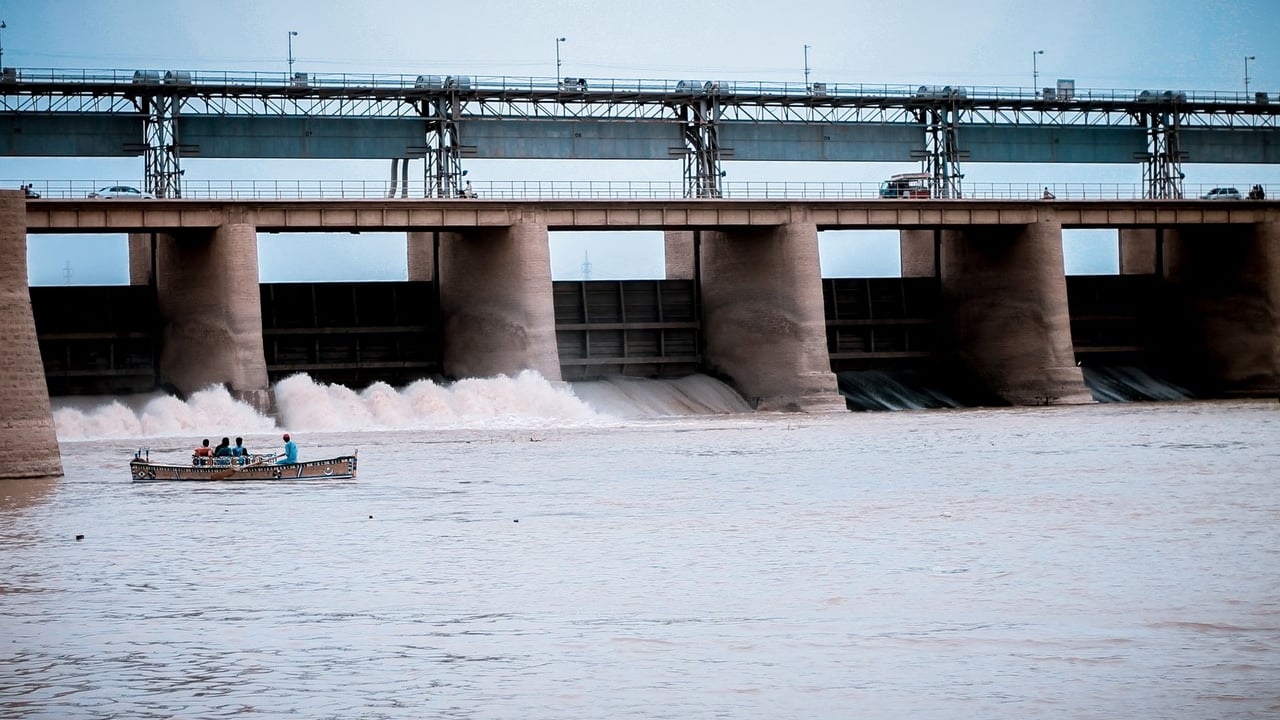

The perennial hostility between Islamabad and New Delhi has found a new and potentially existential flashpoint in the shared waters of the Indus River system. Pakistan's Defense Minister Khawaja Asif recently issued a stark warning that his nation would consider military action should its water security be compromised. This rhetoric marks a significant escalation from territorial disputes to a battle over the fundamental resources required for national survival.
The current crisis stems from New Delhi’s decision to suspend its obligations under the 1960 Indus Waters Treaty (IWT), a move India frames as a response to a deadly shooting incident in Indian-controlled Kashmir. By linking a decades-old water-sharing agreement to contemporary security grievances, India has introduced a volatile new variable into an already fragile regional equilibrium. For Pakistan, the potential loss of these waters is viewed not as a diplomatic setback, but as a direct threat to its territorial and economic integrity.
Adding gravity to the situation, Indian Water Resources Minister Patil has publicly suggested that the flow of the Indus to Pakistan could be completely severed by June 2028. This strategy, reportedly being pursued under the direct guidance of Prime Minister Narendra Modi, represents a pivot toward 'hydro-hegemony.' If realized, the plan would bypass the institutional safeguards that have historically prevented water from becoming a direct instrument of war in South Asia.
The stakes for Islamabad could not be higher, as nearly one-third of the Pakistani population is currently grappling with severe water scarcity. The provinces of Sindh and Balochistan are particularly vulnerable, where agricultural yields and basic human needs are tied directly to the Indus. Faced with what it perceives as an impending humanitarian catastrophe, the Pakistani government has escalated the matter to the UN Security Council, accusing India of violating international law.
While the 1960 treaty survived three major wars between the two neighbors, its current fragility suggests that the 'Cold Peace' maintained by water diplomacy is ending. Defense Minister Asif’s insistence that water is an integral part of national security indicates that Pakistan may no longer distinguish between a kinetic border incursion and a hydraulic blockade. As both nations harden their stances, the risk of a miscalculation leading to conventional conflict has reached its highest point in years.