

Recent imagery circulating within Chinese defense circles suggests that the Type 076 amphibious assault ship is rapidly approaching a critical milestone in its development. Fresh deck markings indicate the vessel is preparing for flight deck trials, a progression that signals China’s intent to redefine the boundaries of maritime power projection. Unlike its predecessors, the Type 076 is not merely a transport for marines; it is being positioned as a sophisticated 'aviation assault ship' capable of operating fixed-wing assets.
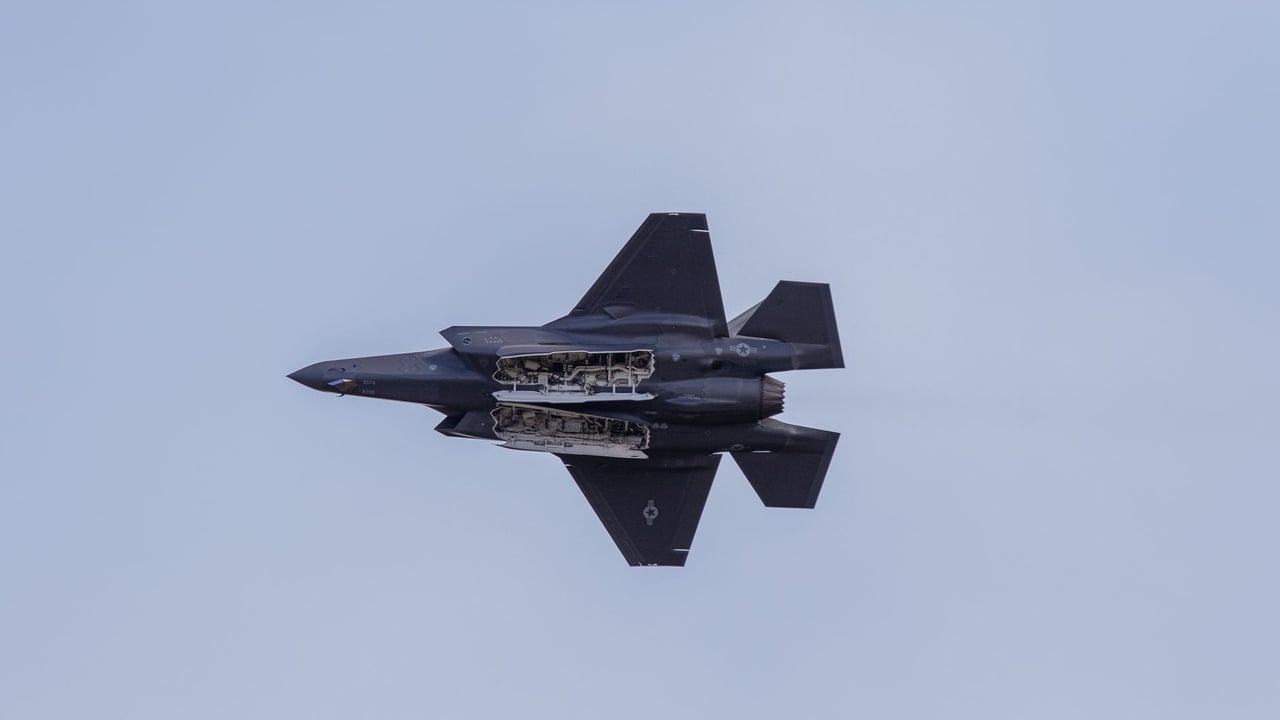
At the heart of the Type 076’s capabilities is the inclusion of an electromagnetic aircraft launch system (EMALS). This technology, typically reserved for full-sized supercarriers like the Type 003 Fujian, provides the ship with the ability to launch heavy fixed-wing aircraft, including the GJ-11 'Sharp Sword' stealth drone and, potentially, the J-35 fifth-generation carrier-based fighter. The technical feasibility of operating the J-35 on such a platform has become a focal point for naval analysts worldwide.
Technical assessments suggest that the Type 076 possesses the requisite deck width to accommodate the J-35. With a total deck span exceeding 42 meters and a designated landing strip of roughly 25 meters, the vessel provides sufficient safety margins for the J-35’s 11.5-to-13-meter wingspan. Furthermore, because the Type 076 shares catapult technology with China’s newest supercarrier, it can theoretically launch the J-35 at maximum takeoff weight, offering a significant advantage over the STOVL-dependent 'Lightning Carrier' concepts used by the United States Navy.
However, the transition from theoretical capability to operational efficiency faces significant hurdles. The ship’s dual-island design and narrower hangar space—estimated at less than 23 meters—create logistical bottlenecks for high-tempo sorties. While the ship could potentially house 18 to 20 J-35 fighters, the cramped environment would complicate engine maintenance and rapid aircraft rotation, potentially limiting its effectiveness in high-intensity combat compared to a dedicated fleet carrier.
Despite these constraints, the Type 076 represents a pragmatic middle ground in China's naval doctrine. In low-to-mid intensity conflicts, it can serve as a 'mini-carrier,' providing localized air superiority without the massive logistical footprint of a supercarrier group. In high-end scenarios, it is likely to act as a force multiplier for the Fujian-class ships, serving as a dedicated drone carrier that offloads specialized tasks from the main strike groups.
The Type 076 may only be the beginning of a new lineage of Chinese warships. Analysts speculate that this design serves as a testbed for a future 60,000-ton variant featuring an angled deck and higher speeds. If successful, this evolution would solidify the People’s Liberation Army Navy's ability to deploy flexible, distributed airpower across the Indo-Pacific, challenging the traditional dominance of the U.S. carrier strike groups.