SpaceX’s $6 Billion Pivot: From Launching Rockets to Leasing AI Supercomputing

SpaceX has signed a $6.3 billion compute rental agreement with open-source startup Reflection AI. The deal provides Reflection AI with access to NVIDIA GB300-powered infrastructure through 2029, marking SpaceX's emergence as a major player in the AI hardware and cloud services market.

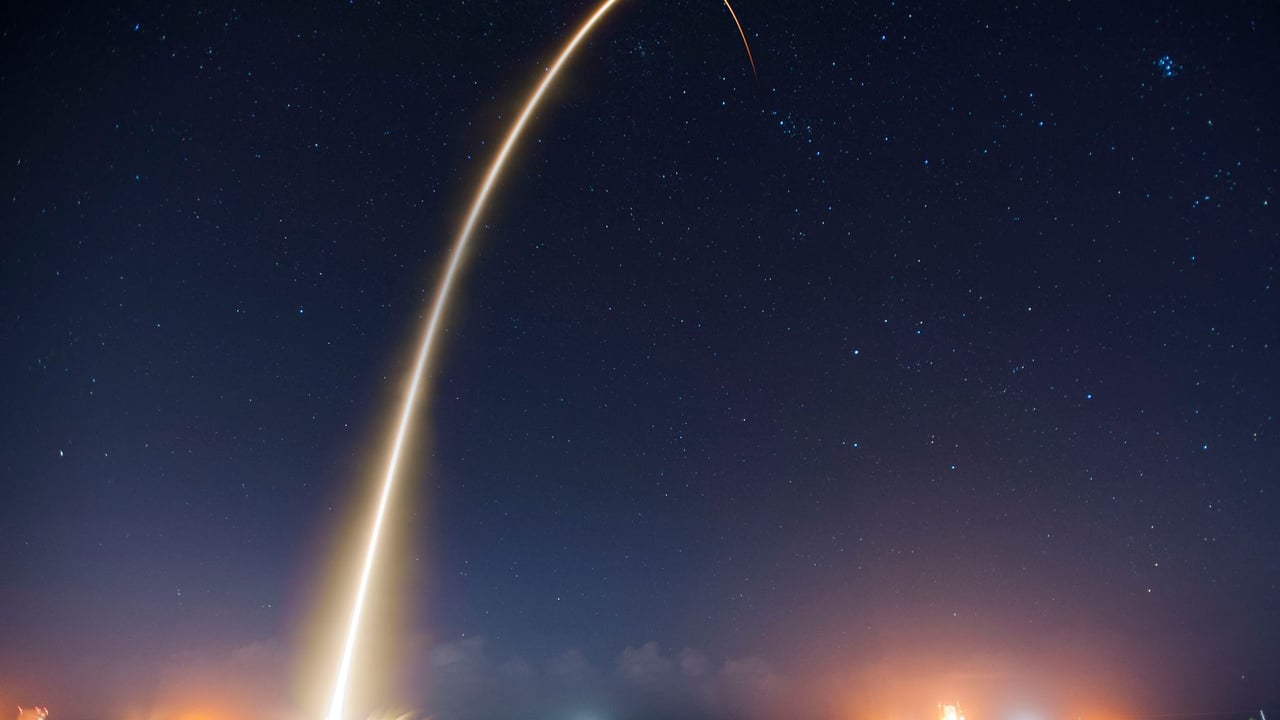
Spectacular long exposure of a rocket launch under a clear, starry night sky showcasing the trail.

Key Takeaways

  • 1SpaceX and Reflection AI signed a compute agreement worth a maximum of $6.3 billion through 2029.
  • 2Reflection AI will pay $150 million per month to access SpaceX's 'Colossus' infrastructure starting July 2026.
  • 3The deal utilizes NVIDIA's top-tier GB300 chips, essential for training next-generation frontier AI models.
  • 4The contract includes a 90-day termination clause, providing flexibility in a high-stakes, capital-intensive market.
  • 5SpaceX is successfully pivoting to leverage its massive energy and logistical footprint to serve the AI sector.

Editor's
Desk

Strategic Analysis

This deal represents a watershed moment for SpaceX, confirming that the company’s real value may increasingly lie in its 'terrestrial' infrastructure rather than its orbital capabilities. By leveraging the energy-dense environments created for its aerospace operations, SpaceX has effectively built a shadow cloud-computing giant that bypasses the constraints of traditional data centers. For the open-source community, Reflection AI’s massive bet suggests that the future of AI development depends entirely on securing long-term hardware pipelines. Musk is effectively creating a circular economy within his empire, where SpaceX's infrastructure supports the very compute needs that will eventually power autonomous systems in space and on Earth. This $6.3 billion pact is not just a lease; it is a declaration that SpaceX is now a central node in the global AI supply chain.

China Daily Brief Editorial
Strategic Insight
China Daily Brief

Elon Musk’s SpaceX is rapidly evolving from an aerospace pioneer into a critical infrastructure provider for the global artificial intelligence race. A landmark agreement with Reflection AI, an open-source startup, has positioned SpaceX as a formidable landlord in the high-performance computing market. The deal, valued at up to $6.3 billion, involves the leasing of Musk’s 'Colossus' compute clusters to external parties, signaling a strategic diversification of SpaceX’s revenue streams beyond satellite internet and orbital launches.

Under the terms of the agreement, Reflection AI will gain immediate access to NVIDIA’s GB300 chips—the high-end successors to the Blackwell architecture designed specifically for training frontier-scale large language models. Starting July 2026, the startup will pay a monthly rental fee of $150 million for compute capacity. This massive capital commitment highlights the extreme costs and hardware scarcity currently defining the frontier of AI development, where access to the latest silicon is the ultimate competitive advantage.

The partnership underscores the unique vertical integration of the Musk ecosystem, where SpaceX’s energy and cooling infrastructure are repurposed to support massive GPU arrays. While the contract extends through 2029, it includes a flexible exit clause allowing either party to terminate the arrangement with 90 days' notice after an initial three-month period. This suggests a volatile and fast-moving market where compute needs and hardware availability are in constant flux.

For the broader AI industry, this deal validates the growing importance of independent compute providers. As traditional cloud giants like Microsoft and Google prioritize their internal AI projects, SpaceX is carving out a niche as a neutral, high-capacity alternative for open-source developers. The move effectively turns SpaceX into a vital utility for the AI era, ensuring that even 'non-Big Tech' players can access the industrial-scale compute required to challenge the current leaders of the field.

Share Article

Related Articles

📰
No related articles found