Shanghai’s Silicon Valley of AI: Zhangjiang Lays Out a 100-Billion Yuan Vision

Zhangjiang AI Innovation Town has announced its 2030 'Double Thousand' roadmap, aiming to host over 1,000 AI enterprises and achieve an industrial output exceeding 100 billion yuan. Already representing a quarter of Shanghai's AI sector, the hub is shifting its focus toward high-density innovation and real-world application scenarios.

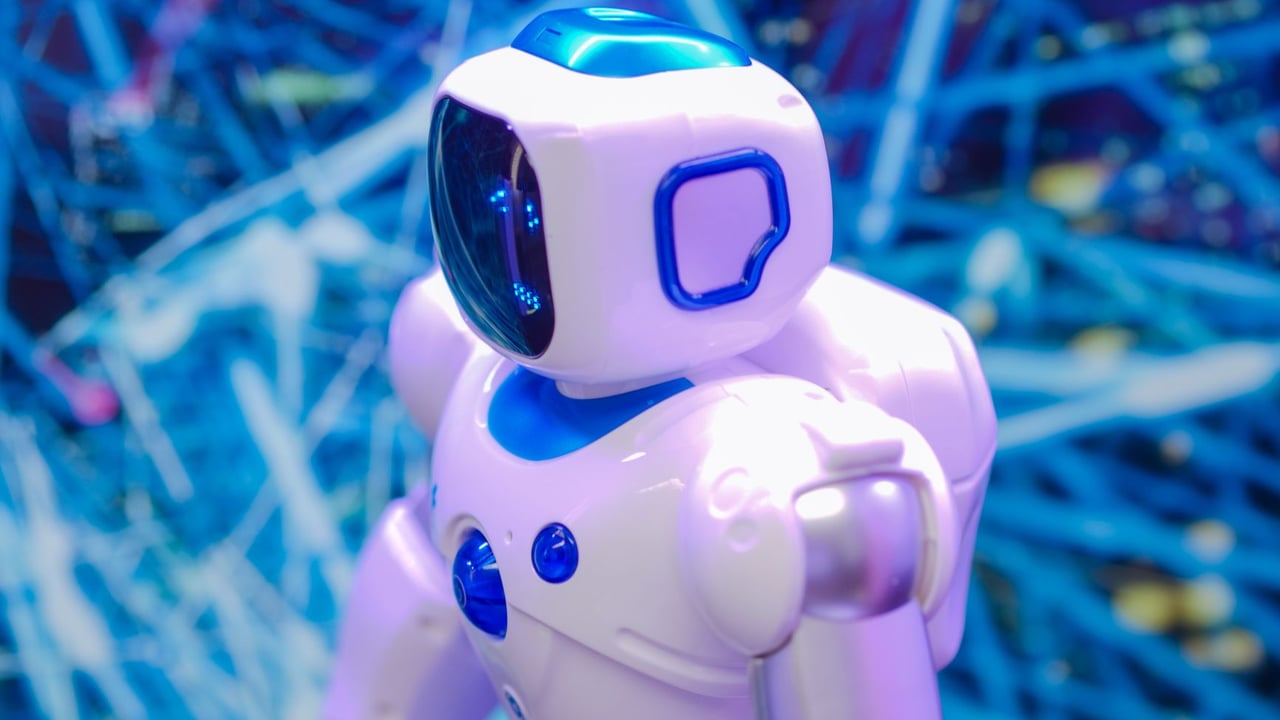
Close-up of a white and blue robot against a dynamic, futuristic tech backdrop.

Key Takeaways

  • 1Zhangjiang AI Innovation Town aims to reach a 100-billion-yuan industry scale and 1,000+ companies by 2030.
  • 2The 2-sq-km hub already contributes 25% of Shanghai’s total AI industrial output after only nine months of operation.
  • 3An intermediate goal for 2027 targets 800 firms and 65 billion yuan in scale with 30 key application scenarios.
  • 4The strategy prioritizes 'output density,' aiming for nationwide leadership in economic efficiency per square meter.
  • 5The hub currently hosts 600+ firms and 30,000 AI practitioners, supported by intensive ecosystem-building activities.

Editor's
Desk

Strategic Analysis

The 'Double Thousand' target is more than just a fiscal milestone; it represents China’s strategic shift toward 'New Quality Productive Forces' by concentrating high-value AI assets within a hyper-dense geographic footprint. By aiming for maximum output density, Zhangjiang is signaling a departure from the sprawling industrial parks of the past in favor of high-efficiency, talent-heavy clusters. This concentration serves a dual purpose: it accelerates the feedback loop between research and commercial application, and it creates a localized supply chain that is more resilient to external market shocks. For global observers, Zhangjiang’s trajectory will indicate whether China can successfully transition from being a fast follower in AI to a dominant force in specialized, application-driven ecosystems.

China Daily Brief Editorial
Strategic Insight
China Daily Brief

In just nine months of operation, the Zhangjiang AI Innovation Town has rapidly evolved from a regional development project into the beating heart of Shanghai’s technological ambitions. Spanning a compact two square kilometers, the district has already successfully clustered over 600 artificial intelligence firms and 30,000 specialized professionals. This dense concentration of talent and capital now accounts for a staggering 25 percent of the total AI industrial output of Shanghai, signaling a successful pivot toward hyper-localized innovation hubs.

Looking toward the next decade, Zhangjiang officials have unveiled the 'Double Thousand' roadmap, a strategic blueprint aimed at cementing the area's dominance. By 2027, the town expects to host 800 AI enterprises with a combined industrial scale of 65 billion yuan. More importantly, the plan emphasizes the deployment of 30 large-scale demonstration application scenarios, moving the focus from theoretical development to practical, commercialized AI solutions.

The final horizon of 2030 aims for the 100-billion-yuan milestone in industrial output, supported by a network of more than 1,000 enterprises. This expansion is not merely about quantity; the project is striving for the highest output density per unit area in China. This focus on efficiency suggests that Zhangjiang is attempting to emulate the high-yield models of global tech centers like Kendall Square or Palo Alto, where proximity breeds rapid iteration.

As geopolitical tensions continue to reshape the global tech landscape, China is increasingly relying on these 'innovation clusters' to achieve self-reliance. By fostering nearly 400 industry events in less than a year, Zhangjiang is building an ecosystem that thrives on networking and cross-pollination. The success of this 100-billion-yuan bet will be a litmus test for whether top-down industrial planning can successfully cultivate the organic agility required for AI leadership.

Share Article

Related Articles

📰
No related articles found