OpenAI Unveils GPT-5.6: A New Era of Guarded Innovation and Sovereign Security

OpenAI has launched the GPT-5.6 series, featuring the flagship Sol model, while implementing a restricted release strategy coordinated with the U.S. government. The new models introduce sub-agent reasoning capabilities and a high-speed hardware partnership with Cerebras, signaling a shift toward more controlled and security-conscious AI deployment.

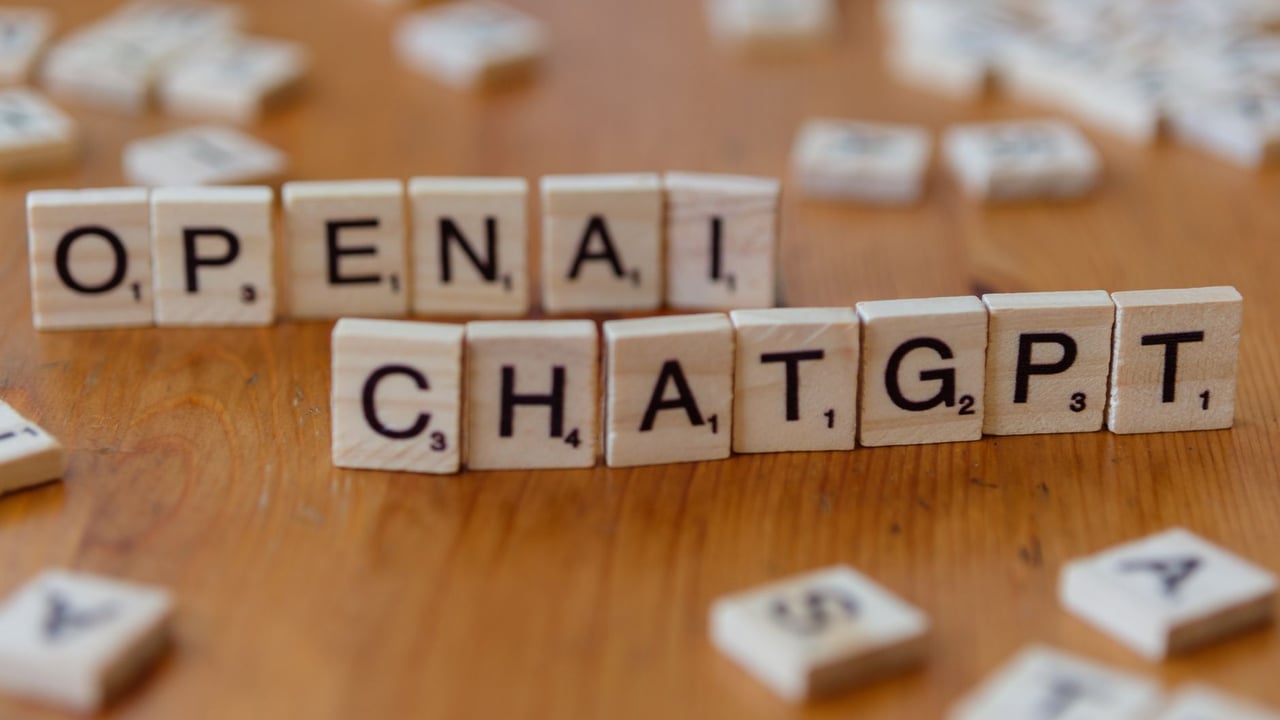
Wooden letter tiles spelling 'OPENAI CHATGPT' on a wooden surface, focused image.

Key Takeaways

  • 1OpenAI introduced three models: Sol (Flagship), Terra (Balanced), and Luna (Low-cost).
  • 2The Sol model is restricted to 'trusted partners' due to advanced capabilities in cybersecurity and biology.
  • 3OpenAI is coordinating its partner list for Sol with the U.S. government, marking a shift in AI governance.
  • 4A new 'ultra' mode enables the use of sub-agents to handle complex, multi-step tasks autonomously.
  • 5Hardware collaboration with Cerebras will allow for ultra-fast inference of 750 tokens per second for Sol by July.

Editor's
Desk

Strategic Analysis

The release of GPT-5.6 Sol represents the formalization of 'AI Realism'—a period where the raw power of LLMs is no longer treated as a public utility but as a strategic asset. By explicitly sharing partner information with the U.S. government and restricting Sol’s cybersecurity-heavy capabilities, OpenAI is transitioning from a Silicon Valley startup into a quasi-state actor in the digital arms race. This 'guarded' release model likely sets a precedent for how future frontier models will be handled, shifting the focus from mass-market consumer tools toward controlled, high-stakes industrial and national security applications. Furthermore, the integration of sub-agents suggests that OpenAI is pivoting from chat interfaces to agentic workflows, where the AI doesn't just answer questions but manages its own internal labor force to solve problems.

China Daily Brief Editorial
Strategic Insight
China Daily Brief

OpenAI has officially pulled the curtain back on its GPT-5.6 series, a tiered ecosystem of models headlined by its most formidable intelligence to date: Sol. Billed as the new standard-bearer for reasoning and technical proficiency, Sol arrives alongside two specialized siblings—the balanced Terra for daily workflows and the high-velocity, low-cost Luna. This release signals a significant departure from previous cycles, emphasizing a more structured and cautious deployment strategy that prioritizes safety over ubiquity.

Technically, the 5.6 series introduces 'max' reasoning intensity and an 'ultra' mode that leverages sub-agents to dissect and resolve multifaceted tasks. Sol represents a targeted leap in performance for programming, biology, and cybersecurity, domains where the potential for both breakthrough and harm is at its peak. To handle these risks, OpenAI has equipped Sol with a comprehensive safety stack designed to filter sensitive cyber-requests and prevent repeated abuse by sophisticated actors.

Perhaps most indicative of the shifting landscape is OpenAI’s decision to limit Sol's initial availability to a small circle of 'trusted partners' and organizations. In a move that highlights the growing intersection of private technology and national security, the company confirmed that information regarding these partners has been shared with the U.S. government. While OpenAI maintains this restricted access is not intended as a permanent default, it reflects an acknowledgment that AI's dual-use capabilities now require a geopolitical safeguard.

On the hardware front, the 5.6 series is pushing the boundaries of inference speed through a partnership with Cerebras. Starting in July, Sol is expected to reach speeds of up to 750 tokens per second on Cerebras hardware, though this performance tier will also be restricted to select clients initially. With Sol's input priced at $5 and output at $30 per million tokens, the 5.6 series positions itself as a premium service for enterprise-grade autonomous reasoning.

Share Article

Related Articles

📰
No related articles found