The New Face of the PLA: How China is Rebranding its Military Academies for the High-Tech Era

China has launched a high-profile recruitment campaign featuring elite military personnel, including an astronaut and a naval officer, to attract top-tier students to its military academies. The campaign emphasizes modern warfare, high-tech career paths, and national prestige to compete for talent in a rapidly evolving security landscape.

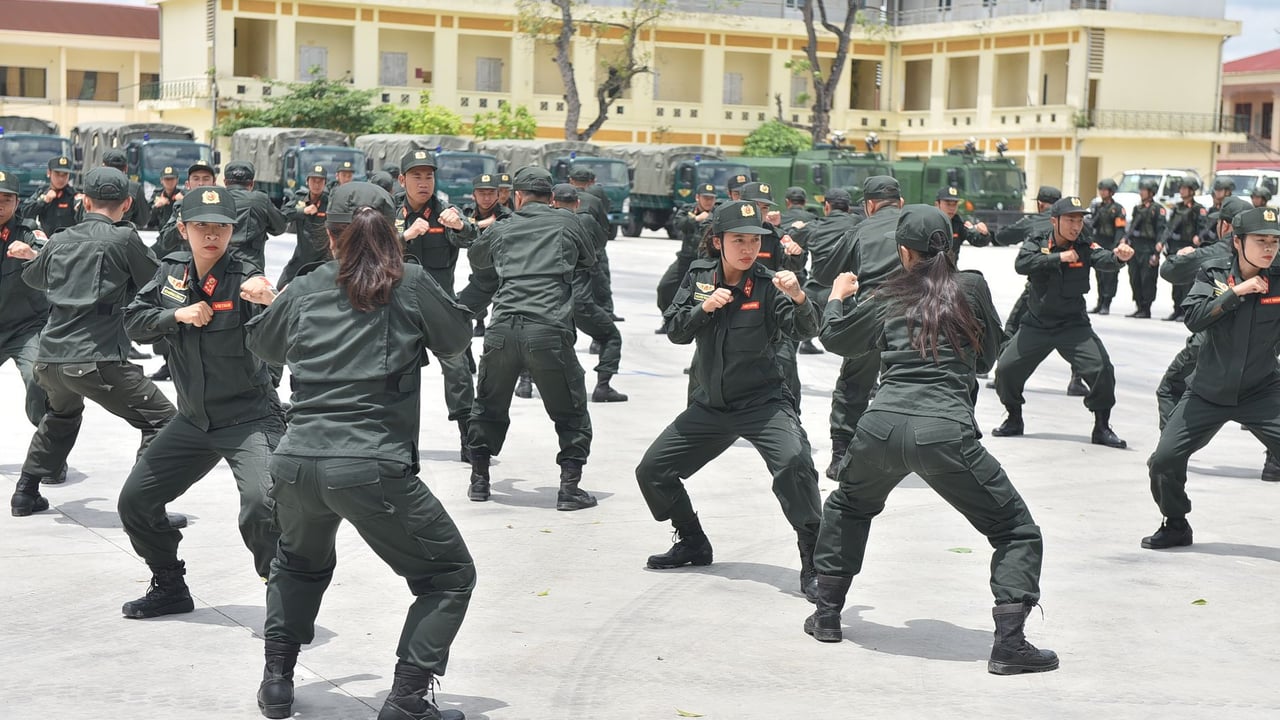
Soldiers participating in a coordinated outdoor training drill, displaying discipline and teamwork.

Key Takeaways

  • 1The 2026 PLA academy recruitment drive features six high-profile ambassadors from elite units, including the space program and the blue-water navy.
  • 2Recruitment rhetoric is shifting from traditional 'bitterness and endurance' to emphasizing 'modern warfare complexity' and 'strategic command.'
  • 3The event highlights the Type 055 destroyer Nanchang as a symbol of China's maritime reach and professional opportunity.
  • 4Beijing is actively targeting high-achieving high school graduates to fill technical and command roles necessitated by military modernization.
  • 5The campaign uses personal narratives to humanize the military and present it as a prestigious path for personal and professional growth.

Editor's
Desk

Strategic Analysis

This recruitment drive is a microcosm of the PLA's broader transformation from a labor-intensive force to a technology-driven superpower. By leveraging figures like Song Lingdong and Liu Yueming, the CCP is effectively branding the military as the primary vehicle for achieving the 'Chinese Dream.' The focus on modern campaign planning and space-based operations suggests that the military's primary recruitment bottleneck is no longer raw manpower, but the high-level cognitive talent required to operate a 'smart' military. As regional tensions persist, the success of such campaigns in drawing the 'best and brightest' into the officer corps will be a critical factor in China's long-term ability to challenge established military paradigms in the Indo-Pacific.

China Daily Brief Editorial
Strategic Insight
China Daily Brief

As the midsummer monsoon rains descend on Wuhan, a different kind of mobilization is taking place within the halls of the Naval University of Engineering. The People’s Liberation Army (PLA) has launched its 2026 recruitment cycle with a high-profile campaign, 'Youth without Regret,' deploying six 'image ambassadors' to serve as the modern face of Chinese military education. This initiative represents a sophisticated shift in how the Central Military Commission seeks to attract the next generation of strategic talent amid an increasingly complex global security environment.

The ambassadors selected for this role are not mere symbols; they represent the apex of China’s military modernization. Among them are Liu Yueming, an officer from the Type 055 destroyer CNS Nanchang, and Song Lingdong, a taikonaut who spent six months in orbit. By showcasing individuals who operate at the frontiers of maritime power and space exploration, Beijing is signaling that the PLA is no longer just a force of terrestrial defense but a global power requiring elite intellectual and technical proficiency.

During the event, the narrative of military life was carefully recalibrated for a generation raised in the digital age. Rather than focusing solely on traditional notions of hardship, speakers like Chen Siqi emphasized the cognitive demands of modern conflict, challenging students to consider the complexities of 72-hour campaign planning and multi-domain operations. This reflects a broader institutional transition toward 'quality over quantity,' as the military competes with the private tech sector for high-achieving STEM graduates.

The impact of this soft-power push was evident among the local high school attendees. Students from elite provincial schools expressed a newfound interest in military service, motivated not by duty alone, but by the promise of a 'stage for extreme self-expression' and the opportunity to handle sophisticated hardware. By humanizing the officer corps and framing the academy experience as a 'foundry' for personal excellence, the PLA is attempting to bridge the gap between civilian aspirations and national strategic goals.

Share Article

Related Articles

📰
No related articles found