
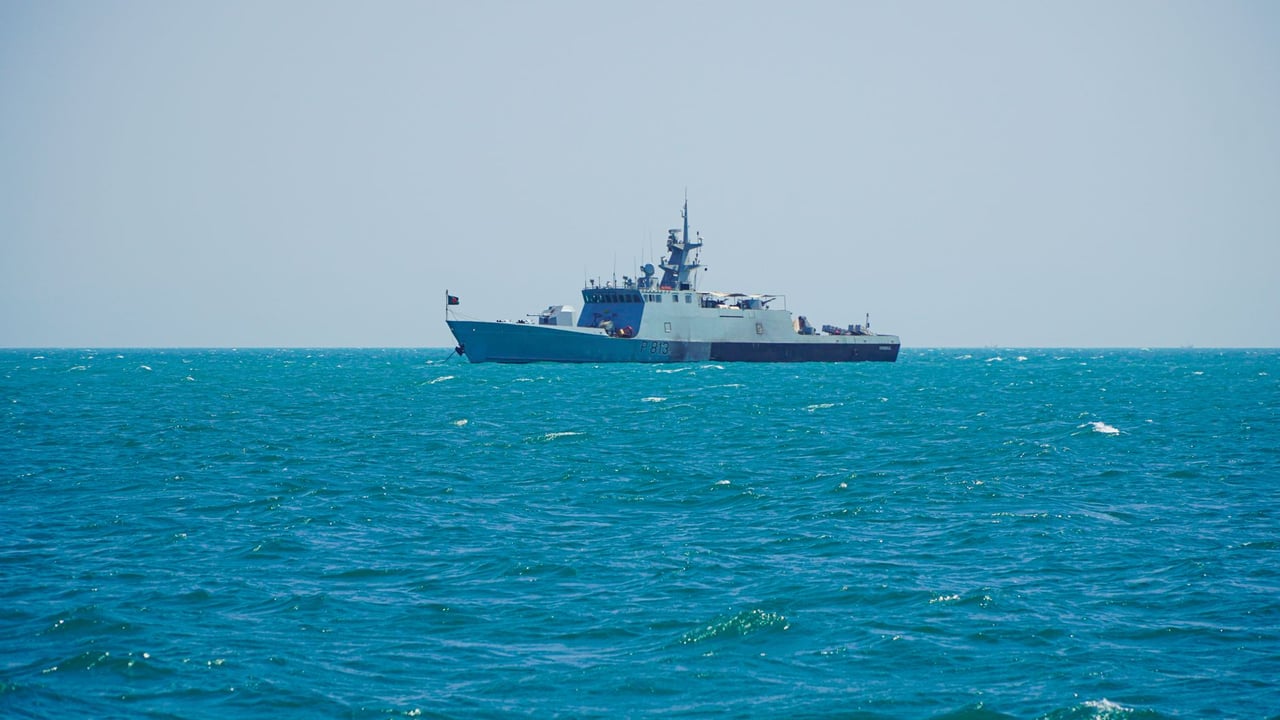

The tenuous peace established in early 2026 has all but evaporated as the United States and Iran exchange direct military strikes in the Persian Gulf. Following alleged Iranian provocations against commercial shipping in the Strait of Hormuz, the U.S. Central Command launched a series of precision strikes on June 27 targeting Iranian military infrastructure. These operations focused on neutralizing Iranian surveillance systems, drone storage facilities, and coastal radar stations that have been rapidly rebuilt since the conflict’s initial flare-up in February.
U.S. President Donald Trump has framed the military action as a necessary response to Iran’s repeated violations of a standing ceasefire agreement. In characteristically blunt rhetoric, Trump warned that American patience is finite, suggesting that continued Iranian defiance could lead to a 'forced' resumption of full-scale military operations. The threat of total destruction looms over the region as the U.S. Navy maintains a significant presence, led by the USS Abraham Lincoln carrier strike group.
Tehran’s response has been swift and geographically expansive. The Islamic Revolutionary Guard Corps (IRGC) claimed responsibility for missile and drone strikes against eight critical U.S. infrastructure points across the Middle East, including the Fifth Fleet headquarters in Bahrain and the Ali Al Salem Air Base in Kuwait. The IRGC maintains that its actions are a 'decisive response' to American aggression and asserts its legal right to control passage through the Strait of Hormuz, a claim that directly contradicts international maritime law.
The escalation has sent shockwaves through neighboring Gulf states, forcing Kuwait and Bahrain to activate their national air defense systems. As sirens blare in Manama and Kuwait City, the regional conflict has transitioned from a shadow war to a direct state-on-state confrontation. With Iran threatening a 'hellish' retaliation against any further U.S. movement, the global energy corridor remains at its highest level of risk in decades.
This cycle of strike and counter-strike reveals the failure of diplomatic off-ramps attempted earlier this year. Despite the heavy losses sustained by Iranian air defenses in April, the rapid reconstruction of their coastal systems suggests a regime committed to a strategy of 'active resistance' regardless of the cost. As the rhetoric from both Washington and Tehran reaches a fever pitch, the margin for error has narrowed to a perilous degree.