China’s Tech Engine Recharges: STAR 50 Surge Signals Shift Toward 'Hard Tech' Resilience

The STAR 50 index surged over 4% as Chinese investors concentrated capital in semiconductors and pharmaceuticals, signaling a preference for state-backed 'hard tech' over the broader market. Despite massive trading volumes, a majority of stocks declined, highlighting a selective rally focused on national strategic industries.

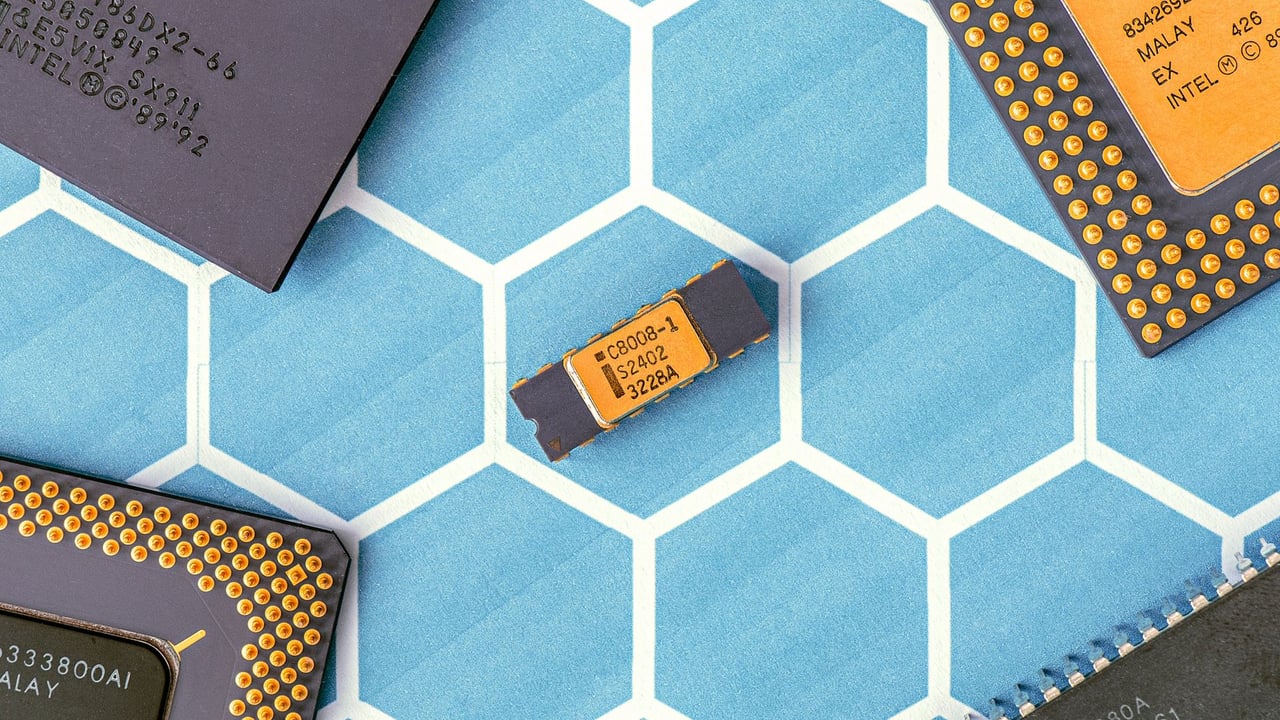
Close-up of various microprocessor chips on a blue hexagonal patterned surface, highlighting electronic technology.

Key Takeaways

  • 1The Sci-Tech Innovation 50 Index (STAR 50) outperformed all major indices with a 4.61% surge.
  • 2Trading volume reached a massive 3.52 trillion RMB, indicating high market turnover and liquidity.
  • 3Semiconductor equipment and electronic gases saw a wave of limit-up performances, driven by self-reliance narratives.
  • 4The pharmaceutical sector staged a broad breakout, with over 20 companies hitting daily price ceilings.
  • 5Market breadth remained negative, with 2,900 stocks falling even as the main indices finished in positive territory.

Editor's
Desk

Strategic Analysis

The current market behavior represents a microcosm of China’s broader economic transition. The massive 3.52 trillion RMB turnover paired with negative breadth suggests that this is not a 'rising tide' bull market, but rather a violent rotation of capital out of old-economy sectors and into the tech-heavy STAR Board. By concentrating gains in semiconductors and 'hard tech,' investors are aligning themselves with the state's strategic imperatives. However, the extreme volatility and rapid sector rotation—moving from nuclear fusion to retail in a single session—indicates that speculative retail behavior remains a dominant force, even within these high-priority sectors. For global observers, this underscores that while China's tech self-sufficiency drive is gaining financial momentum, the equity market remains a battlefield of high-speed sentiment rather than steady long-term valuation.

China Daily Brief Editorial
Strategic Insight
China Daily Brief

Chinese equity markets witnessed a striking divergence on Monday as investor capital flooded into strategic 'hard tech' sectors, propelling the Sci-Tech Innovation 50 Index (STAR 50) to a massive 4.61% gain. While the broader Shanghai Composite managed a more modest 1.16% rise, the concentrated rally in semiconductors and innovative pharmaceuticals suggests a strategic pivot toward the sectors Beijing has prioritized for national self-sufficiency and high-quality development.

The semiconductor sector served as the primary engine for the day's gains, with specialized equipment and electronic gas manufacturers leading the charge. Companies such as Huahai Qingke and Jinhaitong hit their daily price ceilings, reflecting a market that is increasingly betting on the domestic supply chain’s ability to bypass external trade restrictions. This surge comes amid a backdrop of high volatility in North Asian chip stocks, as investors weigh the risks of global AI trades against the relative insulation of China’s localized tech ecosystem.

Beyond hardware, the pharmaceutical and biotechnology sectors experienced an explosive rally, with more than twenty stocks hitting their 10% 'up-limit.' This resurgence in healthcare stocks appears to be driven by a combination of depressed valuations and a renewed focus on innovative drug development. Analysts noted that the sector's performance is becoming increasingly decoupled from broader market sentiment, as Chinese biotech firms transition from domestic players to global contenders seeking international market share.

Despite the bullish headlines for major indices, the session was characterized by a distinct lack of breadth, with over 2,900 individual stocks finishing in the red. This 'K-shaped' market behavior, occurring amidst a staggering trading volume of 3.52 trillion RMB, highlights a predatory search for quality. Capital is clearly gravitating toward 'New Quality Productive Forces'—such as controllable nuclear fusion and advanced manufacturing—while traditional sectors like optical fibers and materials face significant selling pressure.

Share Article

Related Articles

📰
No related articles found