
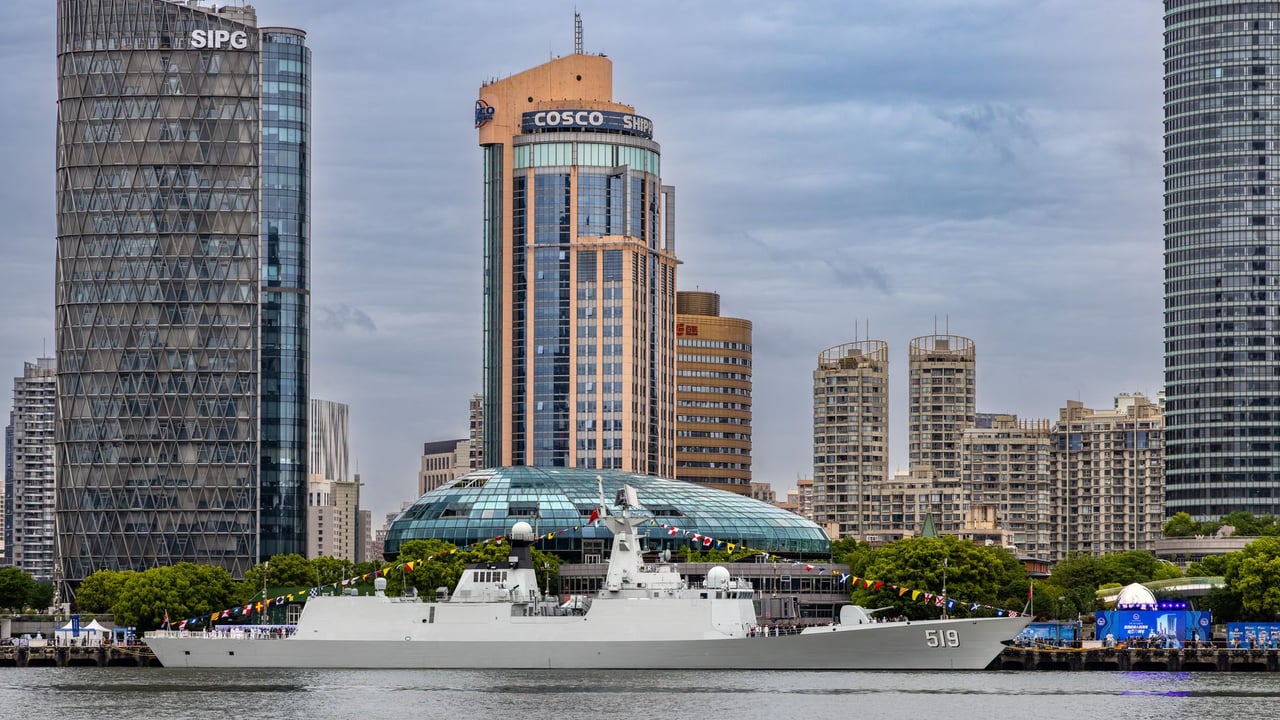

China’s Foreign Ministry has issued a forceful defense of its recent maritime maneuvers in the waters east of Taiwan, characterizing the presence of its forces in the Western Pacific as both "reasonable and lawful." This official stance signals a significant consolidation of Beijing’s assertive posture, aiming to normalize high-intensity operations in what was once considered a strategic sanctuary for the island’s defense. By framing these activities as beyond reproach, the ministry is effectively dismissing international concerns regarding regional stability and freedom of navigation.
The strategic shift toward the eastern side of Taiwan represents a critical evolution in the People’s Liberation Army’s (PLA) operational reach. Historically, Taiwan’s mountainous eastern coast and its deep-water access to the Pacific were seen as a "back door" that could remain open for US and Japanese reinforcements during a conflict. Beijing’s increasing presence in these waters suggests a long-term goal of total maritime envelopment, complicating any potential foreign intervention or resupply efforts.
This rhetorical defense from the Foreign Ministry also serves to preemptively counter legal challenges regarding the status of the Philippine Sea and the waters surrounding the island. By utilizing a vocabulary of "legality" and "reasonableness," Beijing is attempting to codify its naval expansion as a standard exercise of sovereign rights. This approach reflects a broader trend where the Chinese government seeks to redefine the maritime status quo through persistent presence and subsequent legal justification.
Observers note that these activities are no longer sporadic responses to specific diplomatic provocations but have instead become a fixed component of China’s regional security architecture. The normalization of these patrols forces neighboring states and global powers to recalibrate their naval strategies in the Indo-Pacific. As the PLA Navy continues to project power beyond the First Island Chain, the geopolitical friction in the Western Pacific is likely to intensify, with the waters east of Taiwan becoming the new frontline of this competition.