The Long March of Soft Power: Beijing Rebrands Revolutionary History for a Global Audience

China is leveraging the 90th anniversary of the Long March to launch a sophisticated international communication campaign, inviting foreign experts to revolutionary sites in Guangxi. The project aims to link the Communist Party's historical resilience to modern rural revitalization and economic success, rebranding revolutionary history as a global narrative of perseverance.

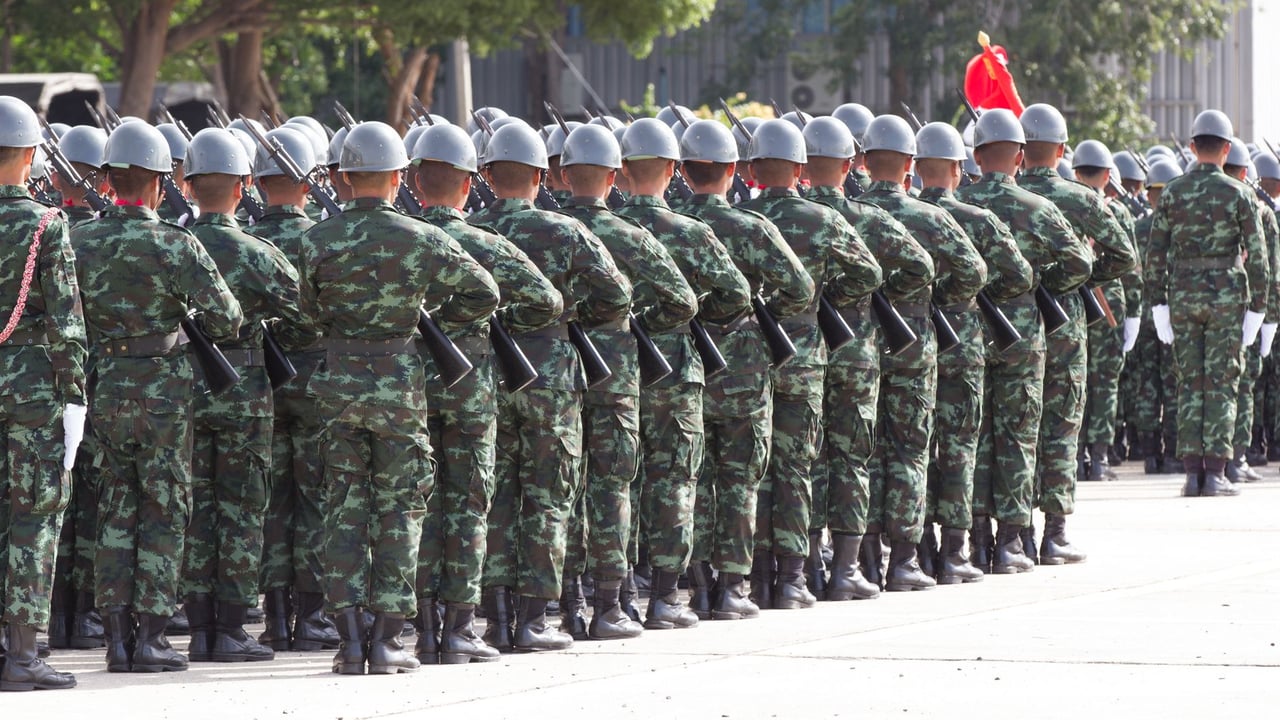
Back view unrecognizable soldiers with riffles wearing khaki uniform and hardhat lining up in rows during military ceremony

Key Takeaways

  • 1The CICG 'Walking the Long March Road' project brought international experts and ASEAN youth to the Xiangjiang Battle sites in Guangxi.
  • 2The campaign uses 'immersion' and foreign testimonials to lend global credibility to the CCP’s foundational revolutionary history.
  • 3The narrative connects the survival of the Red Army in 1934 directly to 21st-century goals like rural revitalization and poverty alleviation.
  • 4Quanzhou’s industrialization of its rice noodle chain is presented as a modern manifestation of the 'Long March Spirit.'
  • 5The event marks the lead-up to the 90th anniversary of the Long March's completion in 2026.

Editor's
Desk

Strategic Analysis

This initiative represents a sophisticated evolution in China's 'telling the China story' strategy. By inviting international voices to engage with 'Red Heritage,' Beijing is attempting to move beyond the blunt propaganda of the past toward a more emotive, relatable form of soft power. The focus on the Xiangjiang Battle—a site of near-total defeat—is particularly strategic; it allows the state to emphasize a narrative of 'resurrection and growth' that mirrors China’s broader rise on the global stage. By integrating the rice noodle industry of Quanzhou into the tour, the state effectively uses its historical legitimacy to validate its current economic policies, suggesting that the CCP's governance is a continuous, unbroken path from the battlefield to the modern factory.

China Daily Brief Editorial
Strategic Insight
China Daily Brief

As the 90th anniversary of the Long March’s conclusion nears in 2026, the Chinese government is intensifying efforts to internationalize its foundational revolutionary myths. Under the 'Walking the Long March Road' project, the China International Communications Group (CICG) recently led a delegation of foreign experts, ASEAN youth representatives, and scholars to the rugged terrain of northern Guangxi. The tour focused on the site of the Xiangjiang Battle, a 1934 conflict that remains one of the bloodiest and most pivotal chapters in the Communist Party’s history.

By trading digital storytelling for physical 'immersion,' the state aims to bridge cultural gaps and frame the 'Long March Spirit' as a universal symbol of resilience. Foreign participants, including Dutch sinologist Elsbeth van Paridon and British editor David Ferguson, provided the necessary external validation. Their testimonials, emphasizing the 'indomitable character' required to overcome adversity, serve to translate a deeply nationalistic narrative into a vocabulary of global struggle and human endurance.

The initiative also highlights a strategic shift in how 'Red Tourism' is utilized domestically. In Quanzhou and Xing’an, the sites of former carnage have been transformed into landmarks of rural revitalization. The narrative arc presented to the international delegation purposefully connects the 'desperate breakthrough' of the 1930s to the modern 'assault on poverty,' where traditional agricultural regions now boast high-tech, selenium-rich rice noodle supply chains.

Ultimately, these curated journeys are designed to prove that the Party’s 'original heart'—its foundational mission—remains intact despite decades of economic transformation. By showcasing the prosperity of these 'Old Revolutionary Areas,' Beijing seeks to demonstrate that the sacrifices of the past have reached a logical, successful conclusion. The Long March is no longer presented merely as a military retreat, but as the enduring spiritual engine driving China’s modern industrial and social ambitions.

Share Article

Related Articles

📰
No related articles found