
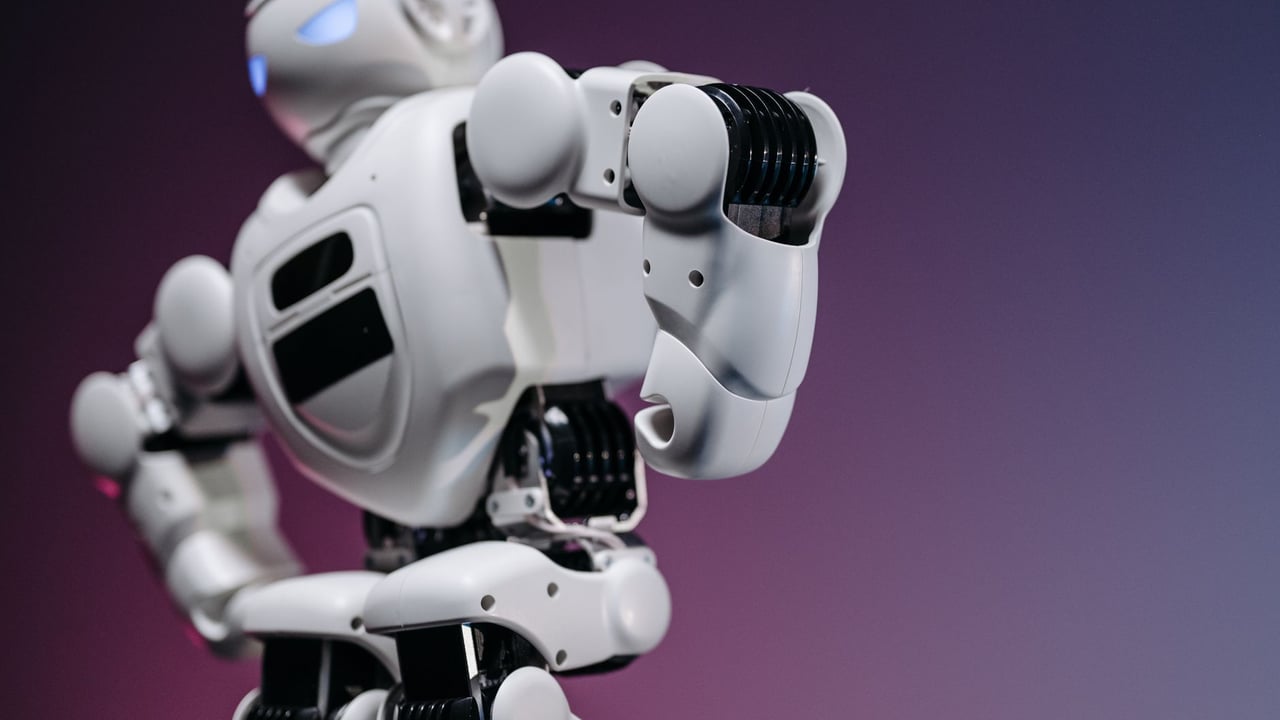

In a bid to bring the futuristic dream of robotic companionship into the Chinese living room, Ubtech Robotics recently unveiled its long-anticipated U1 bionic humanoid series. The launch, however, has revealed a stark divide between the sleek marketing of a 'silicon soulmate' and the clunky mechanical realities of current hardware. While the company reported over 13,000 pre-orders, the initial public reception has been clouded by criticisms regarding aesthetic fidelity and limited functionality.
Ubtech’s pricing strategy reflects the immense cost of humanoid development, with the mid-range U1 Pro retailing at approximately 169,800 RMB ($23,350) and the high-end U1 Ultra reaching nearly 990,000 RMB ($136,000). Despite the steep price tag, the company admitted that the high-volume 'Pro' model lacks the ability to walk autonomously or perform household chores. It is marketed primarily as an 'emotional companion,' a niche that critics argue may be too narrow for such a significant investment.
A particularly vocal segment of the intended market—the 'ACGN' (Anime, Comic, Games, and Novel) subculture—expressed deep disappointment. Early adopters had hoped for collaborations with major gaming or anime intellectual properties (IPs) to customize the robots as beloved characters. Without these skins or custom facial features, and faced with what some call 'uncanny valley' facial expressions, these high-spending enthusiasts are signaling that the product currently lacks the 'waifu' appeal necessary to drive mass adoption.
Technically, the transition from industrial to domestic settings remains a formidable hurdle for the industry. While industrial robots prioritize precision and repetition, home robots require advanced emotional computing, sophisticated environment sensing, and failsafe emergency braking systems. Ubtech’s current iteration, while featuring a large language model for dialogue, still suffers from noticeable latency and mechanical stiffness that hinders the 'natural' interaction promised in promotional materials.
Ubtech's pivot toward the consumer market is increasingly viewed as a move to satisfy investor pressure for a 'C-end' growth story. After years of focusing on industrial applications, the company is attempting to prove that humanoid robots can generate recurring revenue through emotional service. However, with the 'Pro' model effectively serving as a stationary smart speaker in a humanoid shell, the road to achieving a scale of 50,000 units per year—Ubtech’s stated goal—remains uphill.