
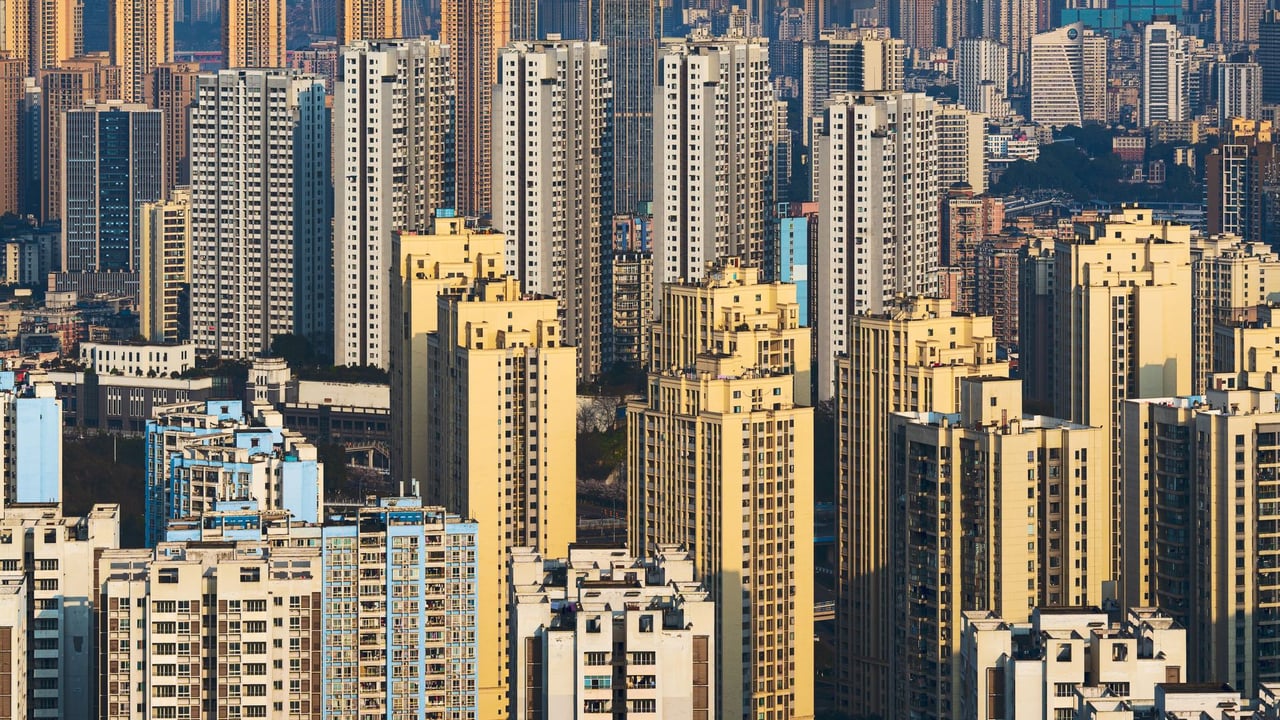

For decades, the Chinese dream was built on a foundation of reinforced concrete. Real estate was not merely a place to live; it was the primary engine of wealth accumulation and the singular store of value for the middle class. However, a landmark report from Goldman Sachs suggests this era is drawing to a close as household balance sheets undergo a fundamental structural shift toward financial assets.
At the height of the property boom in 2021, real estate accounted for a staggering 67% of total household assets in China. Since then, nominal home prices have retreated approximately 30% from their peaks, creating a persistent negative wealth effect that has weighed heavily on consumer confidence. Goldman’s analysts argue that the driver of wealth growth has now officially switched from property to financial instruments, including deposits, stocks, and insurance.
This migration is being accelerated by the rapid erosion of yields on traditional savings. The interest rate on three-year fixed deposits has plummeted from 2.6% in early 2023 to a mere 1.25% today. With the spread between long-term and short-term deposits narrowing significantly, the incentive to lock away cash in banks is vanishing, pushing households to seek higher returns in mutual funds and the broader capital markets.
Goldman projects that by 2035, the share of real estate in household portfolios will shrink to 42%, while the allocation to stocks and insurance will nearly double. Equities, which currently comprise less than 10% of total assets, are expected to benefit from increased indirect participation through mutual funds. Meanwhile, the insurance sector is poised to absorb roughly 6 trillion yuan in annual inflows as residents seek a balance between yield and security.
The transition will not be a linear progression. Chinese investors remain inherently conservative, and the current uneven distribution of wealth means that risk appetite varies wildly across demographics. For this structural shift to sustain momentum, the report emphasizes that market returns must remain attractive and policy stability must be maintained to convince a skeptical public to trade the perceived safety of bricks for the volatility of the ticker tape.