Micron’s $9 Billion Japanese Expansion Signals the Next Front in the Global Memory War

Micron Technology has launched a $9.3 billion expansion of its Hiroshima plant to produce advanced High Bandwidth Memory for AI applications. The move highlights an escalating capital expenditure race among global memory giants to meet the insatiable demands of the AI hardware market.

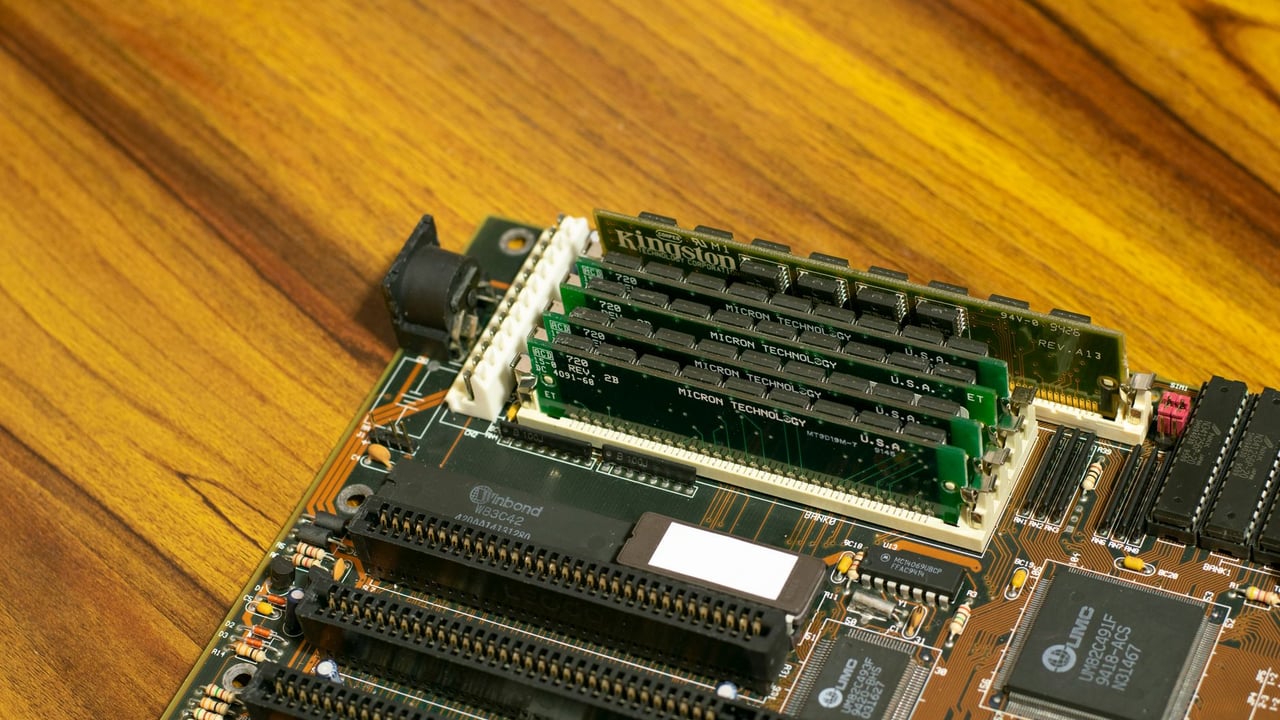
Detailed image of a vintage computer motherboard with RAM sticks.

Key Takeaways

  • 1Micron is investing approximately 1.5 trillion yen ($9.3 billion) in its Hiroshima, Japan facility.
  • 2The expansion focuses on High Bandwidth Memory (HBM), a critical component for Nvidia's AI processors.
  • 3Shipments from the expanded facility are projected to begin in the second half of 2028.
  • 4The move comes amid massive rival investments, including a $51 billion commitment from SK Hynix in South Korea.

Editor's
Desk

Strategic Analysis

The memory sector, once a commodity-driven cycle of boom and bust, has been fundamentally transformed into a strategic bottleneck for the generative AI revolution. Micron’s move into Japan is as much about geopolitics as it is about engineering; by diversifying advanced HBM production into a key U.S. ally, Micron is de-risking the supply chain for Western AI giants. However, the four-year lead time until shipment suggests a risky assumption: that the current compute-heavy AI architecture will not be superseded by more efficient, less memory-dependent models before the factory even comes online. This investment also highlights Japan's successful use of subsidies and industrial policy to lure back cutting-edge manufacturing.

China Daily Brief Editorial
Strategic Insight
China Daily Brief

Micron Technology is doubling down on its presence in Japan, breaking ground on a massive $9.3 billion expansion of its Hiroshima facility. This move is specifically designed to ramp up production of High Bandwidth Memory (HBM), the high-performance chips that act as the vital circulatory system for Nvidia’s market-dominating AI processors.

While the investment signals immediate strategic intent, the timeline reflects the long-term nature of semiconductor infrastructure. Shipments from the new facility are not expected until the latter half of 2028, underscoring a high-stakes bet that the current artificial intelligence boom will remain a structural fixture of the global economy for years to come.

Micron is not acting in a vacuum; its expansion follows a torrent of capital expenditures from South Korean rivals. SK Hynix recently pledged over $50 billion for a new NAND facility, while Samsung continues its aggressive push to reclaim leadership in the HBM space. This capital-intensive arms race is reshaping the industrial landscape of East Asia, as firms race to secure the bottlenecks of the AI supply chain.

For Japan, this investment is a critical victory in its quest to regain relevance in the global chip industry. By hosting Micron’s HBM production, Japan positions itself as a stable, high-tech hub capable of supporting the most advanced AI infrastructure, providing a strategic alternative to the increasingly fraught geopolitical environment surrounding the regional semiconductor supply chain.

Share Article

Related Articles

📰
No related articles found