
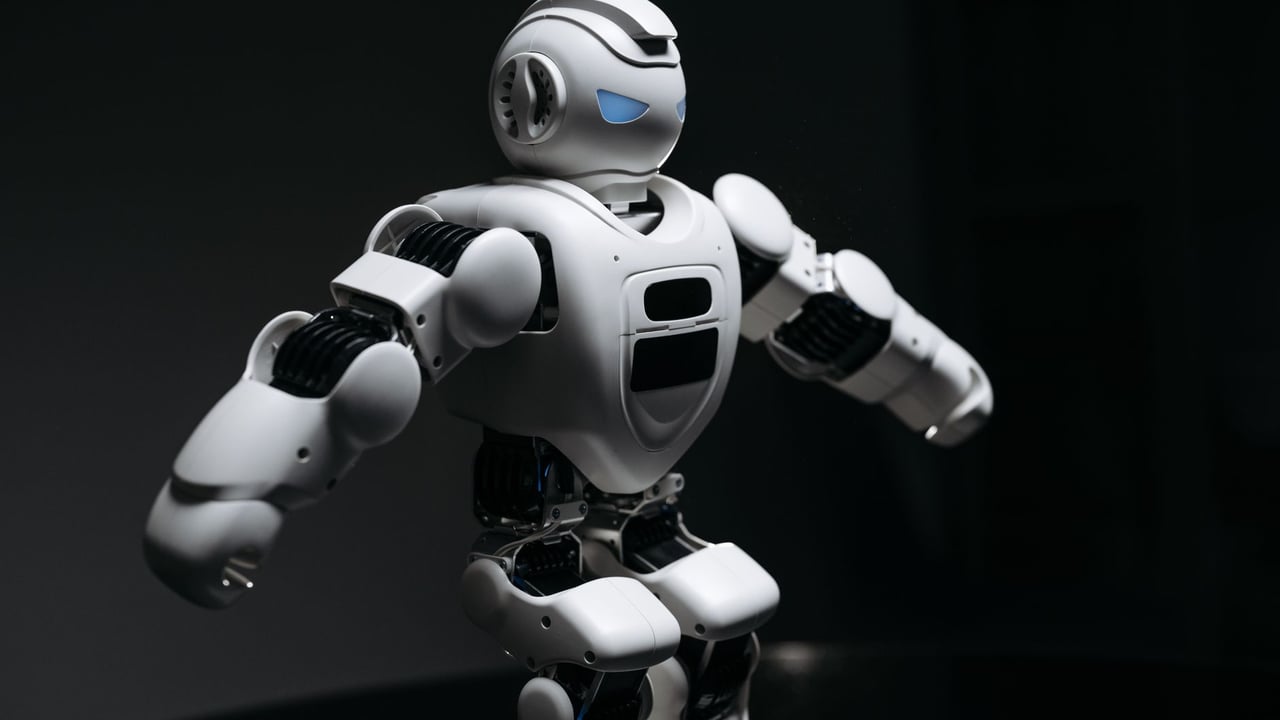

In the dense manufacturing clusters of China’s Pearl River Delta, a new wave of industrial automation is reaching a critical inflection point. Companies like Topstar, which led the Chinese market in light-load industrial robots in 2024, are now navigating a precarious transition from traditional machinery to embodied AI. This shift is not merely a technological upgrade but a survival test for dozens of humanoid robot startups competing for limited industrial placements.
While the internet remains captivated by viral videos of bipedal robots performing backflips or running marathons, factory owners in China operate on a far colder logic. For a robot to earn its place on a 3C electronics or automotive assembly line, it must meet rigid quantitative benchmarks for cycle times, safety, and total cost of ownership. Many startups attempting to pivot from research to production are finding that their products, designed for performance rather than labor, fail these initial screenings.
The physical form of these robots has become a significant point of contention among industrial buyers. In recent supplier selections, customers have consistently favored wheeled humanoid designs over bipedal models for a surprisingly simple reason: catastrophic failure safety. A bipedal robot that loses power or suffers a system crash will collapse, potentially destroying expensive components or injuring nearby workers, whereas a wheeled robot simply coasts to a stop.
This pragmatism is precipitating what industry insiders are now calling a "Battle Royale." The era of easy venture capital and orders from research institutions is ending, and companies must now prove their worth on the factory floor to survive. Unitree, one of the industry's highest-volume shippers, has already signaled a significant slowdown in growth and a drop in profitability as the market for educational and performance robots reaches saturation.
To bridge the gap between spectacle and productivity, leaders like UBTECH and Agibot are refining their control architectures to handle the complexities of the real-world shop floor. These systems utilize hierarchical models where a high-level "brain" handles task scheduling while a millisecond-level "cerebellum" manages precise motor responses. The ultimate goal is to accumulate millions of hours of real-world operational data to refine the Vision-Language-Action (VLA) models that drive these machines.
The industry is currently bifurcating between those who can deliver actual labor and those who can only deliver a spectacle. As funding dries up for the latter, the next two years will likely see a massive consolidation of the 140-plus humanoid robot makers currently operating in China. The survivors will be those who prioritize stability, industrial integration, and the raw data required to achieve high-precision autonomous work.