
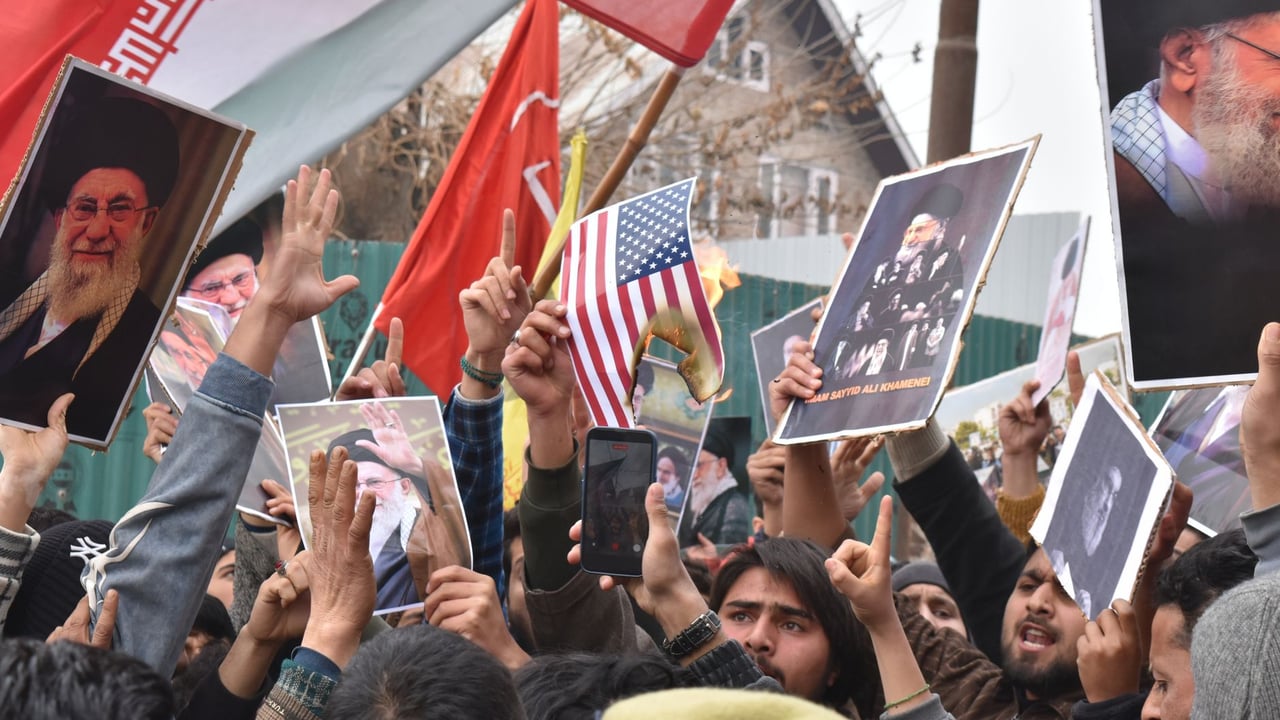

A week of national mourning for the late Supreme Leader Ayatollah Khamenei began in Tehran on July 3, marked by a rare collective appearance of the Islamic Republic’s new leadership. In the sprawling Tehran Grand Mosque, the President, Speaker of the Parliament, and top generals of the Islamic Revolutionary Guard Corps (IRGC) gathered to receive foreign delegations. Notably, high-ranking military figures like IRGC Commander Vahidi and Aerospace Force Commander Musavi emerged from months of public silence, signaling a regime attempt to project stability.
Yet, the most glaring vacancy was that of the new Supreme Leader, Mojtaba Khamenei. Having been injured in the same late-February attack that claimed the lives of his parents and wife, Mojtaba has not been seen in public for months. His absence persists despite the gravity of the national funeral, fueled by a total lack of photographic or video evidence of his recovery. This 'ghost leadership' has forced the regime to rely on written statements to communicate his authority to the Iranian public and the world.
Security concerns appear to be the primary driver behind this prolonged invisibility. Intelligence sources suggest that while Mojtaba expressed a desire to lead prayers over his father’s casket in Mashhad on July 9, security officials vetoed the move. They fear that a public appearance would provide a window for Israeli intelligence to facilitate an assassination or pinpoint the new leader's secure location. This caution follows direct threats from Israeli Defense Minister Yoatv Katz, who recently signaled that Mojtaba remains a target.
In the absence of the Khamenei sons, the family was represented at the funeral by Gholam-Ali Haddad-Adel, Mojtaba’s 81-year-old father-in-law. A veteran of the Islamic Republic’s political establishment and a member of the Expediency Discernment Council, Haddad-Adel’s interactions at the ceremony were telling. His cold reception of Speaker Qalibaf and Foreign Minister Araghchi—the architects of recent negotiations with the United States—highlighted the widening chasm within the Iranian elite.
This internal friction centers on a recently signed memorandum of understanding between Tehran and Washington. Hardline factions, led by the 'Front of Islamic Revolutionary Stability,' have branded the deal a 'capitulation' and staged protests outside the Foreign Ministry. These ultraconservatives, who control the state broadcaster IRIB, argue that only continued confrontation can exhaust American resolve. They view any diplomatic thaw as an existential threat to the revolutionary character of the state.
While Mojtaba has theoretically authorized the government to proceed with negotiations, his personal stance remains an enigma. Some analysts suggest he is merely allowing President Pezeshkian to take the political heat for the unpopular compromise. However, sources close to the family suggest Mojtaba may eventually move to suppress the extreme hardliners to ensure the regime’s economic survival. The true direction of his reign will likely be revealed through his upcoming appointments for the IRIB, the Judiciary, and the Basij militia.